
Democrat lawmakers were physically trapped outside a Brooklyn detention facility after being denied entry—exposing the fierce new standoff over immigration enforcement and constitutional authority in President Trump’s America.
Story Snapshot
- House Democrats denied entry and briefly trapped at Brooklyn MDC during attempted oversight visit.
- Incident highlights renewed power struggle over immigration enforcement and congressional authority under President Trump.
- Pattern of denied access to detention centers raises transparency and accountability concerns as enforcement ramps up.
- Trump administration’s new laws and executive actions have dramatically expanded detention, deportations, and state-federal immigration cooperation.
Democrat Lawmakers Blocked and Trapped at Brooklyn Detention Center
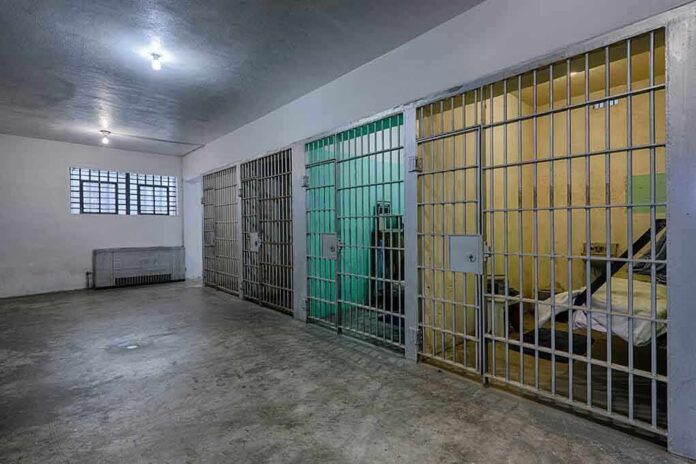
On August 6, 2025, Democratic Representatives Adriano Espaillat, Nydia Velázquez, and Daniel Goldman attempted an oversight visit at the Metropolitan Detention Center (MDC) in Brooklyn, New York. Instead of routine access, agents locked the gates and left the lawmakers and their entourage trapped between fences for nearly half an hour. This escalation is just the latest in a string of confrontations as congressional Democrats press for transparency in federal detention facilities, now operating under aggressive new Trump-era mandates. The lawmakers, accompanied by advocacy groups, were finally released, but not before the incident made national headlines and reignited debate over separation of powers and federal authority.
Just two months earlier, on June 8, Espaillat and Velázquez were also denied entry to ICE detention areas at Manhattan’s 26 Federal Plaza. These repeated blockades signal a concerted shift in enforcement posture since Trump’s return, as authorities assert operational control against congressional oversight. While Democrats decry the lack of transparency and allege inhumane conditions, facility staff and ICE agents cite security and executive directives as the basis for refusals. The pattern is clear: under the Trump administration’s renewed crackdown, access to detention centers—especially by political opponents—is now a battleground.
Trump Administration’s Aggressive Immigration Reforms Change the Landscape
Since January 2025, President Trump has moved swiftly to overhaul immigration policy, fulfilling campaign promises to restore border security and end what supporters saw as the previous era’s chaos. His administration declared a national border emergency, set daily arrest quotas, expanded local police participation in immigration enforcement, and dramatically increased funding for detention. The “One Big Beautiful Bill Act,” signed in July, quadrupled ICE’s detention budget to $45 billion through 2029 and authorized sweeping new powers to detain immigrant adults and families nationwide. Parole programs, refugee admissions, and humanitarian protections established under Biden were dismantled or suspended, while expedited removals ramped up. These moves, cheered by those demanding secure borders, have triggered legal challenges and fierce opposition from open-borders advocates.
The administration’s reforms also include mandatory work verification, daily fines for undocumented immigrants, and threats of funding cuts to so-called sanctuary jurisdictions. Local and federal law enforcement are now more deeply entwined, with states and cities pressured to open databases and comply fully with immigration authorities. For many in the conservative base, these steps mark a long-overdue return to the rule of law and the defense of American sovereignty. Critics, however, warn of constitutional overreach and humanitarian harm.
Constitutional Standoff: Oversight, Transparency, and the Limits of Power
The Brooklyn incident has thrust the constitutional question of congressional oversight back into the spotlight. Lawmakers hold a clear constitutional mandate to inspect federal facilities, ensuring legal compliance and humane treatment. However, with the Trump administration’s robust executive orders and security-first operations, federal agencies have begun openly rebuffing legislative oversight—testing the limits of checks and balances. Legal scholars warn that repeated refusals to allow congressional visits could set a troubling precedent, weakening accountability and emboldening executive overreach. For conservatives, the priority remains border security and restoring order, but many also value government transparency and the proper balance of powers, especially when executive authority is asserted so forcefully.
Advocacy groups and Democrat lawmakers vow to escalate the fight, threatening to use the power of the purse and legislative leverage to enforce oversight. Meanwhile, the administration stands firm, arguing that operational control and national security must come first. This standoff is likely to intensify as Trump’s policies reshape not only the immigration landscape but also the boundaries of federal power and constitutional governance.
Broader Implications for Immigration, Communities, and the Rule of Law
The fallout from these escalating confrontations is far-reaching. In the short term, detention facilities face increased scrutiny, and the political climate around immigration grows even more polarized. Long term, the outcome of this power struggle could redefine congressional oversight, law enforcement cooperation, and the rights of both detainees and lawmakers. Immigrant communities, already unsettled by heightened enforcement, now face even more uncertainty as pathways to relief are curtailed and local authorities are drawn into federal operations. Traditional American values—individual liberty, constitutional checks and balances, and respect for lawful authority—are at the heart of this debate. For conservatives, the Trump administration’s actions represent a necessary correction and a defense of national sovereignty. But the tension between security and oversight, and between executive action and legislative authority, remains unresolved—and will shape the national conversation for years to come.
Democrats attempting to visit Brooklyn ICE facility reportedly ‘trapped’ after being rebuffed by agents https://t.co/rs23ro7Oe9
— Fox News Politics (@foxnewspolitics) August 6, 2025
As the constitutional standoff continues, Americans on all sides must weigh the cost of unbridled executive power against the urgent need to restore order at the border. The coming months will reveal whether transparency and checks on government survive the new era of immigration enforcement, or whether the pendulum has swung too far toward centralized control.