One secretive summons of every U.S. general and admiral to Quantico might signal the most radical shakeup in American military command since World War II, yet not a soul outside the Pentagon has any idea what’s coming next.
Story Snapshot
- Hundreds of top military leaders are ordered to an unprecedented, secretive meeting at Quantico.
- Defense Secretary Pete Hegseth’s sweeping leadership purge and Pentagon rebranding fuel speculation and concern.
- The undisclosed agenda and timing in the midst of political chaos raise stakes for U.S. defense and civil-military relations.
- Congress and the public remain in the dark as the military faces historic internal disruption.
Largest Gathering of U.S. Military Brass in Modern Memory
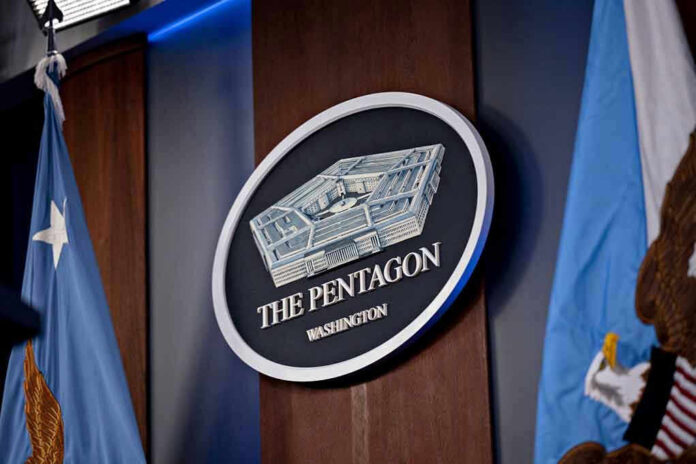
Hundreds of America’s most senior generals and admirals received direct orders: assemble at Marine Corps Base Quantico. Each, from one-star rank and up, plus command sergeant majors, will converge under one roof for what the Pentagon calls a “rare, urgent meeting.” The scale is stunning—routine conferences rarely involve more than a dozen top brass at once. Security planners scramble; never before have so many senior decision-makers gathered in a single, high-profile location. Even at the height of the Cold War, such a summit would have been unthinkable, lest a single attack cripple national defense leadership.
The Pentagon’s silence on the agenda is deafening. When pressed, spokesperson Sean Parnell confirms only the meeting’s date and scope, declining every request for details. Defense insiders, lawmakers, and allies are left to speculate: Is this about a looming threat, a dramatic new doctrine, or a test of loyalty after recent purges? The absence of answers breeds anxiety, especially among officers whose careers now hang in the balance.
Leadership Purges, Department Rebranding, and the Shadow of Uncertainty
President Trump set the stage earlier this month by issuing an executive order to rebrand the Department of Defense as the Department of War—a symbolic gesture that, while lacking congressional approval, signals an aggressive shift in posture. Days later, Secretary of War Pete Hegseth announced a 20% reduction in four-star officers, abruptly removing 15 of the military’s most senior leaders, including the Chairman of the Joint Chiefs of Staff and the Navy’s top admiral. These moves, justified as streamlining and refocusing the armed forces, have upended the senior ranks, leaving remaining commanders wary and watchful.
Such personnel shakeups rarely occur outside wartime, and almost never on this scale. The timing compounds the turbulence: Congress faces a looming government shutdown, Pentagon staff are already bracing for reorganization, and America’s defense strategy is reportedly pivoting away from China toward domestic and Western Hemisphere concerns. For an institution that prizes order and continuity, the current climate feels more like revolution than reform.
Power Struggles and the Search for Loyalty
The internal dynamics are fraught. Hegseth, known for his assertive style, appears intent on consolidating control and enforcing unity among the ranks. Trump, meanwhile, fans the flames by calling the upcoming summit a “big story” and a “kumbaya moment,” suggesting either a dramatic reconciliation or a final warning to dissenters. Vice President JD Vance, by contrast, dismisses the gathering as routine—a claim few inside the Pentagon seem to believe. Congressional leaders, holding the constitutional purse strings, watch warily but remain sidelined for now.
Analysts warn of risks—assembling so many senior commanders in one place poses a tempting target and raises fears about continuity of government should disaster strike. More subtly, military historians and civil-military relations scholars see potential for morale problems and a breakdown of trust after such sweeping, unexplained changes. Some speculate the meeting could be a loyalty test, others that it will unveil a new doctrine or contingency plan. No recent precedent offers a reliable script; the last time the Pentagon saw such drama was during the 1947 reorganization, and even then, secrecy was not this absolute.
Unanswered Questions and the Road Ahead
The stakes extend far beyond Quantico’s gates. Senior officers and their families face profound uncertainty—will the meeting end with further dismissals, new marching orders, or a reconciliation after weeks of upheaval? Defense contractors, industry partners, and international allies all monitor developments, wary of shifts in procurement, priorities, and alliances. The broader public, already weary from years of political tumult, is left to wonder: is this a housecleaning, a crisis response, or something more fundamental to the nation’s future?
Until the doors close and the generals convene, speculation reigns. American defense policy, military morale, and even global perceptions of U.S. stability could change in a single day, depending on what emerges from that Quantico meeting room. The only certainty is that, for the first time in generations, the Pentagon’s inner circle faces a test of unity and purpose that will echo far beyond the beltway.