When a sitting president suggests turning America’s “dangerous” cities into military training grounds, the lines between national defense and domestic control blur in ways that force every reader to ask: What happens when the armed forces become a fixture in everyday urban life?
Story Snapshot
- Donald Trump proposes using US cities as military training sites, marking an extraordinary shift in civil-military relations.
- Speech delivered amid escalating urban unrest and calls for stricter military discipline.
- Key federal and local stakeholders clash over legality, precedent, and social impact.
- Experts warn of constitutional dangers and long-term erosion of civilian protections.
Trump’s Quantico Speech Signals New Era in Civil-Military Relations
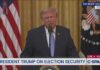
Donald Trump’s announcement at Quantico, flanked by Defense Secretary Pete Hegseth, did more than stir headlines—it signaled a foundational shift in how the administration envisions the role of the military in society. Trump argued that “dangerous” American cities should serve as training grounds for the armed forces, citing an “invasion from within” and equating domestic unrest to threats traditionally reserved for foreign adversaries. This assertion, unprecedented in modern presidential rhetoric, presents the military as the solution to internal disorder and culture war grievances, not merely as a shield against external threats.
By positioning urban neighborhoods as sites for military preparation, Trump’s policy blurs the boundaries that have historically separated the armed forces from domestic law enforcement. The presence of military leadership at Quantico—some reportedly uneasy—underscores the tension between tradition and a new, executive-driven vision. The speech also doubled as a platform to roll out new directives, including a demand to end “woke” culture and reinstate stricter physical fitness standards, setting the stage for a comprehensive military overhaul with domestic implications.
Historical Barriers to Domestic Military Deployment
The proposal stands in stark contrast to longstanding legal and cultural norms that restrict military involvement in civilian affairs. Since the passage of the Posse Comitatus Act in 1878, federal troops have been limited to rare, crisis-induced deployments—natural disasters, riots, and exceptional moments of unrest. Trump’s call for routine use of cities as training grounds marks a radical departure, echoing only the most extreme precedents in US history. The 2020 George Floyd protests and earlier threats to invoke the Insurrection Act serve as the closest historical analogs, but these were always justified as exceptional, not standard operating procedure.
Trump’s narrative frames internal dissent and crime as existential threats, paving the way for a reimagining of the military’s role. The backdrop of immigration-related riots in Los Angeles and the appointment of Pete Hegseth, a vocal critic of progressive reforms, further contextualize the administration’s urgency. This approach resonates with segments of the public concerned about disorder, but provokes alarm among civil rights advocates and legal scholars who see a direct challenge to constitutional limits and civil liberties.
Clashing Stakeholder Interests and Rising Tensions
Power dynamics surrounding the proposal are fluid and fraught with conflict. Trump and Hegseth, wielding significant executive influence, push for a “warrior ethos” and the restoration of military discipline, while military brass grapple with professional norms and legal constraints. City governments, especially those labeled “dangerous,” face the prospect of federal overreach and the risk that military operations may escalate rather than quell unrest. Civil rights groups mobilize to challenge the constitutionality of domestic deployments, warning that such actions could disproportionately impact marginalized communities.
Congressional and judicial oversight become critical as policy changes unfold, with the potential for litigation and hearings that could define the boundaries of executive power for decades. The direct advocacy for military involvement in domestic affairs, coupled with culture war rhetoric, transforms what might otherwise be a law-and-order initiative into a broader contest over American identity and governance.
Short-Term Shock and Long-Term Uncertainty
Immediate effects of Trump’s proposals are palpable: more than 2,000 National Guard and 700 Marines deployed to Los Angeles in response to immigration-related unrest, coupled with new Pentagon directives targeting fitness and culture. The presence of uniformed troops in American streets creates an atmosphere of tension and uncertainty, especially in communities already wary of law enforcement. Local economies face potential disruption, and civic trust may erode as residents navigate the reality of military operations in their neighborhoods.
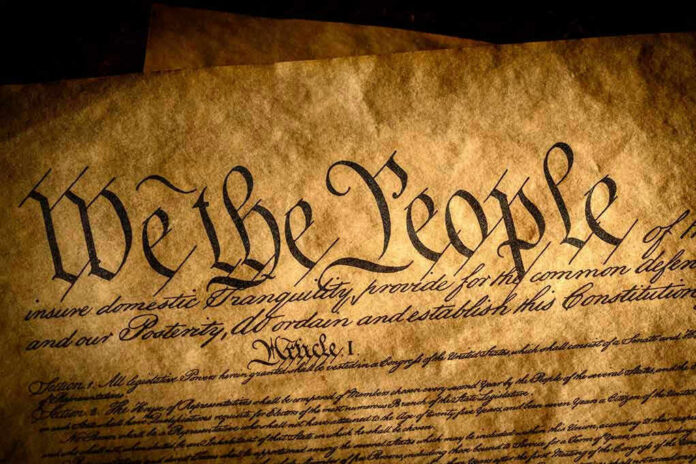
Experts warn of lasting consequences. Routine military engagement in urban areas risks undermining the Posse Comitatus Act and normalizing executive overreach. Legal scholars argue that such policy shifts could set precedents for future administrations, making it harder to restore traditional boundaries. Civil rights advocates highlight the disproportionate risks to minority communities, while historians caution that blurring the lines between civilian and military spheres threatens the democratic fabric of the nation.