U.S. commandos quietly seized an oil tanker off Venezuela’s coast, and the unanswered question is whether this was a one-off stunt or a preview of how Washington will police rogue regimes with commercial firepower instead of full-scale wars.
Story Snapshot
- U.S. forces boarded and took control of a foreign merchant ship near Venezuela, a move almost never seen outside open conflict.
- The operation fit the Trump administration’s broader strategy to choke Nicolás Maduro’s regime without launching a shooting war.
- The ship’s oil cargo sat at the intersection of sanctions policy, narcoterrorism charges, and global energy politics.
- The episode raises sharp questions about precedent, sovereignty, and how far America should go to enforce its laws on the high seas.
Why U.S. Forces Put Boots On The Deck Of A Merchant Ship
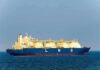
U.S. regulators and diplomats usually wield sanctions, not rifles, yet this time the administration ordered U.S. forces to physically seize an oil tanker operating off Venezuela’s coast. The target was not a warship, a pirate boat, or a hijacked cruise liner; it was a commercial vessel carrying crude that Washington argued helped prop up Nicolás Maduro’s embattled regime and undermine U.S. sanctions. Using uniformed forces in this context signaled an escalation that words and paperwork could not match.
Maduro, Narcoterrorism Charges, And The Logic Of Pressure
Nicolás Maduro did not become a priority by accident. U.S. prosecutors charged him with narcoterrorism, alleging that his inner circle blurred lines between state power and drug trafficking networks that flood American streets. From a conservative, law-and-order perspective, a head of state accused of weaponizing narcotics against Americans forfeits moral standing and invites tough countermeasures. Supporters of the seizure argue that allowing tankers to move Venezuelan oil freely would bankroll a cartel-state hybrid, not just a struggling government.
US forces seize oil tanker near Venezuela, Caracas condemns move as 'piracy' https://t.co/GHhe7HBmoL via @FRANCE24
— Mike (@half_witt) December 11, 2025
Critics counter that treating a sitting foreign leader like a cartel boss risks normalizing regime change by legal indictment, not clear military threat or direct attack on the United States. They worry that once Washington mixes criminal charges, sanctions, and military boarding actions, it becomes easier for future administrations to justify interventions with thinner evidence. The strength of this concern rests on whether the narcoterrorism case holds up in court and in public scrutiny, not just in press conferences.
The Sanctions Game: Follow The Money, Then Seize The Steel
Sanctions on Venezuela aimed to starve Maduro of oil revenue by scaring off buyers, insurers, and shippers, but global energy markets are inventive. Middlemen, re-flagged ships, obscure shell companies, and murky ship-to-ship transfers created a shadow fleet moving sanctioned barrels. When paper enforcement lagged, Washington sent a clear message: sanctions violators would not just face fines; they might lose the ship under their feet. The use of U.S. forces turned financial penalties into a physical risk calculation.
From a common-sense angle, enforcement without consequences is performance theater. If sanctions are national policy, then letting violators profit while American taxpayers absorb the strategic damage invites more cheating. However, conservatives also value limited government and predictable rules. The key test is whether the United States applied clear legal standards before sending forces, or improvised justification after the fact. Durable policy rests on transparent criteria that allies and adversaries can understand, even when they dislike the outcome.
Freedom Of The Seas Versus The Reach Of American Law
The high seas traditionally belong to no one, governed by a web of maritime law, flag-state authority, and long-standing custom. Seizing a merchant ship outside traditional combat raises hard questions: Whose law matters most— the ship’s flag, the coastal state, or the power that claims the cargo violates its sanctions? U.S. officials framed the operation as a lawful enforcement step, not piracy or aggression, citing their authority over transactions that touch the American financial system and U.S.-controlled infrastructure.
Conservative foreign policy has long balanced two instincts: protect American interests robustly, and avoid turning the United States into the world’s self-appointed policeman. Supporters see the seizure as targeted, proportional, and aimed at a regime already tied to narcoterrorism allegations, not a neutral partner. Skeptics ask what happens when China or Russia adopts the same playbook, citing their own domestic laws to seize ships they dislike. A principle that works only when America uses it is a weak principle in a competitive world.
What This Means For Future Conflicts Without Formal Wars
The Venezuela tanker episode belongs to a broader pattern where Washington uses tools short of war—cyber operations, sanctions, covert action, and now, ship seizures—to shape behavior abroad. These methods appeal to Americans who reject endless wars but still expect their government to confront hostile regimes. The risk lies in normalizing “quiet” actions that feel costless in the moment yet accumulate into precedents other nations can mirror against U.S. companies, allies, or even American-flagged vessels.
Common sense suggests a clear framework: reserve such seizures for cases with strong evidence linking the cargo to criminal activity or sanctioned regimes, coordinate closely with allies, and communicate red lines in plain language. When the United States acts predictably, deterrence strengthens and propaganda weakens. When operations appear ad hoc or politically convenient, they invite blowback. How the Venezuela case is explained, litigated, and repeated—or not repeated—will show whether it was a measured tool or the start of a slippery norm.