Jeanine Pirro’s blunt warning that even licensed gun carriers could “go to jail” in Washington, D.C. is igniting a Second Amendment firestorm inside the very coalition that put President Trump back in the White House.
Quick Take
- Pirro said anyone bringing a gun into D.C.—even with an out-of-state license—would go to jail, triggering immediate backlash from major gun-rights voices.
- The controversy lands amid Trump’s federal crackdown on D.C. crime and the Justice Department’s ongoing legal challenge to D.C. gun bans.
- Pirro’s statement appears to clash with her office’s earlier move to stop pursuing certain felony charges for rifles and shotguns in D.C., citing Supreme Court precedent.
- Gun-rights groups argue the episode highlights how D.C.’s patchwork rules can turn law-abiding citizens into targets while criminals remain the focus problem.
Pirro’s “Go to Jail” Line Triggers a Rapid Pro-2A Backlash
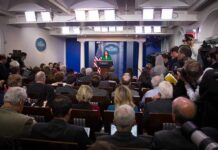
Jeanine Pirro, the U.S. Attorney for the District of Columbia and a Trump appointee, drew intense criticism after stating that anyone who brings a gun into the District would be going to jail, including people licensed elsewhere. The pushback came quickly from prominent gun-rights advocates and Republican voices, framing her remarks as an unnecessary threat aimed at lawful carriers rather than violent offenders. The sharp reaction reflects how central gun rights remain to Trump’s coalition.
Pirro, the top federal prosecutor in the District of Columbia., said anyone who brings a gun to the capital is "going to jail." https://t.co/JW6yLUVgSx
— Newsweek (@Newsweek) February 3, 2026
Rep. Greg Steube of Florida responded online with a “Come and Take It!” message, signaling defiance and highlighting the cultural divide between constitutional-carry sentiment and D.C.’s restrictive posture. Groups including Gun Owners of America and the National Association for Gun Rights also criticized Pirro’s posture, arguing that concealed-carry permit holders are statistically among the most law-abiding segments of the public. As of the reporting summarized in the research, Pirro had not publicly walked back the statement.
Why D.C. Gun Rules Are a Constitutional Flashpoint After Heller and Bruen
Washington, D.C. has long been a national test case for strict gun regulation, including earlier handgun bans struck down by the Supreme Court in District of Columbia v. Heller and modern limits now evaluated under the Court’s Bruen framework. That history matters because D.C. restrictions frequently collide with the principle that firearms “in common use” receive strong constitutional protection. The current dispute is not just political messaging; it’s another stress test of how far local governments can go post-Bruen.
The legal landscape is also moving under the Trump administration’s Justice Department. In late 2025, DOJ filed a lawsuit challenging parts of D.C.’s semiautomatic firearm restrictions, including bans affecting rifles like AR-15-style platforms, arguing they conflict with Supreme Court precedent. That litigation posture reads as broadly supportive of Second Amendment protections, which is why Pirro’s jail-focused warning confused and angered many pro-2A voters who expected consistent signals from federal leadership in D.C.
Trump’s D.C. Crime Crackdown Meets a Messaging Problem Inside the Coalition
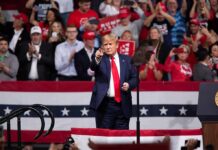
The dispute is unfolding alongside President Trump’s push to tighten federal control over D.C. law enforcement in response to crime concerns, including deployments of federal resources and a more aggressive posture on public safety. Pirro has been presented as part of that law-and-order strategy, and her office has emphasized charging the most serious provable offenses to make the city safer. Federal authorities have also reported seizures of firearms after the takeover began, underscoring the enforcement-heavy environment.
At the same time, Pirro’s office previously announced a policy shift: it would stop pursuing felony charges for rifles and shotguns in certain cases—except for violent crimes or prohibited persons—citing the Supreme Court’s direction on the Second Amendment. That earlier move aligned with the administration’s broader legal arguments that D.C. bans can be unconstitutional. Against that backdrop, a blanket-sounding warning about jailing anyone who brings a gun into D.C. looks, at minimum, like a communications failure that hands ammunition to critics.
What’s Clear, What’s Not, and What Gun Owners Should Watch Next
Based on the available reporting in the research, several key facts remain unsettled: the exact date of Pirro’s statement was described only as “Monday,” and there is no confirmed follow-up clarifying whether she meant all guns under all circumstances, or whether she was referring to specific unlawful possession scenarios under D.C. code and federal charging practices. That gap matters, because D.C. has complex rules that can criminalize possession when permits and registrations do not match local requirements.
For constitutional conservatives, the big takeaway is not internet drama—it’s the risk that aggressive rhetoric could chill lawful self-defense while the DOJ simultaneously argues in court that D.C. gun bans are unconstitutional. If the administration wants to keep faith with millions of law-abiding gun owners, the next steps likely need to be clearer: prioritize violent criminals, keep charging policies consistent with Supreme Court precedent, and communicate precisely so lawful carriers aren’t treated like the problem. Until Pirro clarifies, distrust inside the base will remain.
Sources:
MAGA in Uproar After Jeanine Pirro’s Threat to Gun Owners
Semiautomatic weapons: DC Justice Department lawsuit (Trump, crime, AR-15s, Second Amendment)
It’s Been 5 Years Since the January 6 Insurrection