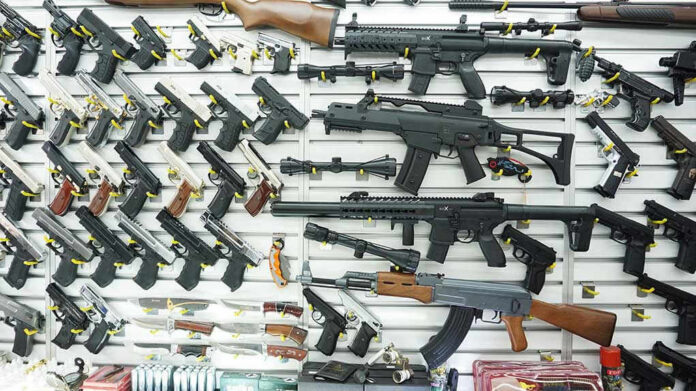
Canada’s “voluntary” gun buyback is collapsing under mass non-compliance—raising the stakes for whether the state now escalates to enforcement against ordinary, licensed citizens.
Story Snapshot
- Canada’s Assault-Style Firearms Compensation Program has produced very low participation after the March 31, 2026 declaration deadline.
- Program costs have surged to hundreds of millions of dollars, with reported per-gun administrative costs dwarfing expected compensation.
- Police agencies and provinces have signaled they lack resources or willingness to help execute a large-scale collection effort.
- The amnesty runs until October 30, 2026, after which non-compliance can expose owners to seizure and prosecution.
Non-compliance exposes the real test: enforcement versus retreat
Canada’s federal government banned more than 1,500 firearm models in 2020 and later expanded restrictions, then built a compensation program around turning those guns in. Early 2026 reporting and advocacy tracking indicate participation has remained extremely low, even after the declaration period closed on March 31, 2026. That gap matters because the policy now pivots from paperwork to practical enforcement—where governments often discover the limits of power, manpower, and public consent.
Limited data from pilot efforts has fueled public skepticism about whether this program can be executed without coercion. Reports described pilot collection targets that were not met, strengthening the view among critics that most owners simply will not participate. Official messaging frames the program as compensation for banned property, but the legal endpoint still requires dispossession by the end of the amnesty. For Americans watching from across the border, the case is a reminder that “temporary” controls can harden into permanent mandates.
Cost overruns and bureaucracy intensify doubts about public safety claims
Financial figures cited in 2026 coverage have become central to the controversy. Critics point to program spending approaching roughly CAD$779.8 million, alongside estimates that administrative costs per gun far exceed the compensation amounts being discussed. Those numbers are hard to square with the stated goal of reducing violence, especially when the program targets licensed owners who already passed background checks and training requirements. When government spending expands while compliance collapses, taxpayers tend to see waste—not safety.
Canadian officials have also faced questions about transparency and operational planning. Reporting described records that were difficult to obtain or heavily redacted, leaving basic implementation details unclear to the public. That matters because any large-scale collection effort requires clear rules, consistent standards, and a credible plan for safe interactions. Without that openness, political leaders risk producing the worst of both worlds: a sweeping mandate that does not meaningfully address criminal misuse, paired with deepening mistrust among law-abiding citizens.
Police and provincial pushback creates a federalism standoff
Practical enforcement runs through local institutions, and that is where the program appears to be meeting resistance. Multiple police services have indicated they are not positioned to participate in a collection effort if it would disrupt core policing priorities. Provinces have also signaled reluctance to devote resources, and some have pursued political or legal strategies designed to shield residents from penalties. The result is a standoff: Ottawa may claim authority, but execution depends on partners who can say no.
What the October 30, 2026 deadline means for ordinary owners
The federal amnesty is scheduled to end October 30, 2026, and that deadline now shapes the next phase. After the amnesty, owners who did not participate can face legal exposure, including potential seizure and prosecution under the framework described by official government materials. The most important unresolved question is whether officials will prioritize aggressive enforcement or quietly narrow the scope to avoid confrontation. Available research does not document widespread violent incidents tied to enforcement as of early 2026.
For a U.S. audience that cares about constitutional limits and civil liberties, the Canadian case is less about Canada’s laws and more about the pattern: sweeping promises, ballooning budgets, and bureaucratic coercion aimed at compliant citizens while criminals adapt. The American Constitution is different, but the political logic—punishing the easiest targets—travels well. Canadians are showing how quickly “voluntary” rhetoric can collide with reality when millions of people decide the policy is illegitimate.
Sources:
Canada Spending $25K+ Per Gun Confiscated From Non-Criminals, 0 Lives Saved
Bill C-21: An Act to amend certain Acts and to make certain consequential amendments (firearms)
Canada Doubles Down on Gun Grab
Think the Canada Gun Grab Can’t Happen Here? It Already Is