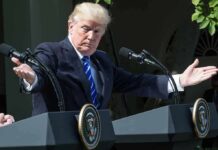


A newly elected U.S. senator put his hands on a reporter during a heated on-camera exchange outside a Detroit polling place — and the viral clip is now shaping the story more than the policies at stake.
Story Highlights
- Abdul El-Sayed argued a Sky News reporter’s questions were irrelevant to Michigan voters before placing both hands on his shoulders.
- James Matthews said U.S. officials owe answers to a global audience because American policy affects the world.
- Coverage focused on the physical contact and sharp tone, driving millions of views and quick backlash.
- The dispute spotlights a broader tug-of-war between political access, accountability, and viral media incentives.
What Happened Outside The Detroit Polling Place
Sky News correspondent James Matthews approached Senator-elect Abdul El-Sayed outside a Detroit polling site on Election Day. El-Sayed asked if Matthews was registered to vote in Michigan and, after hearing “no,” questioned why he should engage. During the back-and-forth, El-Sayed told Matthews to stop chasing him and twice put his hands on the reporter’s shoulders, as cameras rolled. Sky’s account described the moment as a misstep after a stressful contest and posted the video online.
Matthews pushed back that the race mattered globally and that Sky News serves an international audience. He argued that elected leaders in Washington have a duty to explain their positions to people abroad who are affected by U.S. policy. El-Sayed emphasized his focus on Michigan voters and dismissed the value of United Kingdom viewership for his campaign. The men repeatedly talked over each other as the exchange grew tense.
Why The Clip Went Viral So Fast
The physical contact and sharp tone became the headline in many outlets, outpacing any policy questions. Variety reported that versions of the clip drew millions of views on social platforms in hours, with commentary zeroing in on El-Sayed’s hands on Matthews’s shoulders and lines like seeking “zero” votes in the United Kingdom. That framing, once set, guided reactions from across the spectrum and fueled the sense that style overshadowed substance.
Research on modern news dynamics helps explain the surge. Scholars describe a constant tug-of-war between politicians who try to control messages and journalists who push for access and answers. Studies also show that anger, out-group conflict, and charged language spread faster online, rewarding short, emotional clips over nuanced context. That cycle can turn a 60-second clash into the defining narrative of an election night.
The Core Dispute: Voter Focus Versus Global Accountability
El-Sayed framed his stance around accountability to Michigan voters first. He stressed that a reporter without a Michigan vote did not drive his campaign or his obligations on Election Day. His campaign messaging has long centered on local concerns like healthcare costs, jobs, and union rights, which fits his reply that United Kingdom viewership does not decide Michigan elections. That line resonated with people who feel national elites and foreign media ignore local struggles.
Matthews countered that American power reaches far beyond state lines. He noted that a Michigan senator will vote on foreign policy and security issues that touch allies and markets abroad. From his view, democratic accountability includes explaining positions to a world audience that feels the impact of U.S. choices. He called the exchange disappointing and said leaders should foster trust by answering tough questions, even when the interviewer is not a constituent.
What We Know — And What Remains Unclear
Multiple outlets agree El-Sayed placed both hands on Matthews’s shoulders during the exchange. The available reports do not establish whether Matthews objected at that moment, whether the gesture reflected prior familiarity, or whether any formal complaint followed. Coverage differs on whether Matthews “chased” El-Sayed, with Matthews denying that description and Sky noting only that he encountered El-Sayed outside the polling place. The footage captures the contact but not the full lead-up.
A historic election win, followed by a heated exchange with a British journalist. Michigan Senator-elect Abdul El-Sayed clashed with Sky News correspondent James Matthews after questioning why he should answer questions from someone who could not vote in his state. The exchange… pic.twitter.com/t8Fc7ZykNV
— India Today Global (@ITGGlobal) November 5, 2026
The clip’s reach has real consequences. On the left and right, many Americans already believe powerful people dodge accountability while media chases clicks. This moment feeds both beliefs. Voters who feel ignored by distant elites see a politician drawing a firm line for local priorities. Viewers who want transparency see a public official shutting down questions and making physical contact. Either way, a short video now defines character, not a longer record of plans and votes.
Why It Matters For Public Trust
Incidents like this add to a growing trust gap. Citizens think leaders deflect and media sensationalizes, while daily costs, safety, and opportunity feel stuck. When a viral flash becomes the story, both institutions lose. Politicians look hostile to scrutiny. Journalists look more focused on theater than answers. That spiral helps neither side and leaves families with fewer facts to judge real trade-offs on policy, spending, and America’s role in the world.
Sources:
redstate.com, news.sky.com, issues.org, journals.sagepub.com
© patriotpostnews.com 2026. All rights reserved.