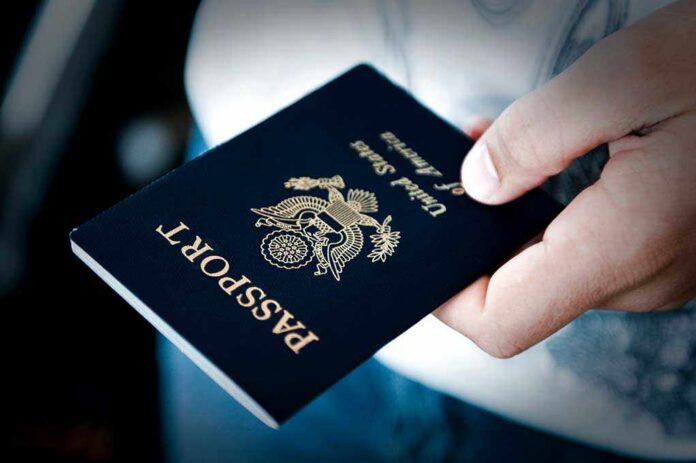
Republican senators say a loophole in U.S. surrogacy and birthright citizenship is being used to manufacture American passports for wealthy Chinese clients—potentially creating a long-term national security headache.
Quick Take
- Sens. Tom Cotton and Rick Scott asked Attorney General Pam Bondi to open a DOJ investigation into foreign-run—especially Chinese-owned—surrogacy agencies operating in the U.S.
- The senators cite reports of more than 107 Chinese-owned surrogacy agencies concentrated in Southern California and surrogate payments exceeding $50,000.
- The letter asks DOJ to evaluate potential crimes including immigration fraud, human trafficking, and foreign-agent registration violations.
- Florida lawmakers advanced a separate foreign-interference bill that includes restrictions tied to surrogacy and adoption involving adversarial nations, signaling state-level escalation.
What Cotton and Scott asked DOJ to investigate
Sen. Tom Cotton of Arkansas and Sen. Rick Scott of Florida sent a Feb. 26, 2026, letter urging Attorney General Pam Bondi to investigate surrogacy centers “operated by foreign nationals,” with particular focus on Chinese-owned agencies. The lawmakers asked for written answers by March 13 and pressed DOJ to determine how many such clinics operate nationwide, how many are controlled by Chinese nationals, and whether federal laws are being violated.
The senators’ stated concern is not merely the ethics of commercial surrogacy, but whether organized networks are leveraging uneven state rules to secure U.S.-born citizenship for children intended to be raised abroad. Their letter highlights alleged patterns of babies being born in the United States and then taken to China, a dynamic they argue warrants scrutiny from a national-security standpoint as well as from a child-welfare and law-enforcement perspective.
The “107 agencies” claim and what’s verified so far
Multiple reports and press materials tied to the senators repeat the claim that more than 107 Chinese-owned surrogacy agencies operate in Southern California alone. The same coverage also cites payments to American surrogate mothers of more than $50,000. Those figures are central to the argument that the practice is not isolated, but potentially industrial in scale. At this stage, the public record reflects allegations and media reporting, not DOJ findings.
The most dramatic example circulating in the reporting involves an alleged Chinese billionaire said to have fathered more than 100 U.S.-born male children who received U.S. passports. That claim has been widely repeated in coverage of the letter, but the underlying documentation has not been publicly released in the materials provided. The senators’ request effectively asks DOJ to separate verified facts from sensational claims and determine whether any organized criminal conduct exists.
Why birthright citizenship sits at the center of the controversy
U.S. birthright citizenship under the 14th Amendment means a child born on American soil is generally granted citizenship regardless of the parents’ nationality. Because surrogacy law is largely state-based, the arrangement can combine permissive state rules with a federal constitutional outcome: a U.S.-citizen child. That structure explains why the issue lands in a wider conservative debate over “birth tourism,” loopholes, and whether federal policymakers should tighten rules that can be exploited.
The senators frame their concern as a sovereignty issue: children born as U.S. citizens could later gain rights associated with citizenship, including voting eligibility and the ability to pursue certain positions, depending on future circumstances and existing legal restrictions. That framing resonates with voters who watched the Biden era prioritize globalist rhetoric and lax enforcement, because it treats the border-and-citizenship debate as more than economics—it becomes a question of national resilience.
Potential federal violations DOJ could examine
The letter asks DOJ to consider whether any conduct tied to these surrogacy arrangements implicates immigration fraud, human trafficking, and foreign-agent registration requirements. The foreign-agent angle matters because the senators’ public messaging suggests some agencies may be linked to Chinese state-owned entities or broader influence operations—an allegation that would require rigorous evidentiary proof. If DOJ proceeds, investigators would likely have to map ownership, contracts, money flows, and travel patterns.
Commercial surrogacy itself is not uniformly illegal in the United States, and the patchwork of state laws creates gray zones that sophisticated operators can exploit. That reality makes a federal probe consequential even beyond any single case: a DOJ review could clarify what triggers federal jurisdiction, what documentation is required, and whether coercion or deception is present in recruitment and contracting. For conservatives who want limited but effective government, clear enforcement lines matter.
States move as Washington weighs next steps
While DOJ’s response remains pending, Florida lawmakers advanced a foreign-interference bill that includes restrictions related to surrogacy and adoption involving adversarial nations such as China. The state-level push shows how quickly this issue is spreading beyond a single letter into legislative activity. It also underscores a practical reality: when federal law is unclear or slow-moving, states often attempt to plug perceived security gaps—sometimes with imperfect language.
Florida Democrats raised concerns in coverage that broad restrictions could have unintended consequences for adoptions, a critique that highlights the need for precise drafting and transparent criteria. For now, the main facts are straightforward: Senate Republicans have asked DOJ to investigate, Florida is testing tougher guardrails, and the claims about scale and intent will rise or fall on what investigators can verify with documents, testimony, and enforceable statutes.
Sources:
US Senators Seek Probe into Chinese Surrogacy Centres
Press Release: Cotton and Scott Request Investigation into Chinese-Owned Surrogacy Centers
Rick Scott demands DOJ crackdown on Chinese-run surrogacy clinics
Surrogacy, adoption ban added to Florida foreign interference bill
Florida and Arkansas senators push for DOJ probe into foreign-owned surrogacy agencies