A decade-long bug plague in an Arizona suburb shows how basic quality-of-life problems can fester when government infrastructure decisions collide with the daily lives of taxpayers.
Story Snapshot
- Residents in south Gilbert, Arizona, say dense midge-fly swarms keep families indoors and overwhelm homes, cars, and yards.
- Local reporting links the infestation to municipal water recharge basins that create ideal standing-water breeding conditions.
- Gilbert officials have used fogging, larvicide, monitoring, and even pausing recharge activities, but residents say relief is temporary.
- The “mutant” framing appears sensational; available reporting describes non-biting midges whose sheer numbers create the problem.
Why “Trapped at Home” Became the Defining Complaint
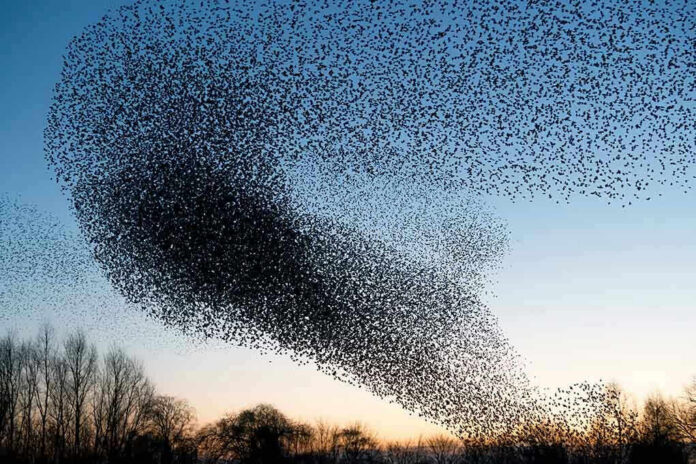
Residents living in south Gilbert near major cross-streets such as Ocotillo and Power have described summers dominated by thick clouds of midge flies. Accounts in local coverage say the insects get into mouths, eyes, noses, and even inside homes and cars, turning routine outdoor life into a chore. While the insects are generally described as non-biting, the volume can be so intense that families avoid barbecues, kids avoid playing outside, and windows stay shut.
The language of being “prisoners” reflects the lived effect more than a technical hazard: people feel pushed off their patios and out of their yards. That frustration resonates beyond one neighborhood because it looks like a familiar pattern—citizens paying taxes for services while feeling ignored when the service decisions produce obvious, persistent side effects. The available reporting also indicates this is not a one-season fluke; it has been described as a recurring issue for more than a decade.
The Suspected Source: Water Recharge Basins and Standing-Water Reality
Reporting summarized in the research ties the swarms to a town water recharge facility that keeps basins filled to replenish groundwater. Standing water is a known breeding environment for midge larvae, especially in warm conditions, so a water-management asset can also become a reliable insect factory for nearby homes. This creates a classic governance trade-off: water security matters in Arizona, but so does the right of families to enjoy their property without seasonal infestation.
Gilbert’s situation also underscores a broader political point that frustrates voters across the spectrum: even when government is doing something “important,” residents can experience it as unaccountable if they bear the costs. Conservatives typically argue that local government should prioritize practical outcomes and responsiveness, not bureaucratic explanations. Liberals often argue that public works should not externalize burdens onto specific neighborhoods. In this case, both critiques point toward the same demand—measurable performance, not excuses.
What Officials Have Tried—and Why Residents Say It Isn’t Working
The research describes municipal steps that include daily monitoring, fogging operations, larvicide use, and operational changes like pausing recharge activities, which reportedly reduced swarms in the short term. The problem is that these tools can manage symptoms without solving the underlying habitat conditions. Officials have also indicated full eradication may not be possible, a message that can sound like surrender to families who have dealt with the same cycle year after year.
That gap between temporary relief and permanent fix is where public trust breaks down. When residents hear that draining basins works but is “unsustainable,” they infer that the system is designed to protect the program rather than the people living next to it. The research available here does not provide detailed cost estimates, engineering alternatives, or timelines for long-term redesign, which limits what can be concluded about the best permanent option—only that current mitigation has not delivered durable results.
Beyond Gilbert: Similar Swarms, Same Public Confidence Problem
The research also points to other communities dealing with overwhelming insect activity, including Sparrows Point, Maryland, where local authorities reportedly sought state help for spraying and residents blamed heavy rains and delayed action. Even though each location has different conditions, the recurring theme is predictable: seasonal nuisances become political flashpoints when government looks slow, reactive, or unable to coordinate a clear plan. For many Americans, that reinforces the belief that institutions struggle with basic service delivery.
For conservative-leaning readers, the Gilbert story lands as more than a gross-out headline. It raises questions about whether public agencies are structured to protect residents first, whether decision-makers feel real pressure to produce results, and why families can face a decade of disruption without a permanent solution. For liberal readers, it still highlights an equity issue—who gets stuck living next to the downsides of public infrastructure. Either way, the common denominator is a government credibility test happening on a front porch.