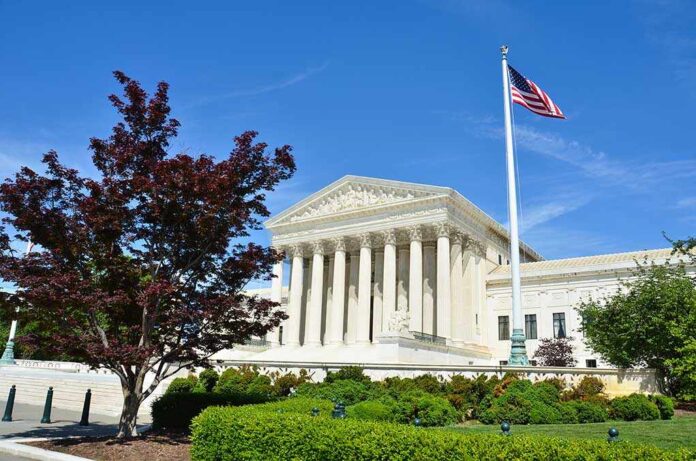
James Carville’s call for Democrats to pack the Supreme Court and create new blue states exposes a radical strategy that could fundamentally alter America’s constitutional balance.
Story Snapshot
- Democratic strategist James Carville urges his party to grant statehood to D.C. and Puerto Rico and expand the Supreme Court if they regain power in 2028.
- Carville frames these controversial moves as necessary to “save democracy” from Republican dominance.
- The proposals would break longstanding political norms, raising fears of further polarization and constitutional erosion.
- Internal Democratic divides and strong Republican opposition cast doubt on the viability and legitimacy of such power grabs.
Carville’s Radical “Pandora’s Box” Strategy Unveiled
James Carville, a veteran Democratic strategist, has openly advocated for the Democratic Party to pursue controversial and unprecedented actions should they regain full federal power in 2028. On his “Politics War Room” podcast and in subsequent media appearances, Carville called for granting statehood to both the District of Columbia and Puerto Rico and for expanding—packing—the Supreme Court. He explicitly described these measures as “opening Pandora’s Box,” arguing that such steps were necessary to counter what he perceives as entrenched Republican dominance and the erosion of democratic norms. This calculated strategy would require Democrats to use every lever of power, regardless of historical precedent or escalating controversy, to shift the balance of power in Congress and the judiciary.
These proposals come on the heels of recent Republican electoral victories, including President Trump’s popular vote win, which have solidified conservative control over the Supreme Court and much of federal policymaking. Carville’s statements have sparked a nationwide debate, with conservative commentators warning that such a maneuver would amount to a naked power grab, undermining the constitutional order and eroding the legitimacy of America’s highest court. The explicit focus on statehood for D.C. and Puerto Rico—both expected to elect Democratic senators—would immediately shift the balance of the Senate, potentially cementing a lasting progressive majority and weakening the influence of traditional, constitutionally grounded states.
Historical and Political Context: A Nation at a Crossroads
The idea of granting statehood to D.C. and Puerto Rico is not new. Democrats have long supported these efforts, citing representation for disenfranchised citizens, while Republicans have opposed them on constitutional and political grounds. The last serious attempt to expand the Supreme Court occurred under FDR in 1937 and failed, with “court packing” remaining a political taboo for decades. However, progressive activists began reviving these debates in recent years, especially as partisan conflict over judicial appointments and electoral rules intensified. Carville’s remarks come amid growing frustration among Democrats over structural disadvantages such as the Electoral College and Senate representation, and follow years of legislative efforts for statehood that have repeatedly stalled in Congress.
Within the Democratic Party, deep divisions remain. Moderates and progressives are split over whether to pursue such aggressive institutional reforms, with some warning that norm-breaking tactics could backfire, damaging the party’s legitimacy and threatening democratic norms for generations. Carville’s call to arms underscores a sense of desperation in the face of recent Republican successes, yet it also highlights the internal disunity and escalating rhetoric within the party.
Conservative Concerns: Constitutional Erosion and Escalation
Conservatives and Republican leaders have been quick to condemn Carville’s proposals as dangerous, illegitimate, and fundamentally destabilizing. Granting statehood to D.C. and Puerto Rico would not only shift the balance of power in Congress but would also set a precedent for politicizing the process of state admission. Expanding the Supreme Court—effectively “packing” it—would undermine its independence and credibility, leading to retaliatory measures by future majorities and threatening the judiciary’s role as a check on legislative and executive overreach. Many see these efforts as a direct assault on the constitutional framework that underpins American self-government, warning that such moves could unleash a cycle of escalation that erodes the very foundation of the republic.
Legal and constitutional scholars across the spectrum note that while these reforms may be technically constitutional, their implementation would be highly controversial and could trigger severe partisan backlash. The risks include increased polarization, long-term institutional damage, and a loss of public trust in government. For patriots concerned with preserving the Constitution, gun rights, and traditional American values, Carville’s “Pandora’s Box” approach represents a dangerous escalation in the ongoing battle over the nation’s future direction.
Impact and the Road Ahead
If enacted, these radical changes would have far-reaching consequences. In the short term, they would deepen political divisions, escalate intra-party debates, and generate intense media scrutiny. Over the long term, the addition of new states and the packing of the Supreme Court would permanently alter the nation’s political landscape, potentially sidelining states that respect constitutional principles and conservative values. For residents of D.C. and Puerto Rico, statehood would bring representation, but for millions of Americans, these moves would signal the triumph of partisan manipulation over principle. As Democrats weigh these controversial ideas and Republicans prepare to oppose them, the nation faces a defining test of its commitment to constitutional order and the rule of law.
Carville calls on Democrats to 'unilaterally' pack Supreme Court, create new blue states 'to save democracy' #Democrats #Supremecourt #Democracy #Bluestateshttps://t.co/0fRqz31Pu2
— Chet Kincaid (@ChetKincaid3) August 7, 2025
While Carville’s remarks have not been officially adopted as party policy, their mere suggestion reveals the high stakes and deep divides shaping the 2028 political landscape. Americans who believe in limited government, federalism, and the sanctity of the Constitution must remain vigilant against any effort—no matter how brazen—that seeks to upend the foundational structures of our republic for short-term political gain.
Sources:
RedState (2025-08-06): Carville’s podcast remarks and context
Fox News (2025-07-21): Carville’s essay on Democratic disunity
Hannity (2025-08-07): Carville’s call for “Pandora’s Box”
Fox News (2025-08-07): Carville’s plan for court expansion and statehood