Cuban forces opened fire on a Florida-registered speedboat carrying armed Cuban exiles, killing four and wounding six, in a deadly confrontation that raises serious questions about sovereignty, territorial rights, and the Trump administration’s evolving strategy toward the communist regime.
Story Snapshot
- Cuban coast guard killed four and wounded six passengers aboard a US-registered speedboat in Cuban waters on February 25, 2026
- Cuban President Miguel Diaz-Canel vowed to defend against “terrorist and mercenary aggression” following the deadly incident
- Passengers were armed with assault rifles, handguns, and Molotov cocktails; Cuba claims they intended terrorist infiltration
- Secretary of State Marco Rubio is investigating and suggested Cuba could be the next focus of Trump administration efforts in the region
Armed Infiltration Attempt Sparks Deadly Response
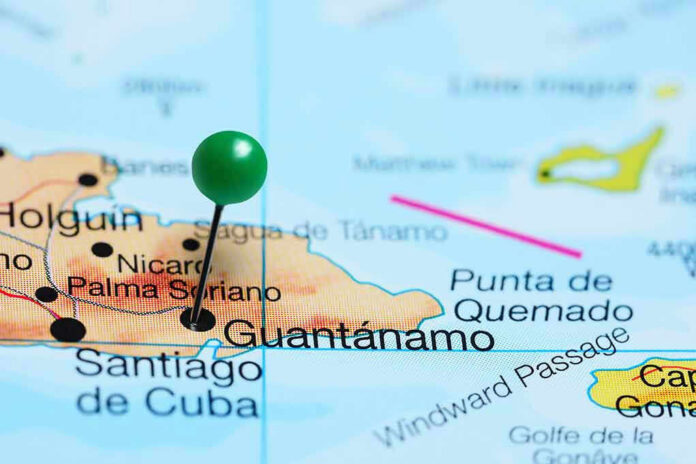
Cuban border guard troops intercepted a 24-foot Florida speedboat that entered Cuban territorial waters near Falcones Cay, Villa Clara Province, approximately 100 miles from Florida on February 25. According to Cuba’s interior ministry, a passenger on the speedboat fired first, wounding the Cuban commander. Cuban forces returned fire, killing four people and wounding six others. The passengers were Cuban residents of the United States armed with assault rifles, handguns, and Molotov cocktails. Six surviving passengers now in Cuban detention stated they intended to carry out an infiltration for terrorist purposes, with two previously wanted by Cuba for terrorism.
Diaz-Canel Issues Defiant Warning
Cuban President Miguel Diaz-Canel declared Thursday that Cuba will defend itself “with determination and firmness against any terrorist and mercenary aggression against its sovereignty and national stability.” The statement positions the communist regime as a victim defending against external threats, framing the speedboat confrontation as attempted infiltration rather than a law enforcement overreach. This rhetoric echoes historical patterns dating back to the failed 1961 Bay of Pigs invasion, when Cuban exiles attempted to overthrow Fidel Castro with US backing. Cuba continues to leverage sovereignty arguments while facing severe economic vulnerability and internal instability that make such infiltration attempts more likely.
Cuba will defend itself against any "terrorist aggression", President Miguel Diaz-Canel declared Thursday, a day after a deadly shoot-out between gunmen on a US-registered speedboat and Cuban coast guard vessels.https://t.co/4ZwTuCiyxr
— Jamaica Observer (@JamaicaObserver) February 26, 2026
Trump Administration Signals Potential Action
Secretary of State Marco Rubio stated the US embassy in Havana is investigating the incident and will “respond accordingly,” while suggesting Cuba might be the next focus of Trump administration efforts in the Western Hemisphere. The Department of Homeland Security and US Coast Guard are involved in the investigation. Vice President JD Vance acknowledged the White House is monitoring the situation but has limited details. Florida Republican officials, including Attorney General James Uthmeier, Congressman Carlos Gimenez, and Senator Rick Scott, are calling for investigation and accountability regarding the use of lethal force against a US-registered vessel. President Trump previously stated he is not contemplating military actions against Cuba, believing “Cuba will collapse on its own.”
Economic Crisis Fuels Regional Instability
Cuba is enduring a six-year economic crisis with government reports indicating economic growth has dropped by at least 15 percent, resulting in shortages of essential goods, rampant inflation, deteriorating services, and widespread power outages. The US has blocked virtually all oil shipments reaching Cuba, severely impacting the island’s fragile energy infrastructure. Venezuela previously provided approximately 30 percent of Cuba’s oil imports in exchange for thousands of Cuban medical professionals. Following US military operations in Venezuela in early 2026, Diaz-Canel denounced these actions as “state terrorism” and violations of international law, further escalating tensions across the Western Hemisphere under Trump’s reasserted American influence.
Unanswered Questions Demand Accountability
The incident creates multiple complications for US-Cuba relations and raises legitimate concerns about proportional use of force and territorial sovereignty. Six wounded passengers remain in Cuban detention, creating potential hostage or prisoner exchange scenarios that could further complicate diplomatic relations. Cuban authorities arrested another individual in the US who allegedly facilitated the armed infiltration and has confessed. While Cuba’s characterization of the incident as terrorist infiltration depends on government accounts without independent verification, the presence of assault weapons and Molotov cocktails on the speedboat supports concerns about the passengers’ intentions. Florida officials rightfully demand transparency and accountability, as American citizens deserve answers about what occurred in Cuban waters and whether additional infiltration attempts are being planned.
JUST IN – Cuban President says Cuba will defend itself against any ‘terrorist aggression’https://t.co/4OwTAcmtCr
— Insider Paper (@TheInsiderPaper) February 26, 2026
The deadly confrontation reflects broader geopolitical dynamics as the Trump administration weighs its approach toward communist regimes in the Western Hemisphere. Cuba’s severe economic vulnerability and reliance on military posturing create volatile conditions that could encourage further infiltration attempts or provoke disproportionate responses. As multiple federal and state agencies investigate, Americans should watch closely how the administration balances sovereignty concerns with accountability for the use of lethal force against a US-registered vessel. The incident underscores ongoing tensions rooted in decades of failed communist policies that have impoverished the Cuban people while enriching regime elites who maintain power through authoritarian control.
Sources:
Cuba will defend terrorist aggression president – Jamaica Observer
Cuba stands firm against external threats – Devdiscourse
Cuba Diaz-Canel denounces state terrorism against Venezuela – France24
Cuban forces kill four Florida – AOL