In a country fraught with corruption and political instability, Bulgaria’s prime minister resigned amid mass protests, leaving the nation at a pivotal crossroads.
Story Snapshot
- Prime Minister Rosen Zhelyazkov resigns after less than a year in office.
- Mass protests erupted over a controversial 2026 draft budget perceived as corrupt.
- President Rumen Radev supports protesters and calls for early elections.
- Bulgaria still set to join the eurozone on January 1, despite political turmoil.
Mass Protests and Political Upheaval
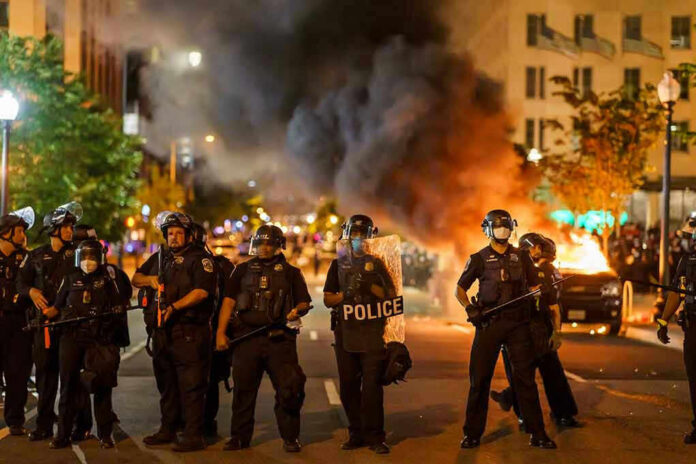
Bulgaria has been rocked by mass protests that compelled Prime Minister Rosen Zhelyazkov to resign on December 11, 2025. The resignation came just ahead of a scheduled no-confidence vote, reflecting the intensity of public discontent. Tens of thousands of Bulgarians took to the streets, protesting a draft 2026 budget seen as a cover for corruption. Despite the withdrawal of the draft budget, the protests continued, underscoring long-standing grievances against corruption and low trust in institutions.
President Rumen Radev publicly supported the protesters, demanding the government step down to pave the way for early elections. His stance placed additional pressure on the government, which had already been struggling with parliamentary opposition. This move by the president highlights a significant shift in political dynamics, where executive support for civic movements can decisively influence governmental stability.
Historical Context and Political Instability
Bulgaria, the European Union’s poorest member, has long struggled with corruption and political instability. Since 2020, the country has experienced seven snap elections, often triggered by anti-corruption protests and failed coalition governments. The cycle of political instability has eroded public trust and fostered an environment where street protests have become a central political tool. The GERB party, once dominant under former Prime Minister Boyko Borissov, continues to face accusations of corruption, which have fueled public anger and repeated demands for governmental accountability.
In late 2024, GERB topped the elections and formed a coalition government under Zhelyazkov in January 2025. However, this coalition proved fragile, collapsing under the weight of renewed protests. The draft 2026 budget, introduced in late 2025, was criticized as a mechanism to institutionalize corruption, leading to its withdrawal. Yet, this act did little to quell the public’s dissatisfaction, indicating deeper systemic issues at play.
The Impact of Eurozone Accession
Despite the political upheaval, Bulgaria is still expected to join the eurozone on January 1. This significant economic milestone brings both opportunities and challenges. On the one hand, eurozone membership promises financial integration and lower transaction costs. On the other, it raises concerns about economic stability and fiscal governance, especially in a country grappling with low institutional trust and political volatility. Analysts highlight that the combination of euro adoption and political unrest could exacerbate public frustration, given concerns over prices and cost of living.
The upcoming early elections, called for by President Radev, offer a chance to address these issues, though they also risk deepening voter fatigue. The political field remains fragmented, with GERB still a major player despite legitimacy challenges. The repeated anti-corruption mobilizations could lead to a realignment of political forces, potentially empowering new or existing parties that prioritize transparency and accountability.
Implications and Future Outlook
The resignation of Bulgaria’s government marks another chapter in a prolonged struggle for political reform and accountability. In the short term, the appointment of a caretaker government by President Radev will ensure continuity but with limited authority for substantive policy changes. The upcoming elections present an opportunity for political renewal, though the chronic instability of recent years suggests that forming a stable and effective government will be challenging.
Long-term, Bulgaria’s path will depend on its ability to address entrenched corruption and build public trust in institutions. Successful eurozone membership could bolster economic prospects, but only if accompanied by credible reforms. The ongoing civic engagement demonstrated by the protests indicates a public willing to hold its leaders accountable, a crucial factor in shaping Bulgaria’s future political landscape.