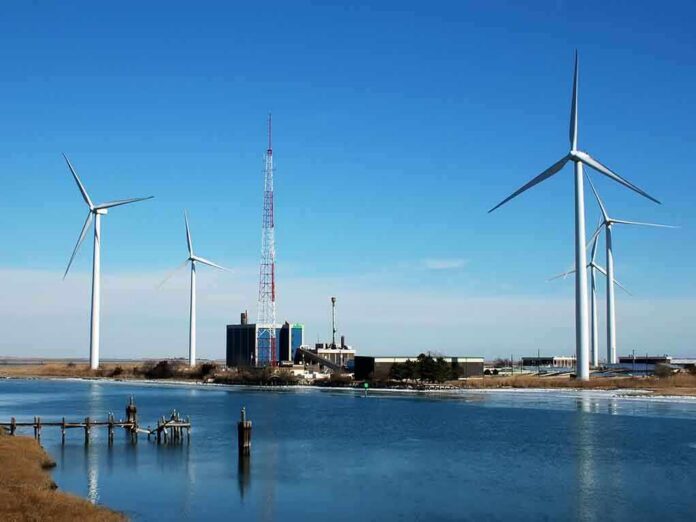
Over half a million balsa trees are illegally stripped from the Amazon rainforest every year to satisfy the global wind turbine industry’s insatiable appetite, exposing the green energy movement’s devastating environmental hypocrisy.
Story Snapshot
- Approximately 523,810 balsa trees are illegally logged annually from virgin Amazon forests to meet wind turbine blade demand, driven primarily by Chinese manufacturers
- Environmental Investigation Agency findings reveal exporters blend 10-70% illegal wood into supplies, with up to 50% of total production sourced from protected areas like Yasuní National Park
- Indigenous communities including the Achuar and Waorani face ecosystem destruction and social disruption as loggers invade their territories, echoing historical exploitation from rubber and oil booms
- The “green energy” balsa boom depleted sustainable plantations by 2020, forcing a shift to pristine rainforests that contradicts wind power’s environmental promises
Green Energy’s Dirty Secret in the Amazon
The wind turbine industry’s reliance on balsa wood has triggered an environmental catastrophe in the Amazon rainforest. Ecuador produces approximately 80,000 tonnes of balsa annually, with estimates suggesting 55% supplies wind turbine manufacturers. Each turbine’s three-blade set requires 10.5 cubic meters of balsa or roughly 40 trees. When sustainable plantation supplies are subtracted from total demand, calculations point to over 523,810 trees illegally harvested each year. This math exposes a troubling reality: the very technology promoted as environmentally friendly is fueling massive deforestation in one of Earth’s most critical ecosystems.
Chris Morrison: EXCLUSIVE: Half a Million Balsa Trees Illegally Logged in Amazon Rainforest Every Year to Feed Global Wind Turbine Demand https://t.co/28WpD9iv7M
— Climate Realists🌞 (@ClimateRealists) March 17, 2026
From Sustainable Plantations to Virgin Forest Destruction
Balsa wood historically came from managed plantations, valued for its lightweight strength that comprises roughly 7% of turbine blade mass. This system worked until 2018-2020 when global wind capacity surged 18% in 2021, driving Chinese turbine production from $8-12 billion to $16 billion by 2024. The demand spike exhausted legitimate plantation supplies, forcing loggers into virgin Amazon territories. Between March and September 2020 alone, approximately 20,000 trees were felled in Achuar territory. What followed was “balsa fever” as opportunistic cutters invaded protected areas along the Pastaza and Copataza Rivers, accessing remote balsa groves by canoe.
Weak Enforcement Enables Ecological Rape
The Environmental Investigation Agency’s 2024 report documented how Ecuadorian exporters openly rely on illegally sourced Amazon wood as an “immediate replacement” for depleted plantations. Traders admitted harvesting massive trees from Yasuní National Park despite knowing the criminal nature of operations. Peru’s forestry agencies registered 875 plantations theoretically capable of producing 371,866 cubic meters annually, yet expert Frank Rivero confirmed no mandatory inspections verify these sources. Licensed production in Peru reached only 13,393 cubic meters in 2021, revealing the gap filled by illegal operations. This represents government failure to protect natural resources and enforce basic conservation standards.
Indigenous Communities Bear the Brunt
Achuar and Waorani Indigenous peoples face devastation reminiscent of historical rubber and oil extraction booms. Illegal loggers bring drugs, alcohol, and prostitution into previously isolated territories, eroding traditional cultures. River pollution accompanies the clear-cutting, harming wildlife including turtles and parrots that depend on riverbank ecosystems. In some areas, 75% of balsa trees were removed during the 2020 rush. These communities lack political leverage against well-financed logging networks that operate with apparent impunity. The social disruption parallels past exploitation patterns, demonstrating how progressive environmental policies often harm the vulnerable populations they claim to protect.
The wind turbine supply chain’s dependence on illegal Amazon logging undermines every sustainability claim made by renewable energy advocates. While some experts note agriculture remains the primary Amazon deforestation driver, this provides no excuse for an industry marketing itself as environmentally responsible. Forest fragmentation and biodiversity loss represent long-term consequences that won’t reverse when alternative materials eventually replace balsa. The Chinese manufacturing boom continues driving demand, with production projected to reach $18 billion in 2025. This exposes a fundamental contradiction: policies pushed by climate activists are directly financing ecological destruction in protected rainforests, all while American families endure higher energy costs justified by environmental concerns.
Sources:
How the Wind Power Boom is Driving Deforestation in the Amazon – El País
Balsa Fever Brought Hope and Havoc in the Amazon: What Happened Next – Dialogue Earth
Wind Turbine Blades Are Made From Balsa – Science Feedback
U.S. Wind Turbine Timber Report – Environmental Investigation Agency