
Los Angeles just witnessed the federal government roll out the military hardware and muscle for an immigration sweep so massive, even longtime residents are questioning whether this is California or some banana republic where the Constitution takes a back seat to political theater.
At a Glance
- California National Guard troops and military vehicles deployed to protect federal immigration officers during a massive Los Angeles raid.
- Federal agents targeted MacArthur Park, a hotspot for illegal activity and a known stronghold of organized crime.
- Mayor Karen Bass and local officials were sidelined, sparking outrage over federal overreach and lack of state consent.
- Protesters clashed with law enforcement, further exposing the chasm between federal priorities and local “sanctuary” policies.
National Guard Deployed: California’s “Sanctuary” Fantasy Runs Headfirst Into Federal Reality
In a scene that should send chills down the spine of anyone who still believes in state sovereignty, roughly 90 California National Guard soldiers and a convoy of military vehicles descended on Los Angeles’s MacArthur Park as federal immigration agents launched one of the largest raids in the city’s recent history. This wasn’t just a few ICE agents knocking on doors. We’re talking 17 Humvees, cargo trucks, and ambulances fanned out around a city park, all to back up federal officers tasked with enforcing laws Los Angeles politicians seem to think don’t exist.
The message from Washington, D.C. couldn’t be clearer: if local leaders won’t uphold federal law, the federal government will do it for them, whether they like it or not. The National Guard’s mission? Establish a security perimeter, protect federal property, and—thanks to federal activation under Title 10—detain anyone who threatened the operation. Governor Newsom, for all his huffing and puffing, had zero say in the deployment once the Guard was federalized. Local officials could only watch as the operation unfolded, their authority as hollow as the promises made to “protect” illegal immigrants from the consequences of breaking U.S. law.
Federal Authority Collides With Local Resistance
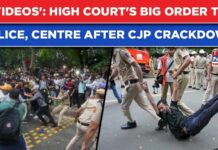
The raid itself was a show of force designed to root out criminal activity in an area notorious for MS-13 and gang operations. Federal agents arrived with armored vehicles and mounted Border Patrol officers, making it clear that these weren’t your run-of-the-mill traffic stops. Between June and July, more than 1,600 arrests had already taken place in Los Angeles as the Trump administration’s latest crackdown shifted into high gear. But as soon as the operation kicked off, protesters showed up, slashing tires, throwing objects at vehicles, and—of course—amplifying the narrative that enforcing immigration law is somehow “inhumane.”
Mayor Karen Bass, never one to miss an opportunity to grandstand, arrived in person to demand an end to the operation. She condemned the use of the National Guard without state consent and called the raids “inhumane,” as if the criminals running wild in MacArthur Park are suddenly model citizens the moment ICE arrives. Activist groups and legal observers lined the sidewalks, shouting through megaphones and warning residents. But the reality is simple: federal law trumps local posturing every single time, and the spectacle of city officials powerless to stop the operation only underscores the futility of so-called sanctuary policies.
Constitutional Questions and the Cost of Political Gamesmanship
The use of federalized National Guard troops for immigration enforcement is nearly unheard of—and for good reason. It’s a drastic measure, usually reserved for real emergencies, not political standoffs. But when local politicians refuse to cooperate with federal law, it leaves the federal government little choice. The Department of Defense emphasized that the Guard’s role was limited to protecting officers and securing the perimeter, not conducting arrests. Still, the optics are jarring: military vehicles in the heart of Los Angeles, while city leaders wring their hands and protest from the sidelines.
For the immigrant communities caught in the crossfire, the short-term impact is fear and disruption. Families were separated, children witnessed the chaos, and residents faced the inevitable trauma of seeing armed troops on their streets. But let’s not kid ourselves—this is the direct result of years of political gamesmanship, where local governments openly defied federal law, prioritized the feelings of activists over public safety, and turned a blind eye to the criminal networks flourishing in their own backyards.
Political Fallout and the Road Ahead
This operation has already triggered a political firestorm. Trust between immigrant communities and law enforcement, already threadbare, is taking another beating. Legal challenges are sure to follow, with city and state officials vowing to fight the use of the National Guard in federal immigration enforcement. Meanwhile, constitutional scholars are debating the precedent set by activating the Guard without state consent—something that could reshape the relationship between local and federal government for years to come.
Let’s be clear: federal law is not a suggestion, and when states refuse to do their part, the Constitution gives the federal government the tools to enforce the law. The real tragedy is that it took this level of escalation—military vehicles on city streets—to remind everyone that political agendas don’t override the rule of law. Maybe next time, Los Angeles officials will remember that their first duty is to the safety and security of all citizens, not just the ones who make for a good photo op at a protest.