Unidentified drones slipping over a high-security Army post just two miles from the White House has exposed a chilling reality: Washington’s most protected zip codes aren’t as protected as Americans are told.
Quick Take
- Multiple unidentified drones were detected over Fort Lesley J. McNair in Washington, D.C., a high-security Army installation.
- The base houses Secretary of State Marco Rubio and Defense Secretary Pete Hegseth, prompting a White House emergency review and tightened security.
- Officials discussed relocating the cabinet members, but both remained at their residences as of March 19, 2026.
- The drone origin and intent remain undetermined, even as U.S. forces operate under elevated alert tied to the U.S.-Iran conflict.
Drones Over Fort McNair Trigger Emergency Review
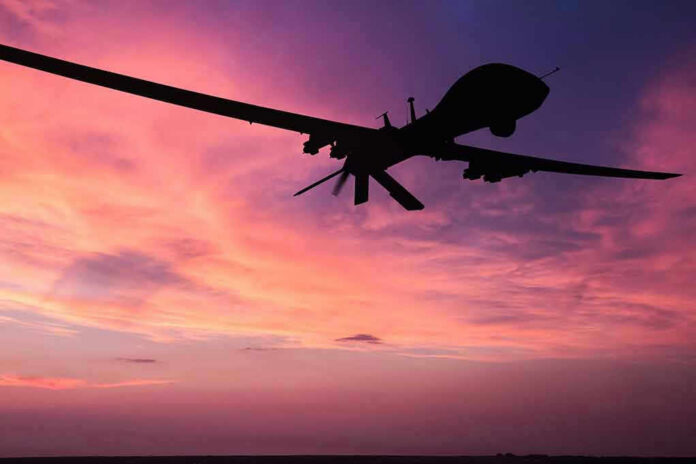
U.S. officials detected multiple unidentified drones over Fort Lesley J. McNair, a sensitive Army base in Washington, D.C., setting off a rapid security response and a White House review. Reporting indicates the drones appeared on a single night within the last 10 days, but officials have not publicly identified who flew them or why. The lack of clear attribution is central to the concern because it complicates deterrence and accountability.
Fort McNair is not a generic facility; it is a high-security installation tied to senior military leadership and the National Defense University. The report that top cabinet officials live there raised the stakes immediately, because the same event that might be treated as nuisance activity over a rural base becomes a national-security problem in the nation’s capital. Officials increased surveillance and monitoring after the incident, but technical details about the drones were not disclosed.
Why Rubio and Hegseth’s Residence Location Matters
Secretary of State Marco Rubio and Defense Secretary Pete Hegseth reside at Fort McNair, and officials weighed relocating them after the drones were spotted. As of the latest reporting, neither had moved, even though the discussions occurred. The government’s caution about movements is consistent with operational security practices, and the Pentagon’s top spokesman publicly pushed back on reporting that could help adversaries track senior leaders.
Pentagon Chief Spokesman Sean Parnell declined to discuss the incident’s specifics, stressing that the department cannot comment on the secretary’s movements for security reasons and criticizing reporting about such movements. The State Department did not respond to requests for comment, and no formal Trump administration public statement was cited in the available reporting. That leaves Americans with a familiar pattern: high concern behind the scenes, limited detail in public.
Capital-Area Vulnerabilities: Geography, Buffers, and Public Disclosure
Fort McNair’s location amplifies the incident. It sits roughly two miles from the White House and Capitol Hill, and reporting noted it lacks the same safety buffer as other bases in the capital region. That matters in a drone era, because standoff distance is a basic layer of physical protection. When a small aircraft can cross a perimeter quickly, short reaction windows expose any gaps in detection, identification, and response.
Another factor is that media reports previously identified where Rubio and Hegseth live, with coverage in 2025 said to have publicized their residences on the base. The research does not prove cause-and-effect between that reporting and the drone incident, but it does highlight a recurring tension: transparency versus operational security. Conservatives who value strong national defense will recognize that broadcasting sensitive locations can create avoidable risk.
U.S.-Iran Conflict Raises the Stakes, Even Without Attribution
The drone breach unfolded amid elevated military alert conditions connected to U.S. and Israeli operations against Iran that began on February 28, 2026, according to the cited reporting. That context does not establish Iranian involvement in the Fort McNair incident, and officials have not attributed the drones to any foreign government. Still, the timing explains why the White House treated the incident as more than a curiosity and convened an emergency review.
Unknown Drones Breach D.C. Military Base Housing Rubio, Hegseth During Threat Alerthttps://t.co/Z2jxbZjzIG
— RedState (@RedState) March 19, 2026
Key uncertainties remain. Reports describe “multiple” drones but do not specify how many, what type, or whether any were intercepted. The origin and intent are officially undetermined, and the available sources provide no independent verification beyond officials briefed on the matter. Limited public detail may be prudent for security, but the unresolved questions underscore why counter-drone readiness, hardened perimeters, and disciplined information practices are becoming baseline requirements in a modern threat environment.
Sources:
Threat To Rubio & Hegseth? US Base Under Lockdown After Drone Spotted Over Military Facility In DC
US detects drones over base where Rubio, Hegseth live, Washington Post reports
Unidentified drones detected over US Army base housing Rubio and Hegseth: Report
Drones Seen Over US Army Base Where Rubio Lives Amid Iran War: Report
Drones detected over base where Rubio and Hegseth live, report says