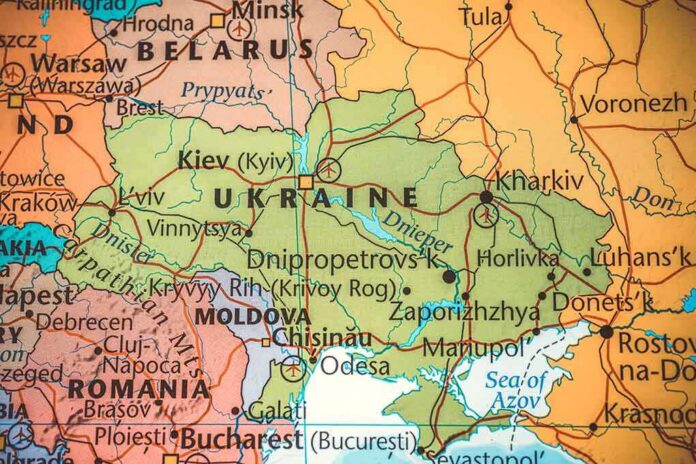
Ukraine is now exporting its hard-won battlefield expertise to America, reversing years of dependency as the Trump administration turns to Kyiv for help countering Iranian drone threats in the Middle East.
Story Snapshot
- President Zelenskyy confirmed the U.S. requested Ukrainian assistance to combat Iranian Shahed drones attacking American interests in the Middle East
- Ukraine developed superior anti-drone technology and tactics after years defending against Russian-deployed Iranian Shaheds since 2022
- Pentagon and Gulf states are in active talks to purchase Ukrainian interceptor systems, marking a dramatic role reversal in U.S.-Ukraine relations
- The request follows Iranian retaliation strikes using Shahed drones that penetrated existing defenses in Dubai, UAE, Qatar, and Saudi Arabia
Ukraine’s Hard-Won Expertise Now American Asset
Ukrainian President Volodymyr Zelenskyy announced on March 5, 2026, that the United States specifically requested support from Ukraine to counter Iranian Shahed drones targeting American interests across the Middle East. Zelenskyy stated he instructed Ukrainian officials to provide necessary resources and specialists, noting that “Ukraine helps partners who help ensure our security.” This marks an extraordinary shift from Ukraine as aid recipient to technology exporter, particularly under the Trump administration which previously criticized billions in Ukraine assistance. The request followed escalating Middle East tensions after U.S. and Israeli strikes killed Iranian Supreme Leader Ayatollah Ali Khamenei.
Battle-Tested Technology Outperforms American Systems
Ukraine’s superiority in countering Shahed drones stems from relentless Russian attacks using Iranian-supplied models since 2022. Ukrainian firms like Wild Hornets developed specialized interceptors including the STING drone system, reshaping defense tactics against cheap, mass-deployed threats that overwhelm traditional missile defenses. Reports indicate more Patriot missiles were expended in the Middle East during three days of Iranian attacks than Ukraine received throughout the entire conflict since 2022. The Pentagon and Gulf states are now pursuing Ukrainian interceptor technology through active procurement talks, acknowledging battlefield experience trumps theoretical engineering. This represents a stunning validation of Ukrainian innovation born from necessity.
Media Confusion Reveals Misplaced Credit
Fox News inadvertently highlighted Ukraine’s technological edge by mislabeling Ukrainian Shahed intercept footage as American high-tech arsenal destroying Iranian drones on March 5. Wild Hornets, the Ukrainian manufacturer, publicly corrected the attribution, underscoring how mainstream media failed to recognize where effective counter-drone technology actually originated. The incident reflects broader confusion about which nation leads in practical drone warfare solutions. Meanwhile, the U.S. has been reverse-engineering captured Iranian drones for Middle East deployment, a tacit admission that American systems lagged behind threats Ukraine already mastered. This media error exposes the gap between American military reputation and Ukrainian battlefield reality.
Strategic Leverage in Complex Negotiations
Zelenskyy attached conditions to expanded Middle East assistance, suggesting Gulf states leverage their economic ties with Russia to pressure Putin toward a ceasefire in Ukraine within one to two months. This sophisticated diplomatic play positions Ukraine’s drone expertise as bargaining leverage across multiple conflicts simultaneously. However, Russia maintains contact with Iran and Gulf nations while rejecting ceasefire proposals, making Zelenskyy’s gambit uncertain. The Financial Times reported Pentagon discussions with Gulf states to procure Ukrainian systems, indicating American willingness to engage despite strained Trump-Zelenskyy relations since their contentious April 2025 White House meeting. Ukraine’s transition from aid dependency to indispensable technology provider fundamentally alters power dynamics, though whether this translates to meaningful ceasefire progress remains doubtful given Putin’s track record.
Zelenskyy said the US asked Ukraine for support in fighting off Iran's Shahed drones, so he's sending experts their way
Source: Business Insider https://t.co/MmNPu4gt8Y— Dedrick Shabazz (@DedrickHarris3) March 6, 2026
The development validates conservative skepticism about bloated defense spending producing inferior results compared to frontline necessity driving innovation. Ukraine’s battlefield-forged solutions now protect American interests more effectively than systems costing taxpayers billions, demonstrating that real-world testing surpasses Pentagon procurement bureaucracy. This represents pragmatic cooperation under Trump, prioritizing American security over ideological grudges, while exposing how previous administrations overlooked cost-effective alternatives. The broader implication warns that Iranian Shahed proliferation threatens global stability, requiring agile responses beyond traditional military-industrial approaches that Ukraine has already pioneered under fire.
Sources:
Zelenskyy says US requested assistance to combat Iranian drones
Ukraine offers help to Middle East to stop Iran’s Shaheds drones but for a price
Better Late Than Never: US and Allies Race Toward Ukrainian Counter-Shahed Tech