
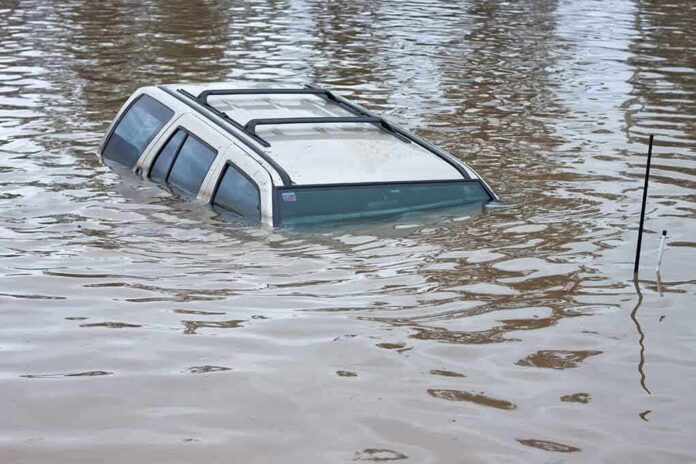
Floodwaters rose higher than ever recorded across Alaska’s remote Yukon-Kuskokwim Delta, leaving behind not just battered villages and splintered roads, but the unsettling question: how many more times can these communities endure disasters supercharged by a changing climate?
Story Snapshot
- Remnants of Typhoon Halong triggered Alaska’s most severe flooding in decades, displacing over 1,400 people and destroying vital infrastructure.
- Rescue teams scrambled to find missing residents and evacuate entire villages as water levels shattered old records by nearly two feet.
- Remote communities, many accessible only by air or water, faced unique challenges in both emergency response and long-term recovery.
- Experts warn that storms like Halong, once rare, are becoming more frequent and severe due to warming Arctic conditions.
Flooding on an Unprecedented Scale: The Anatomy of a Disaster
Communities scattered across western Alaska’s Yukon-Kuskokwim Delta awoke to a nightmare as the remnants of Typhoon Halong collided with the coastline on October 12, 2025. In Kipnuk, floodwaters surged to 6.6 feet above normal high tide, nearly two feet higher than the previous record. Roads vanished beneath churning brown water; runways and small airports, lifelines for these isolated villages, became impassable. Over 50 critical infrastructure sites, including roads and airports, sustained damage, cutting off access and complicating every rescue effort. For many, the only way out was by helicopter or boat, if the weather allowed.
Alaska’s State Troopers and National Guard rushed in, executing dozens of rescues as reports of missing residents multiplied. With entire neighborhoods under water, more than 1,400 people sought refuge in hastily established shelters. Tragically, one resident has been confirmed dead. The crisis echoed the devastation wrought by Typhoon Merbok in 2022, but local organizations warn that Halong’s destruction may be even greater, both in scale and in the lasting scars it leaves on these communities.
Remote Realities: Why Western Alaska Is Uniquely Vulnerable
The Yukon-Kuskokwim Delta is not just remote—it is a sprawling region where most villages are unconnected by roads, their only links to the outside world being airstrips and seasonal river traffic. When disaster strikes, even the best-prepared agencies face logistical nightmares. Preceding storms had already saturated the ground and swollen the rivers, leaving the region primed for catastrophe. As Halong’s remnants made landfall, hurricane-force winds and a massive storm surge battered the coastline, overwhelming defenses that were never designed for storms of this caliber.
For Indigenous communities in particular, the flood was not just a physical disaster but a cultural one. Homes, subsistence resources, and centuries-old ways of life are at risk whenever the land itself is transformed overnight. State and federal agencies—the Alaska Department of Transportation, Division of Homeland Security, and the National Guard—coordinated response efforts, but the region’s sheer isolation meant that some villages waited hours, even days, for help to arrive. Local leaders and tribal councils, often the first line of defense, juggled limited resources and communication breakdowns as they fought to keep their people safe.
From Crisis to Recovery: What Comes Next?
As floodwaters receded, the immediate danger gave way to a grinding recovery. All missing persons were accounted for by October 14, but the toll was staggering: over 1,400 people displaced, more than 50 airports and roads damaged, and a region thrown into chaos. Emergency shelters remained full, and the challenge of rebuilding loomed large. For families forced out of their homes, the timeline to return remains uncertain, especially with winter closing in fast.
As the remnant circulation of Typhoon Halong makes landfall on the southern coast of the Seward Peninsula, it is still causing significant impacts across the West Coast. Here is updated forecast information for various coastal communities. #akwx pic.twitter.com/HzBrtukgDT
— NWS Fairbanks (@NWSFairbanks) October 12, 2025
Experts at the Alaska Center for Climate Assessment and Policy emphasize that storms like Halong are not outliers but urgent warnings. Warming Arctic waters are fueling stronger, more frequent extratropical cyclones, raising the stakes for communities already on the front lines of climate change. Local nonprofits and Indigenous leaders are calling for a fundamental shift in disaster preparedness and infrastructure investment. Without stronger levees, resilient roads, and culturally informed emergency plans, the next storm may find these communities no more prepared than the last.
Climate and Policy: The New Normal for Alaska’s Coast
Economic, social, and political impacts of Halong’s flood ripple far beyond the immediate loss of homes and roads. Regional air travel, the backbone of rural Alaska, remains disrupted, while local businesses face months of lost revenue. The trauma of displacement and loss echoes through tight-knit villages, testing the resilience not just of infrastructure but of community bonds. Politicians and policymakers now face renewed scrutiny over disaster readiness and climate adaptation. Calls for upgraded infrastructure, better forecasting, and more robust emergency resources grow louder after each disaster, yet progress remains slow.
The scientific consensus is clear: Alaska’s coastal storms are becoming more severe, and the window for action is shrinking. For the residents of the Yukon-Kuskokwim Delta, the question is no longer whether another Halong will come, but when—and whether they will be ready.
Sources:
Alaska Center for Climate Assessment and Policy (ACCAP)