

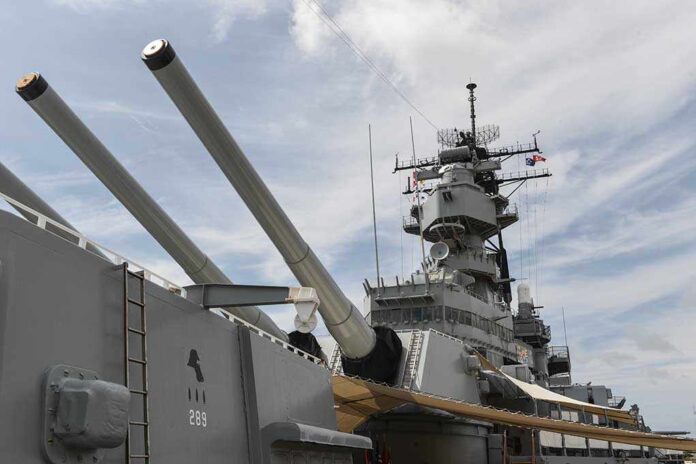
The return of Russia’s massive nuclear battlecruiser, Admiral Nakhimov, after 28 years, sends a bold signal to NATO with its formidable arsenal.
Story Highlights
- Admiral Nakhimov returns to service after 28 years, marking a significant milestone in Russian naval modernization.
- The battlecruiser is now the largest non-aircraft carrier surface combatant in the world.
- Modernization includes new missile systems and electronic warfare capabilities.
- Sea trials have commenced in the White Sea, with further testing planned in the Barents Sea.
Russia’s Naval Power Play with Admiral Nakhimov
After nearly three decades of dormancy, the Russian Navy’s Admiral Nakhimov has reemerged, now embarking on sea trials in the White Sea. The battlecruiser, originally commissioned during the Soviet era, symbolizes Russia’s commitment to revitalizing its naval capabilities. The ship’s modernization involves significant upgrades to its weaponry, sensors, and propulsion systems, positioning it as a strategic asset amid rising tensions with NATO in the Arctic and North Atlantic regions.
The Admiral Nakhimov is a formidable presence due to its size and advanced capabilities. As the largest non-aircraft carrier surface combatant globally, the battlecruiser boasts enhanced missile systems, including the S-300F Fort and potentially the Poliment-Redut air defense system. These advancements serve to bolster Russia’s naval strength, signifying a renewed emphasis on blue-water naval power and military modernization.
The Historical Context and Strategic Importance
Conceived in the 1970s, the Kirov-class battlecruisers were designed to counter NATO’s naval forces. However, post-Soviet budget cuts led to the mothballing of most of these ships in the 1990s. The decision to modernize Admiral Nakhimov reflects Russia’s strategic focus on restoring its naval dominance. The ship’s return is part of a broader military modernization program, despite technical and financial hurdles over the years. This initiative underscores Russia’s intent to maintain a formidable presence in strategically significant waters.
Notably, the Admiral Nakhimov is equipped with upgraded radar, sonar, and combat information systems, further enhancing its operational capabilities. The vessel’s reactivation not only demonstrates Russia’s technical prowess but also serves as a geopolitical statement amid ongoing international tensions. Its presence is likely to influence NATO’s naval strategies and deployment in response to Russia’s assertive maritime posture.
Implications and Future Outlook
The Admiral Nakhimov’s return to service has both immediate and long-term implications. In the short term, it enhances the Russian naval presence, particularly in the Arctic and North Atlantic, while potentially altering the regional naval balance. Long-term, this move could catalyze similar modernization efforts by other naval powers as they respond to Russia’s enhanced capabilities. Economically, the project has invigorated Russia’s defense industry, potentially leading to further contracts and technological advances.
The ship’s reactivation is a testament to Russia’s military ambitions, projecting power to both domestic and international audiences. While some analysts view this as a strategic signal, others question the cost-effectiveness and practicality of revamping such large, complex vessels. Despite these debates, the Admiral Nakhimov stands as a unique Cold War relic, now poised to navigate the challenges of 21st-century naval warfare.