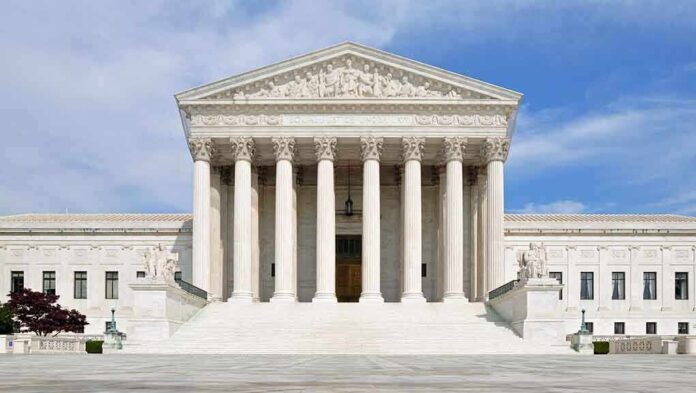
Six Supreme Court justices can now decide which identity travels with you, even as the rest of the world moves toward recognizing more than two genders.
Story Overview
- The Supreme Court’s 6-3 ruling upholds Trump-era passport sex marker restrictions during ongoing litigation.
- Transgender and non-binary Americans lose the right to passports matching their gender identity or using an “X” marker.
- The decision reverses Obama and Biden administration policies that allowed gender marker changes and non-binary options.
- Advocacy groups pledge continued legal battles, warning of increased discrimination and travel barriers.
Supreme Court Restores Birth Certificate Sex Rule for Passports
On November 6, 2025, the US Supreme Court ruled 6-3 to allow enforcement of a Trump administration policy requiring all US passports to list the sex assigned at birth, as shown on the applicant’s birth certificate. This blocks transgender and non-binary Americans from obtaining travel documents reflecting their gender identity or an “X” marker for non-binary status. The ruling does not resolve the underlying lawsuits but permits the policy to take effect while litigation proceeds.
US supreme court lets Trump block passport sex markers for trans and non-binary people https://t.co/RqhicaaTKe
— Shirley Jenkins (@YourHoodLawyer) November 6, 2025
The policy reverses changes established in 2010 and expanded in 2021 that let people change passport sex markers with medical approval or select an “X” for non-binary gender. The Trump administration, citing concerns over document consistency and security, reinstated the birth certificate requirement immediately after returning to office on January 20, 2025. Legal challenges began quickly, with advocacy groups arguing the policy violates constitutional protections and endangers vulnerable populations.
Who Decides Your Identity: Clash of Civil Rights and Government Power
The Supreme Court’s decision thrusts federal identity documentation policy into the spotlight, forcing a national reckoning over who controls the legal definition of sex and gender. For affected Americans, the implications are direct and personal: passports must now display the sex assigned at birth, regardless of medical transition or personal identification. Advocacy groups, including the ACLU, have condemned the move as discriminatory, arguing it increases risk of harassment and restricts freedom of movement.
Conservative legal scholars support the decision, citing statutory requirements and the need for uniformity in federal documents. The State Department, tasked with implementing the change, has begun denying requests for gender marker changes unless applicants can provide amended birth certificates—an impossibility for many. The power dynamic places executive authority and judicial interpretation above individual autonomy, leaving civil rights advocates to challenge the policy through the courts.
Ripple Effects: Travel, Employment, and International Relations
Short-term consequences include immediate restrictions on passport changes, leaving transgender, non-binary, and intersex Americans vulnerable to discrimination and travel difficulties. Advocacy organizations must redirect resources to legal fights, while affected individuals face barriers in travel, employment, and daily identification. The travel and tourism industries may see reduced participation from marginalized groups, and US policies now conflict with more inclusive international standards.
Long-term, the Supreme Court’s decision could normalize restrictive documentation policies and set precedent for further rollbacks of transgender rights. The ruling intensifies the national debate over federal authority and civil liberties, with potential for broad social and economic impacts. As litigation continues in lower courts, the outcome will shape the future of identity in America—and whether government or individual determines the sex marker on a passport.
Sources:
Politico: Supreme Court Transgender Case Passports Ruling