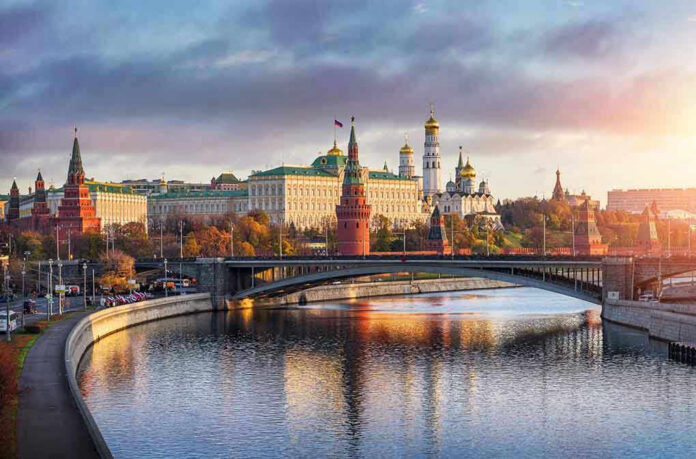
For the first time in nearly two decades, Russia’s Victory Day parade rolled through Red Square without a single tank or missile launcher — a striking symbol of how the Ukraine war is grinding down the Kremlin’s military machine and propaganda apparatus simultaneously.
Story Highlights
- Russia stripped tanks and heavy weapons from its May 9 Victory Day parade for the first time in roughly 20 years, citing Ukrainian long-range strike threats.
- Ukrainian President Volodymyr Zelensky signed a decree ordering his military not to attack the parade, trading restraint for the return of 1,000 detainees on each side.
- Analysts and regional officials suggest equipment shortages from battlefield losses — not just security fears — contributed to the scaled-back display.
- Moscow imposed internet and communications blackouts during the event, and Putin traveled in an armored vehicle alone — measures critics called an “iron curtain 2.0.”
No Tanks on Red Square for the First Time in Two Decades
Russia’s annual Victory Day parade on May 9, 2026, proceeded without the armored columns and ballistic missile launchers that have defined the event for generations. The Kremlin cited a wave of Ukrainian long-range strikes on Russian energy facilities in recent weeks as the reason for ramping up security and removing military hardware from the procession — the first time heavy weapons have been absent from the parade in nearly 20 years. Approximately 14,000 troops still marched across Red Square as Vladimir Putin looked on.
Putin used the occasion to voice confidence in Russia’s eventual victory in Ukraine, delivering remarks consistent with the Soviet-era triumphalism that has anchored his political identity for 25 years. However, much of the military equipment typically showcased was replaced with pre-recorded footage and, according to observers, recycled video from prior years’ parades — raising pointed questions about what Russia’s armed forces actually have left to display after more than four years of grinding warfare.
Ukraine’s Calculated Restraint — and a Prisoner Exchange
Zelensky signed Decree 374/2026 on May 8, 2026, formally ordering Ukrainian forces not to strike Red Square during the parade. His reasoning was blunt: “Red Square is less important to us than the lives of Ukrainian prisoners who can be returned home.” The decree enabled a detainee swap — 1,000 prisoners released on each side — as part of a brief ceasefire brokered with United States involvement under President Trump’s administration. The exchange represented a rare moment of tangible diplomatic progress amid an otherwise stalemated conflict.
The ceasefire itself proved fragile. According to reporting, the unilateral Russian ceasefire collapsed almost immediately after taking effect, with both sides launching major strikes. Russia’s Defense Ministry released videos of attacks on Ukrainian positions specifically to signal it had “not lost momentum” — an acknowledgment that the optics of a scaled-back parade required a counter-narrative of battlefield aggression.
Fear, Logistics, or Battlefield Losses — What’s Really Behind the Cutback?
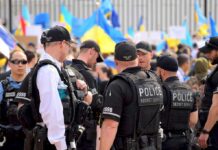
The Kremlin’s official explanation centers on security threats from Ukrainian drones and missiles. Russia’s Defense Ministry had warned before the event that any Ukrainian disruption would trigger a “massive strike on the heart of Kyiv,” and urged foreign diplomats to evacuate the Ukrainian capital ahead of May 9. Internet and communications blackouts blanketed Moscow during the parade, and Putin was driven alone in an armored Mercedes after the event — precautions consistent with genuine concern about a strike.
🇺🇦 Zelensky signed Decree 374/2026 excluding Moscow's Red Square from Ukrainian strike plans for today's Victory Day parade, from 10 a.m. Kyiv time. The Kremlin's response: Russia "does not require anyone's permission" to hold the parade, per OSINTdefender.
— Nivel Global Media (@NivelGlobalNews) May 9, 2026
But security fears tell only part of the story. Maria Piechowska, a researcher at the Polish Institute of International Affairs, noted that transporting heavy vehicles and missiles to Moscow just for a parade has become “logistically difficult” — a polite way of describing a military stretched thin by four-plus years of attrition warfare. An anonymous Volgograd government source confirmed that “there won’t be any modern equipment,” adding that the decision came from Moscow. Eleven Russian regions canceled public Victory Day celebrations entirely. Whether the primary driver is Ukrainian strike capability, equipment losses in combat, or the sheer logistical burden of a prolonged war, the result is the same: Russia’s most important propaganda showcase looked noticeably diminished — and the world noticed.
Sources:
[1] Moscow to hold scaled-back Victory Day parade as Ukraine truce kicks in
[2] Why Moscow is afraid this Victory Day
[3] Russia Scales Back Victory Day Parade as Ukraine War Shapes Moscow Security Calculus
[4]
[5]
[6]
[7] Russia Readies for Dialed-Down Victory Day Spectacle as Drones Fly and Millions Go Offline
[8] Putin denounces Nato at scaled back Victory Day parade
[9]
[10]
[11] Several Regions in Russia Cancel Victory Day Parade Over Security …