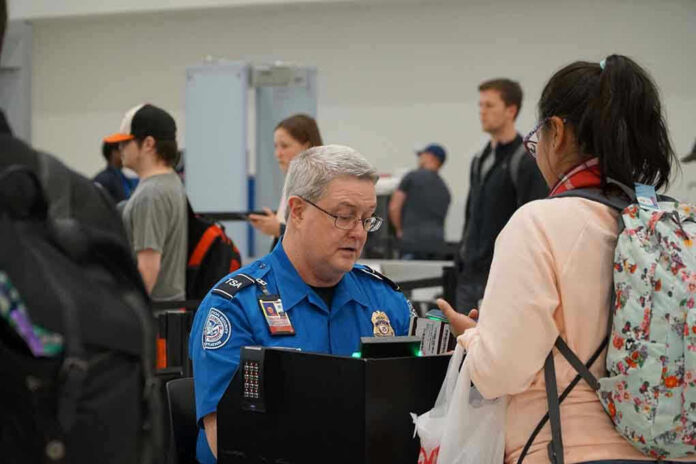
DHS’s shutdown whiplash briefly put millions of law-abiding, pre-vetted travelers on notice—then reversed course overnight, exposing how quickly “emergency” government can turn into public chaos.
Quick Take
- DHS initially said TSA PreCheck and Global Entry would be suspended as DHS entered “emergency operating status” during a partial shutdown, then TSA clarified PreCheck would continue for the public.
- The partial shutdown began Feb. 14, 2026, after Congress failed to agree on DHS funding amid demands for reforms tied to January shootings in Minneapolis involving federal immigration agents.
- TSA says it will prioritize core security missions; “courtesy” services like congressional escorts were suspended even as PreCheck continued.
- Global Entry was described by DHS officials as unaffected, though staffing shifts at CBP were discussed as part of shutdown triage.
DHS shutdown confusion triggers rapid reversal on PreCheck
DHS announced Feb. 21 that TSA and FEMA would move into “emergency operating status” the next morning, a move that was initially described as suspending TSA PreCheck and Global Entry along with other courtesies. Within hours, that message collided with a key reality: PreCheck is used by more than 20 million enrolled travelers, many of them working Americans who paid fees and completed background checks for faster screening. TSA later clarified PreCheck remained available to the traveling public.
TSA’s updated statement said PreCheck would continue “with no change for the traveling public,” while the agency evaluated other services on a case-by-case basis. That clarification matters because shutdowns already strain public trust, and security operations depend on predictable processes and clear instructions. When federal agencies broadcast a suspension and then walk it back, it reinforces a basic concern many conservatives share: large bureaucracies often struggle to communicate accurately when pressure hits.
What “emergency operating status” really changes for travelers
TSA PreCheck, launched in 2011, is built around a simple bargain: vetted U.S. citizens and lawful permanent residents submit to background checks and pay fees in exchange for expedited screening. Global Entry, operated by Customs and Border Protection since 2013, extends expedited processing to international arrivals and includes travelers from more than two dozen countries. During shutdowns, both programs become vulnerable because staffing and funding tighten even if front-line screening continues.
Under the current partial shutdown, a large share of TSA’s workforce reportedly continues working without pay, a recipe for absenteeism and longer lines even when programs technically remain “operational.” Past shutdowns offer a preview. During the 2018–2019 shutdown, TSA faced absenteeism and longer waits, yet PreCheck was not suspended. A more recent 43-day shutdown ending in November 2025 also kept these programs running, even as political leaders argued over unrelated policy disputes.
Why congressional “courtesies” got cut while the public program stayed
DHS leadership said the priority was serving the general traveling public and protecting core missions during the funding lapse. That translated into suspending “courtesy” escorts—services often associated with Members of Congress and other VIP movements—while keeping regular travelers moving as normally as possible. Homeland Security Secretary Kristi Noem framed the triage as a security-first decision, and TSA echoed that approach by emphasizing operational continuity for standard passengers.
From a taxpayer perspective, the distinction is hard to miss: cutting special access while preserving the paid, background-checked program for regular Americans is the kind of prioritization voters usually expect from limited-government, equal-treatment principles. At the same time, the episode showed how quickly federal agencies can mix up messaging in a crisis, which is exactly why travelers should rely on official status tools and direct TSA updates rather than viral headlines.
The funding standoff behind the disruption—and what’s still uncertain
The shutdown began Feb. 14 after a funding impasse focused on DHS, an agency that includes TSA, FEMA, the Coast Guard, CISA, CBP, and ICE. Democrats sought DHS reforms following January 2026 shootings in Minneapolis involving federal immigration agents, while the administration and DHS continued operating under shutdown constraints. With FEMA also adjusting operations ahead of a major Northeast winter storm, DHS signaled that staffing and service decisions could shift quickly.
As of Feb. 22, TSA maintained that PreCheck was operating normally and DHS officials said Global Entry was not impacted, though CBP staffing was being reassigned to support general processing. The practical takeaway for travelers is straightforward: program status can change fast during a shutdown, and the agencies themselves acknowledged they may adjust on a case-by-case basis. Limited independent expert analysis was available in the cited reporting, so the strongest verified facts remain the official statements and timelines already published.
Sources:
DHS says TSA PreCheck still operational after announcing suspension amid partial shutdown