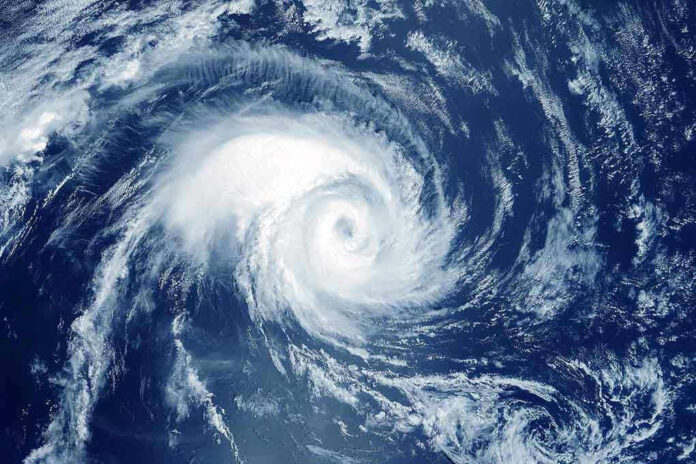
A rare tropical storm in the Malacca Strait has unleashed catastrophic flooding across Southeast Asia, leaving over 600 dead and hundreds still missing as rescue teams race against time in one of the region’s most devastating natural disasters in recent memory.
Quick Take
- Death toll exceeds 600 across Indonesia, Thailand, Malaysia, and Sri Lanka with hundreds still missing
- Over 4 million people affected, with nearly 3 million impacted in southern Thailand alone
- Hat Yai, Thailand recorded 335mm of rain in a single day—the highest rainfall in 300 years
- Rescue operations face critical challenges accessing isolated communities via helicopter deliveries
- Cross-border humanitarian coordination underway, with Malaysia evacuating over 6,200 of its nationals
The Storm Nobody Expected
Tropical storms forming in the Malacca Strait are meteorological anomalies. This rare system developed between Malaysia and Indonesia, defying typical cyclone patterns and triggering a cascade of destruction across three nations simultaneously. The storm maintained sustained heavy rainfall and dangerous wind gusts for approximately one week through late November 2025, creating conditions that transformed rivers into torrents and mountainous terrain into avalanches of mud and debris. The unprecedented nature of this formation makes it a watershed moment in regional disaster history.
Record-Breaking Devastation Reshapes Understanding of Regional Vulnerability
Hat Yai, Thailand’s largest city in Songkhla Province, experienced 335 millimeters of rainfall in a single day—a measurement that shatters three centuries of weather records for the region. This single-day deluge exceeded typical monsoon patterns by extraordinary margins, overwhelming infrastructure designed for conventional seasonal rainfall. Songkhla Province itself recorded 131 deaths, making it the hardest-hit area in Thailand. The scale of rainfall fundamentally challenged assumptions about what weather systems the region could endure.
Indonesia’s western regions, particularly Sumatra, experienced equally catastrophic conditions. The Indonesian Relief and Rescue Teams documented 336 confirmed deaths with 289 people still missing and 213,000 displaced. In the isolated town of Palembayan in West Sumatra, Reuters photographers captured haunting images of entire neighborhoods swept away by floodwaters, with survivors waiting desperately at soccer field landing zones for helicopter deliveries of food and supplies. The geography that once protected these communities became their prison, with landslides blocking mountain passes and cutting off escape routes.
When Infrastructure Fails and Desperation Takes Hold
Relief operations face logistical nightmares that conventional disaster response cannot solve. Blocked roads from landslides and flooding force rescue teams to rely entirely on helicopter-based aid delivery—a slow, capacity-limited approach when millions need immediate assistance. Reports of looting in affected areas signal a dangerous shift from passive suffering to active desperation. When food becomes scarce and government aid cannot reach communities fast enough, social order deteriorates rapidly, creating secondary crises that compound the original disaster.
The Cross-Border Crisis Tests Regional Cooperation
Malaysia’s evacuation of over 6,200 of its nationals from Thailand demonstrates both the disaster’s cross-border reach and the functioning of established international protocols. The Malaysian Foreign Ministry issued advisories requesting Malaysian citizens in West Sumatra to register with local consulates for assistance, acknowledging that stranded nationals cannot rely on local infrastructure. Thailand reported 170 deaths with 102 injuries, while Malaysia confirmed 2 deaths with approximately 24,500 people still sheltering in evacuation centers. This coordinated response, while necessary, reveals how thoroughly the disaster transcends national boundaries.
Sri Lanka’s Cyclone: The Forgotten Tragedy Within the Tragedy
A related cyclone struck Sri Lanka with devastating force, killing 153 people with 191 missing and over 500,000 affected nationwide. This secondary disaster often receives less international attention than the Indonesia-Thailand flooding, yet represents a parallel humanitarian catastrophe of enormous proportions. The broader meteorological system affecting the Indian Ocean and Southeast Asian region suggests weather patterns at continental scales have shifted dangerously. The simultaneous impact across four nations indicates climate dynamics that transcend traditional seasonal patterns.
The Numbers Hide Human Suffering
Statistics obscure the reality facing survivors. Over 4 million people affected means 4 million disrupted lives, 4 million stories of loss, and 4 million uncertain futures. In Indonesia alone, 213,000 displaced persons have lost homes and livelihoods. The 289 missing Indonesians represent families waiting for answers that may never come. The 102 injured Thais face recovery in overwhelmed medical systems. Each number represents someone whose world ended when the rains came.
What Comes After the Rescue Operations End
When helicopters stop flying and international media attention shifts elsewhere, the real crisis begins. Reconstruction of homes and infrastructure will take years. Agricultural impacts in rural areas threaten food security across the region. Psychological trauma from displacement and loss will require sustained mental health services that developing nations struggle to provide. Economic losses from destroyed crops, livestock, and commercial infrastructure will suppress regional economic growth. The disaster’s effects will ripple through regional economies and social structures for decades.
This tropical storm represents more than a weather event. It exposes the fragility of modern infrastructure against extreme natural forces and the vulnerability of millions living in geographically precarious locations. As climate patterns continue shifting, Southeast Asia faces a sobering question: was this an unprecedented anomaly or a preview of the region’s future?
Sources:
Tropical Storm Deaths Cross 500 in Southeast Asia, Over 4 Million Affected