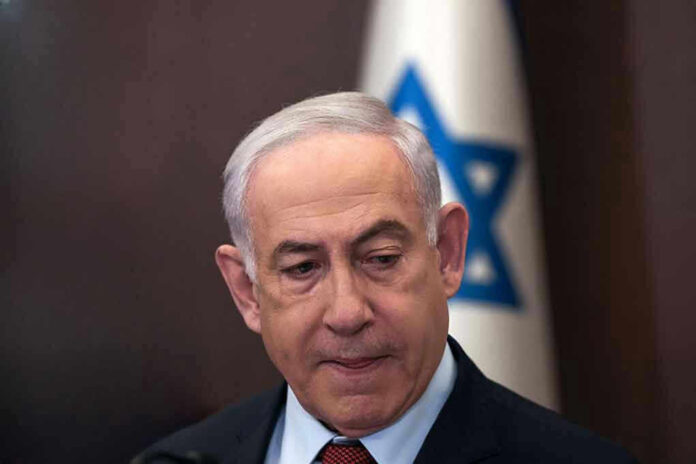
Benjamin Netanyahu’s request for a pardon could redefine the boundaries of political accountability in Israel.
Story Overview
- Netanyahu seeks a pardon from Israeli President Isaac Herzog.
- The request marks a dramatic shift in his previous stance.
- Netanyahu faces serious corruption charges.
- The outcome could impact Israeli politics and judicial integrity.
Netanyahu’s Strategic Shift
On November 30, 2025, Benjamin Netanyahu, under the shadow of corruption charges, submitted a pardon request to President Isaac Herzog. Previously, Netanyahu dismissed such actions as unnecessary, yet the ongoing legal pressures seem to have prompted this reversal. The request covers multiple cases, reflecting a strategic pivot aimed at reducing the burdens of court proceedings and potential political fallout. This move suggests Netanyahu acknowledges his legal strategies have reached a critical juncture.
Netanyahu’s legal battles have been a defining feature of his tenure, involving allegations of bribery, fraud, and breach of trust. These cases have kept him in the spotlight, demanding considerable time and resources. The pardon request signifies an attempt to mitigate these demands and focus on governance and political alliances. Netanyahu’s coalition allies in the Knesset strongly support this move, highlighting its priority within his political strategy.
The Role of President Herzog
President Herzog now faces the delicate task of weighing Netanyahu’s pardon request. As the constitutional authority on such matters, his decision will set a precedent for handling clemency requests from high-ranking officials. Herzog’s office acknowledged the complexity of this request, emphasizing the need for a responsible and sincere evaluation. This decision could redefine the balance between executive authority and judicial independence in Israel.
The decision’s ramifications extend beyond Israeli borders, as international observers, including the U.S., monitor the developments. A pardon could imply leniency towards governmental corruption, impacting Israel’s reputation on the global stage. Herzog’s handling of the situation will reflect on his leadership and the principles guiding Israeli governance.
Implications for Israeli Politics
If granted, the pardon would alleviate Netanyahu’s legal burdens, allowing him to focus on political maneuvering and coalition management. This could strengthen his position in Israeli politics, enhancing his influence and potentially swaying upcoming elections. Conversely, a denial would intensify legal proceedings, possibly weakening his political standing and creating challenges for his administration.
The Israeli public remains divided, with opinions varying on issues of accountability and justice. The decision will test public confidence in the government’s commitment to uphold the rule of law. It also raises broader questions about the separation of powers and the potential for executive clemency to override judicial outcomes, particularly in corruption cases.
Broader Implications and Expert Perspectives
Netanyahu’s request highlights the tension between executive power and judicial accountability, a dynamic mirrored in global politics. Analysts suggest this move indicates Netanyahu has exhausted other legal and political avenues. His strategic shift underscores the gravity of his situation and the potential consequences of ongoing legal battles.
Observers note that while a pardon could empower Netanyahu politically, it might erode public trust and signal a tolerance for corruption at high levels. The decision will affect Israel’s political landscape and its democratic institutions, setting a precedent for how similar cases might be handled in the future.
Sources:
Netanyahu Asks Israel’s President to Pardon Him in Corruption Cases