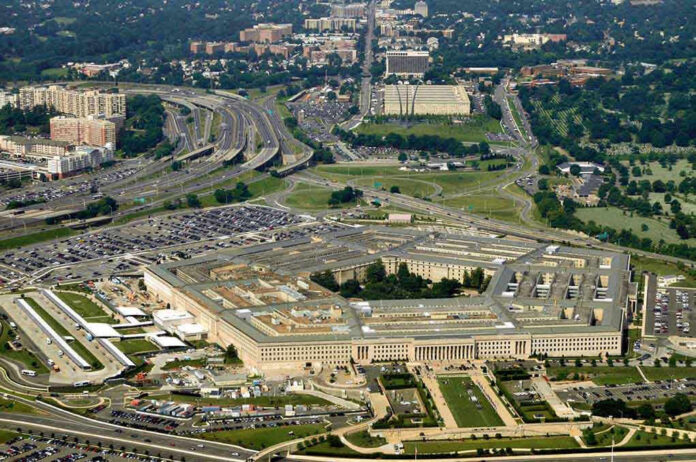
President Trump’s move to revive the “Department of War” title for the Pentagon signals a bold rejection of decades of bureaucratic drift and reasserts America’s commitment to military strength—sparking both debate and support among citizens concerned about watered-down defense priorities.
Story Snapshot
- Trump to sign an executive order restoring “Department of War” as a secondary title for the Pentagon, the first major renaming of a federal department in decades.
- The change is part of a wider Pentagon “warrior ethos” campaign, emphasizing military strength and traditional values.
- Congress may need to approve a permanent title change, raising questions about executive authority and constitutional boundaries.
- Move has triggered debate about the symbolism of “war” versus “defense” in U.S. policy and its impact on military culture and global perception.
Trump’s Executive Order: Restoring a Name, Reviving a Tradition
President Donald Trump is set to sign an executive order directing the Department of Defense to begin using “Department of War” as a secondary title, reviving the historic name that defined U.S. military leadership from 1789 until 1949. The order immediately permits Secretary of Defense Pete Hegseth to assume the title “Secretary of War” and instructs the Pentagon to propose further legislative and executive actions to make the change permanent. This marks the first major renaming of a federal department in decades and is a central part of the administration’s broader campaign to restore a “warrior ethos” throughout the armed forces. Trump announced, “We’re just going to do it. I’m sure Congress will go along if we need that. I don’t think we even need that,” underscoring his administration’s determination to bypass bureaucratic slowdowns and send a clear signal of military resolve.
The Department of War name carries deep historical roots, having guided U.S. military action since the nation’s founding. The original department was replaced in 1949 by the Department of Defense, reflecting a shift toward a broader mission that included peacetime operations and diplomacy. Trump’s decision to resurrect the “Department of War” title comes amid ongoing debates about military readiness, global threats, and the perceived erosion of traditional defense values over recent years. White House officials frame the move as a return to clarity and strength, stating that the new title “conveys a stronger message of readiness and resolve,” while critics suggest it could be seen as provocative or out of sync with modern defense strategy.
Executive Authority and Congressional Oversight: Where Does the Power Lie?
The executive order’s immediate effect is largely symbolic, allowing for updated signage, website branding, and official correspondence that carries the “Department of War” label. However, a permanent change would require congressional approval, since statutory authority over federal department names rests with Congress. This sets up a potential power struggle between the executive branch, which is asserting its authority to initiate the change, and lawmakers who may favor a more cautious approach. Trump’s confidence that Congress will “go along” is not universally shared, and legal experts indicate that a legislative process is likely necessary for full adoption, highlighting the ongoing tension between executive ambition and constitutional checks and balances.
Within the Pentagon, Secretary Pete Hegseth will oversee the implementation of the new campaign, tasked with managing both the internal culture shift and the external communications required for such a high-profile rebranding. The move is also expected to generate increased media attention and public debate, as it challenges decades of established nomenclature and prompts discussions about the symbolic role of military institutions in American life. While some see the change as a much-needed affirmation of strength and resolve after years of what they perceive as left-leaning defense policies, others warn it might lead to confusion or misinterpretation, both at home and abroad.
Symbolism, Military Culture, and Potential Impacts
Supporters argue that restoring the “Department of War” title revives tradition, projects strength, and counters what they view as recent efforts to weaken America’s military posture through excessive bureaucracy and progressive social experiments. The administration’s “warrior ethos” campaign is designed to foster resilience, discipline, and readiness among service members—a direct response to frustration with so-called “woke” policies that many conservatives believe have diluted the military’s core mission. Critics, on the other hand, caution that the name change could be interpreted as a shift toward a more aggressive international posture, potentially escalating tensions with adversaries and complicating diplomacy.
The immediate practical effects will be seen in the rebranding of Pentagon communications, signage, and documentation. While the costs of these changes are not yet fully known, the White House insists that the benefits—restoring clarity of purpose and reinforcing America’s unmatched military power—far outweigh any short-term expenses. Longer-term, if Congress approves the permanent change, it could set a precedent for further symbolic or structural reforms across other federal agencies and influence how the United States is perceived on the world stage. For now, the move has energized debate about the importance of tradition, the meaning of strength, and the proper balance between executive initiative and legislative oversight in shaping the nation’s defense policies.
Trump to rename Pentagon, restoring historic ‘Department of War’ in latest military move https://t.co/uDWNlKppie
— Fox News Politics (@foxnewspolitics) September 5, 2025
Uncertainty remains over whether the executive order alone is sufficient for a permanent change. All major news outlets confirm the contents and intent of the order, but the legal process may require further negotiation between the White House and Congress. As the Pentagon moves forward with the “warrior ethos” campaign, Americans will be watching closely to see whether this revival of a historic title marks a lasting return to the nation’s foundational defense values or simply the latest flashpoint in the ongoing debate over America’s role in a dangerous world.
Sources:
Trump to rename Pentagon, restoring historic ‘Department of War’ in latest military move
Trump signs executive order renaming Pentagon the Department of War
Trump to sign order renaming Pentagon ‘Department of War’