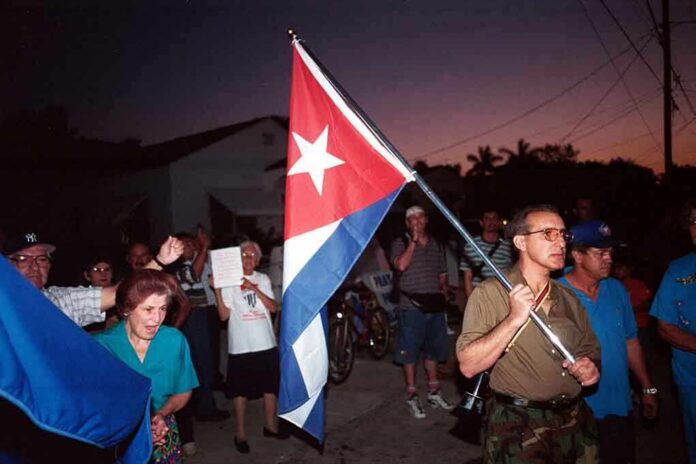
President Trump’s latest “taking Cuba” remark is forcing a serious question: is this just negotiating pressure—or the start of a new, open-ended doctrine that could test U.S. power, borders, and constitutional limits?
Story Snapshot
- President Trump said on March 17 that it would be an “honor” to “take Cuba,” adding, “whether I free it, take it, I think I can do anything I want with it,” as U.S.-Cuba talks continue amid Cuba’s energy collapse.
- The comments cap a rapid escalation from a “friendly takeover” concept in late February to “not so friendly” language by March 10, with no publicly detailed legal basis for intervention.
- Cuba’s crisis intensified after Venezuela’s Nicolás Maduro was ousted, cutting Cuba’s oil supply; the U.S. later imposed tariffs targeting countries that supply oil to Cuba.
- U.S. agencies are investigating a deadly February speedboat incident involving Florida registration, and the Justice Department is reported to be examining cases against Cuban leaders.
Trump’s “Honor of Taking Cuba” Line Raises Stakes in Ongoing Talks
President Donald Trump’s March 17 video comments—saying he expects the “honor” of “taking Cuba,” and that “whether I free it, take it, I think I can do anything I want with it”—arrived while U.S.-Cuba talks are still described as active. The language is notably broader than conventional diplomacy, and it is already being read through two lenses: a pressure tactic meant to accelerate concessions, or a signal of potential regime-change intent.
The public record summarized in reporting shows Trump first floated a “friendly takeover” concept on February 28, then repeated it on March 2 as a U.S. fuel blockade was highlighted, and escalated again on March 10 by adding that it might be “not so friendly.” By March 16 and March 17, the phrasing shifted to “take Cuba in some form” and then to the more personal, sweeping “anything I want” framing.
Energy Leverage: Venezuela’s Collapse, Oil Tariffs, and a Fuel Squeeze
Cuba’s immediate vulnerability centers on energy. After the U.S. helped oust Venezuela’s Nicolás Maduro in early January, Cuba reportedly lost a key oil supply stream that had propped up the island’s economy for years. Later in January, Trump signed an executive order imposing tariffs on countries supplying oil to Cuba, tightening the vise. The outcome described across sources is a country facing blackouts, severe shortages, and growing humanitarian strain.
Cuban officials have publicly condemned the fuel squeeze as collective punishment, while Trump has described Cuba as weakened and running on fumes. For American readers who remember decades of failed détente, the tactical logic is recognizable: the U.S. is using economic leverage where it has it, rather than committing troops. The unresolved issue is transparency: the administration has not publicly laid out a clear legal framework for any coercive “taking” beyond sanctions and negotiations.
A Florida-Linked Boat Attack Adds Security Tension to an Already Volatile Moment
Security pressure rose after a February 26 incident in which a Florida-registered speedboat carrying armed Cubans fired on Cuban soldiers, killing four, according to the research summary. U.S. agencies—including DHS and the Coast Guard—were cited as investigating. The event matters because it complicates diplomacy: Cuba can point to violence tied to U.S. territory, while Washington can argue the regime’s instability is producing dangerous spillover in the Florida Straits.
The speedboat episode also highlights a risk conservatives routinely flag: when foreign crises intersect with U.S. domestic security, Americans end up paying the price—through migration surges, maritime interdictions, and potentially open-ended enforcement missions. The sources do not establish who directed the attackers or whether the incident was coordinated by any state actor. What is clear is that it added friction right as the White House rhetoric was escalating.
Rubio-Led Talks, Regime-Change Allegations, and the Need for Constitutional Clarity
Secretary of State Marco Rubio is described as leading high-level talks with Cuba, while Cuban President Miguel Díaz-Canel has insisted on sovereignty and “equality” in any dialogue. Reporting referenced in the research also says the U.S. objective may include removing Díaz-Canel, though the details are not presented as formally confirmed. Separately, the Justice Department is reported to be eyeing cases against Cuban leaders, suggesting legal pressure could be part of a broader strategy.
For Trump-supporting voters who watched prior administrations stretch executive power overseas while neglecting the border at home, the central standard is straightforward: if the U.S. is moving beyond sanctions into coercive action, Congress and the public deserve clarity on authority, objectives, costs, and exit ramps. Tough talk can be leverage, but constitutional government requires more than rhetoric—especially when “take” language is being used about a sovereign neighbor during a humanitarian breakdown.
(VIDEO) Trump Says He'll Have the 'Honor' of 'Taking Cuba' – 'Whether I Free it, Take it, I Think I Can Do Anything I Want with It'
CUBA would be the premier tourist destination https://t.co/6xON8DQsfo #gatewaypundit via @gatewaypundit
— ConservativePatriot (@Val4NoBigGov) March 17, 2026
The near-term consequences are tangible regardless of intent: deeper shortages can drive migration, blackouts can accelerate unrest, and regional rivals can exploit uncertainty. The longer-term question is whether the U.S. is laying groundwork for a negotiated transition or drifting toward an ambiguous promise to “take” a country without publicly defined legal bounds. The available sources document escalation in rhetoric and pressure tools; they do not provide a finalized policy blueprint, leaving Americans to infer far more than they should.
Sources:
https://fortune.com/2026/02/28/trump-says-cuba-has-no-money-and-maybe-well-have-a-friendly-takeover/