

What happens when a President, determined to curb the influence of public broadcasting, finds himself in a legal standoff with the Corporation for Public Broadcasting? The answer could redefine executive power in America.
At a Glance
- The DOJ is suing to remove CPB board members Laura Ross, Thomas Rothman, and Diane Kaplan.
- The Trump administration seeks to end federal funding for NPR and PBS.
- This lawsuit could set a precedent for presidential authority over congressionally chartered nonprofits.
- The CPB argues it should remain independent from executive control.
The Power Struggle Unfolds
The Department of Justice filed a lawsuit against Laura Ross, Thomas Rothman, and Diane Kaplan, claiming they unlawfully remained on the CPB board after being asked to step down by President Trump. The President’s directive to these board members came as part of a broader strategy to reshape public broadcasting, including defunding NPR and PBS. The CPB disputes the removals, arguing that it operates independently of the executive branch, a stance that has landed both parties in a legal battle.
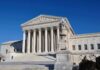
The DOJ’s lawsuit, filed in the U.S. District Court for the District of Columbia, positions the three board members as “usurpers” who have unlawfully continued their roles. This action emphasizes the administration’s commitment to upholding the President’s Article II powers, including making personnel decisions in federal appointments. However, the CPB’s leadership, including CEO Patricia Harrison, maintains that the CPB’s charter protects it from direct presidential interference, a conflict now awaiting a court’s interpretation.
Implications for Public Broadcasting
The outcome of this legal confrontation could significantly impact the governance of public broadcasting. Should the administration prevail, it could mean increased presidential influence over entities like the CPB, undermining their editorial independence. This possibility has raised alarms among public media advocates who stress the need for insulation from political pressures.
Public broadcasting outlets like PBS and NPR, heavily reliant on CPB funding, face potential financial and operational disruptions. The administration’s push to claw back $1.1 billion in funding further intensifies the uncertainty surrounding these institutions. The result could be a chilling effect on non-commercial, independent programming, especially in underserved areas.
The Larger Constitutional Question
The crux of the debate lies in the question of presidential authority over congressionally chartered nonprofits. Legal experts are divided; some argue the President’s removal power is not absolute, particularly for entities designed to be independent. Others assert that the President has broad authority over federal appointments unless Congress explicitly limits those powers.
This case could set a lasting precedent, not just for public broadcasting but for other federally funded nonprofits. The DOJ’s stance underscores a vision of expanded executive power, while the CPB’s resistance highlights the ongoing tension between governmental authority and institutional independence.
Looking Ahead
As this legal battle unfolds, its implications are being closely watched by stakeholders across the nonprofit and public sectors. The court’s decision will likely influence future administrations’ ability to exert control over independent boards. Meanwhile, the CPB continues to operate amid this uncertainty, with its disputed board members actively participating in meetings and decisions, despite the DOJ’s efforts to remove them.
The broader impact on public media outlets remains a concern, with potential repercussions for the availability and quality of public broadcasting services. As the legal proceedings progress, the balance between executive power and nonprofit independence hangs in the balance, with the outcome set to shape the future of public media in America.
Sources:
Texas Border Business, July 16, 2025
DOJ Press Release, July 15, 2025