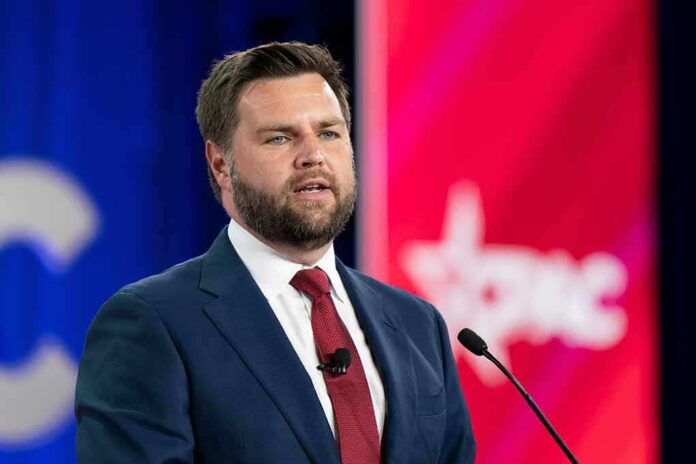
JD Vance just delivered a blistering critique of Massie, accusing him of alienating the GOP by opposing party positions on nearly every issue.
Story Snapshot
- JD Vance publicly criticized Massie for consistently opposing GOP stances.
- Massie’s independent streak has reportedly made him enemies within the party.
- The clash highlights a growing divide between traditional conservatives and those seeking to redefine the party’s direction.
- Observers see this as a sign of deeper ideological fractures within the Republican Party.
The Vance-Massie Showdown
JD Vance’s recent remarks about Massie cut straight to the heart of a simmering conflict within the GOP. Vance accused Massie of bucking the party on nearly every issue, suggesting that Massie’s approach is not only out of step but also damaging to Republican unity. The critique is more than just personal; it reflects a broader concern about the direction of the party and the consequences of defying party leadership.
Vance’s comments come at a time when the GOP is grappling with internal divisions. Massie’s willingness to break ranks has earned him both praise and criticism. Supporters see him as a principled conservative willing to stand alone. Critics argue that his actions undermine party cohesion and make it harder to achieve legislative goals. The tension between loyalty and independence is not new, but it has taken on new urgency in the current political climate.
Massie’s Record of Defiance
Massie’s reputation as a maverick is well-earned. He has opposed party leadership on issues ranging from spending bills to foreign policy. His votes often diverge from the GOP majority, and he has not shied away from criticizing party leaders. This independence has made him a target for those who prioritize party unity over individual principle. The result is a growing list of enemies within the party, as Vance’s comments suggest.
Massie’s approach is rooted in a belief that the party should adhere to conservative principles, even when it means going against the grain. He argues that compromise on core issues undermines the party’s credibility. However, this stance has also led to accusations of being obstructionist and unwilling to work within the party framework. The debate over Massie’s tactics is emblematic of a larger struggle within the GOP.
The GOP’s Identity Crisis
The Vance-Massie clash is a symptom of a deeper identity crisis within the Republican Party. As the party seeks to define its future, it is grappling with questions about loyalty, principle, and the balance between unity and independence. Vance’s critique of Massie reflects a desire for a more cohesive party, while Massie’s actions highlight the tension between individual conviction and collective action.
This divide is not limited to Vance and Massie. It is playing out across the party, as different factions vie for influence and control. The outcome of this struggle will shape the GOP’s direction in the years to come. For now, the party is caught between the need for unity and the desire for principled leadership.
What’s at Stake for the GOP
The stakes for the GOP are high. The party’s ability to present a united front will determine its effectiveness in Congress and its appeal to voters. Vance’s criticism of Massie is a reminder that party loyalty is not just a matter of personal preference; it is a strategic imperative. At the same time, Massie’s independence raises important questions about the role of principle in politics.
As the GOP navigates these challenges, it must find a way to balance unity and principle. The party’s future depends on its ability to reconcile these competing demands. The Vance-Massie showdown is a microcosm of this larger struggle, and its outcome will have far-reaching implications for the party and the country.
Sources:
Massie fires back after Vance criticizes him at Turning Point USA event