
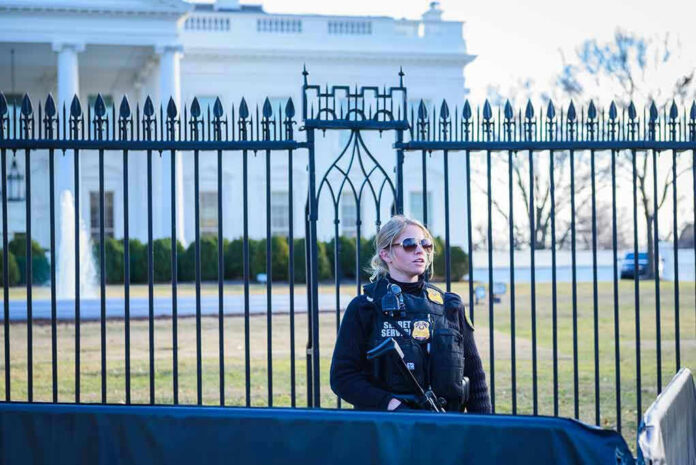
One reckless driver, a split-second decision, and the White House’s fortress mentality is tested—again—by a car slamming into a Secret Service gate, sparking urgent questions about how much security is enough when America’s most symbolic home is under siege from both machines and motives.
Story Snapshot
- A vehicle crashed directly into the White House’s Secret Service gate, triggering an immediate, coordinated response and a rapid lockdown.
- The incident reignited debates about the delicate balance between national security and public accessibility at the President’s official residence.
- Security protocols, technology, and physical barriers were tested and scrutinized in real time as authorities investigated both the driver’s intent and the efficacy of their defenses.
- Experts and officials now weigh whether another layer of fortification should further transform this icon of democracy into an impenetrable fortress—or if such moves risk eroding its public character.
When Security Meets Symbolism: The Gate Under Attack
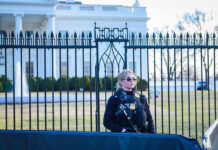
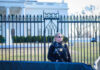
Metal screeched and sirens wailed as a vehicle, undeterred by reinforced fencing and anti-ram barriers, smashed into the White House’s perimeter. Within seconds, Secret Service agents swarmed the scene, weapons drawn, their training for worst-case scenarios suddenly put to the test. The driver was apprehended and the area sealed off, even as onlookers and staffers grappled with a single unavoidable question: If a car can breach the White House’s front line defenses, are any of us truly safe?
Law enforcement moved swiftly to inspect the vehicle for explosives, while the Secret Service issued a terse statement confirming the breach and vowing a full review. The President and First Family remained secure, but the incident’s psychological shockwaves rippled far beyond Pennsylvania Avenue, rattling both the capital’s daily rhythm and the nation’s sense of security. For a brief moment, the White House was not just a seat of power, but a target—and the world was watching.
Layers of Defense: A History of Escalating Barriers
Washington’s most recognizable address was never meant to be a fortress. In the 19th century, citizens could stroll the grounds with little more than a polite nod to security. But as threats evolved—from lone trespassers to sophisticated terror plots—the White House perimeter has become a showcase of security upgrades. High-tech surveillance, vibration sensors, and anti-ram barricades work alongside a growing cadre of agents, each layer a response to past breaches, from fence-jumpers to gunfire from passing vehicles. After every incident, the question returns: Is the next technological fix enough, or merely the next line waiting to be breached?
Recent years have seen fences rise higher and anti-ram barriers grow thicker, a visible reminder of how the open spirit of American democracy is increasingly barricaded by necessity. Yet, for every new measure, an intruder seems willing to test its limits, whether driven by protest, notoriety, or personal crisis. The cycle of breach, response, and fortification continues, with each event reopening the debate about how much is lost—and gained—when the public’s house becomes the nation’s bunker.
Behind the Barricades: Authority, Accountability, and American Values
The Secret Service, tasked with an impossible mandate—absolute protection in an age of unpredictable threats—now faces renewed scrutiny. Their rapid response neutralized the immediate threat, but the incident has prompted calls for further reviews and enhancements. Congressional oversight committees and security experts weigh in, some pushing for more physical barriers, others warning that the White House risks becoming a symbol of fear rather than freedom. Civil liberties advocates ask pointed questions about how much transparency and openness the public must forfeit for safety.
Every decision about White House security is ultimately a reflection of American priorities. Should the People’s House stand as a fortress, or as a living symbol of accessibility? As urban planners and architects remind us, every added barrier is both a shield and a wall—one that can protect, but also separate leaders from the led. The challenge is not merely technical, but philosophical: can a democracy maintain its openness while fending off an ever-evolving array of threats?
The Breach’s Ripple Effects: What Comes Next?
The immediate aftermath of the crash saw heightened security and temporary closures, but the long-term implications may be more profound. Federal agencies are already reviewing whether anti-ram measures should be further reinforced. The security industry stands to benefit as new technologies are considered. Meanwhile, ordinary Washingtonians brace for more traffic delays and restricted access, and the nation at large confronts the uneasy reality that even the most fortified institutions remain vulnerable to determined individuals.
As the investigation into the driver’s motives unfolds, the question lingers: Will the next breach demand still more barriers—or will Americans decide that, at some point, the cost to their own sense of openness is too high? The White House, once again, sits at the crossroads of security and symbolism, its newest scars a reminder that the story of its protection is far from finished.
Sources:
CFA Blog: White House security: It takes more than a fence
Wikipedia: List of White House security breaches