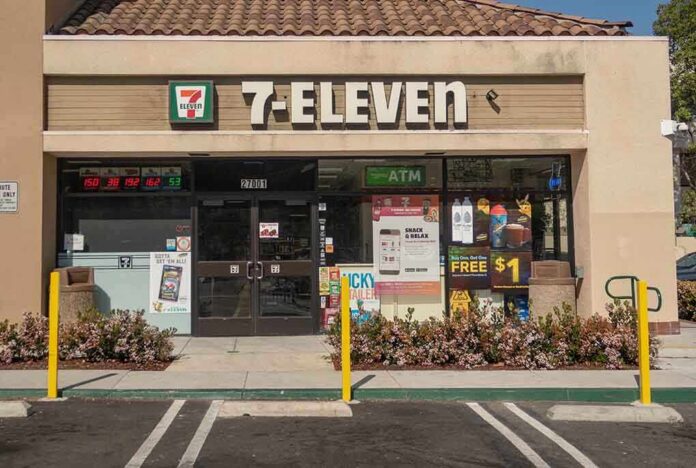
7-Eleven’s announcement of 645 store closures marks the fifth consecutive year the iconic convenience chain is shutting down more locations than it opens, exposing a corporate strategy that prioritizes profits over the American workers and communities left behind.
Story Snapshot
- 7-Eleven will close 645 stores across North America during fiscal year 2026, the highest closure count in recent years
- The closures mark the fifth straight year the company has shuttered more locations than it opened, signaling a troubling long-term trend
- While opening 200+ new stores, the net loss of approximately 445 locations will eliminate jobs and reduce access for countless Americans
- Company refuses to disclose which specific locations face closure, leaving franchise owners, employees, and communities in the dark
Fifth Year of Shrinking Footprint Raises Red Flags
Seven & i Holdings announced in April 2026 earnings documents that 7-Eleven will close 645 stores during fiscal year 2026, which runs from March 2026 through February 2027. This represents the largest single-year closure initiative in recent memory and continues an alarming pattern of contraction. The company has closed more stores than it opened for four consecutive years prior to this announcement, demonstrating a sustained retreat from American communities. Despite plans to open 200 new locations, the net reduction of 445 stores signals corporate prioritization of profitability over maintaining presence in neighborhoods that have depended on these outlets for decades.
Workers and Franchise Owners Left Without Answers
Seven & i Holdings has refused to provide transparency about which specific locations will close or the exact timeline for shutdowns during the fiscal year. This lack of disclosure leaves franchise owners who invested their life savings into these businesses uncertain about their futures. Thousands of employees face potential job losses with no advance warning about whether their workplace is on the chopping block. The company’s silence when questioned about conversion plans for wholesale fuel stores demonstrates a troubling disregard for the stakeholders who built this business. For hardworking Americans who depend on these jobs, the uncertainty created by corporate secrecy adds insult to injury.
Corporate Competition Excuse Masks Deeper Failures
Company executives justify closures by claiming they must compete with premium chains like Wawa and Buc-ee’s through a food-focused redesign strategy. However, this explanation ignores fundamental management failures that created the competitive disadvantage in the first place. The franchise ownership model, which allowed inconsistent quality and aging infrastructure across locations, represents years of corporate neglect. Rather than investing in upgrades to support existing franchise partners and their employees, management chose the path of mass closures and selective new openings. This approach prioritizes creating showpiece locations in profitable markets while abandoning communities where underperforming stores could have been improved with proper investment and support.
Communities Lose Access as Corporate Consolidates
The closure of 645 stores will disproportionately impact rural and underserved areas where 7-Eleven locations often serve as essential community resources. These stores provide not just convenience items but access to fuel, basic groceries, and services in areas with limited retail options. The corporate restructuring benefits competitors like Circle K and Wawa, who gain market share as 7-Eleven retreats. Meanwhile, ordinary Americans in affected communities lose convenient access to goods and services. The company’s conversion of some locations to wholesale fuel-only operations eliminates even more jobs while reducing the utility these sites provide to local residents. This pattern reflects a broader economic reality where corporate consolidation and restructuring consistently harm working Americans.
Long-Term Trend Signals Industry Transformation
The multi-year closure pattern represents a fundamental shift from expansion-focused growth to what executives call quality-focused consolidation. Since 2022, 7-Eleven has closed well over 1,000 locations across North America while corporate leadership pursued defensive strategies against hostile takeover attempts. Seven & i Holdings even split off U.S. operations to protect more profitable Asian markets, acknowledging that American stores were underperforming. This strategic retreat demonstrates how corporate decision-making prioritizes shareholder value and executive interests over commitment to American workers, franchise partners, and the communities that supported the brand’s growth. The convenience store industry’s shift toward premium formats may benefit affluent consumers, but it leaves behind working-class Americans in markets deemed insufficiently profitable.
Sources:
7-Eleven closing stores as it focuses on food transition
Iconic Convenience Store Chain to Shut Down 600 Locations in 2026
7-Eleven plans to close 645 c-stores in fiscal 2026
Major Convenience Store Chain Is Closing Hundreds of Stores