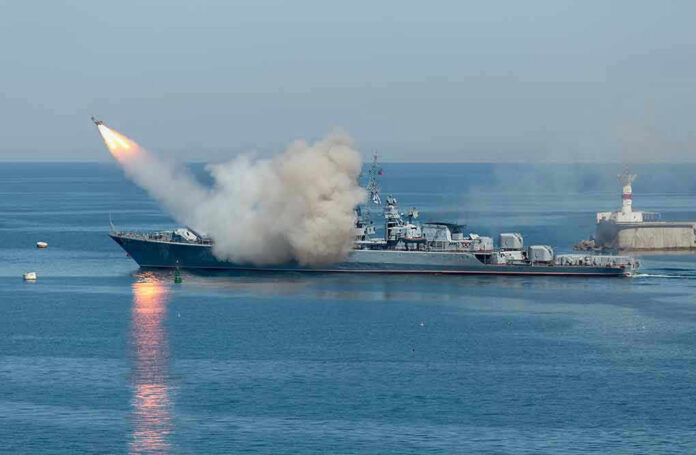
patriotpostnews.com — As Washington calls fresh strikes inside Iran “self-defense,” many conservatives are asking whether America is truly protecting its troops—or sliding back toward open-ended, undeclared war in a vital oil chokepoint.
Story Snapshot
- The United States military hit Iranian missile sites and boats near the Strait of Hormuz, calling the action “self-defense” during a fragile ceasefire.
- Officials say the strikes were aimed at protecting American forces from threats by Iranian units, not launching a broader new war.[1][2][3]
- Reports agree the targets were missile launch positions and vessels allegedly attempting to lay naval mines near key shipping lanes.[1][2][3]
- Public evidence for an “imminent” attack is thin, leaving citizens to take classified claims on trust while the region’s oil lifeline is put at risk.[1][2]
What The Pentagon Says Happened In Southern Iran
The United States Central Command said American forces carried out what it called “self-defense” strikes in southern Iran, focusing on missile launch sites and boats near the Strait of Hormuz.[2][3] Command officials framed the operation as a limited action designed “to protect our troops from threats posed by Iranian forces” during an ongoing ceasefire, stressing that United States personnel were not reporting casualties from this incident.[1][2] Television briefings repeated that the United States was acting with “restraint” while still defending its deployed forces.[1]
News reports from several outlets described explosions near the Iranian port city of Bandar Abbas, a major naval hub overlooking the Strait of Hormuz, shortly before or during the strikes.[1][2] Broadcasters relayed the Pentagon’s statement that the targets included missile positions and Iranian boats “attempting to place mines” or “allegedly preparing naval mines” in nearby waters.[1][2] Commentators emphasized that United States leaders want to keep the strait open to commercial shipping while warning Iran that American forces will respond to perceived threats.[1][2]
Mine-Laying Claims, Ceasefire Tensions, And The Evidence Gap
Coverage repeatedly linked the action to a “fragile ceasefire” and ongoing talks aimed at dialing back the wider conflict, raising concerns that any strike—even defensive—could destabilize negotiations.[1][2] Reports noted that United States officials did not claim American troops were actually hit, only that boats were “possibly going to lay mines” and missile sites posed a serious threat.[1] Journalists highlighted that no public imagery, intercepted communications, or recovered mines have been released so far to independently prove the vessels were in the act of mine-laying when destroyed.[1][2]
Some outlets even used cautious language, saying the vessels were “thought to be planting mines” or were “allegedly preparing naval mines,” underscoring that the details come almost entirely from the United States Central Command’s description rather than outside verification.[2] One report stated that Iran had yet to issue a full response, which left the American version of events largely unchallenged in the first news cycle.[2] Analysts pointed out that this pattern is familiar in United States–Iran crises, where Washington invokes self-defense based on classified intelligence while critics worry about escalation and mission creep.[1][2][4]
Why This Matters For America-First Security And Energy Stability
Strategists across outlets agreed that the Strait of Hormuz carries a large share of the world’s seaborne oil, making any confrontation there a direct threat to global energy prices and to American families already squeezed by high costs.[1][2] Commentators explained that even limited military exchanges can spike insurance rates for tankers, restrict shipping traffic, and trigger price shocks that punish working households far from the Gulf.[1][2] That reality raises the stakes for every decision to strike targets near such a narrow and strategically vital shipping lane.
🇺🇸 The First Order Consequence: Renewed U. S. strikes in southern Iran heightened investor concerns about regional instability, lifting oil prices and dampening near-term expectations for a durable peace, reducing the likelihood that energy-market participants price in quick… https://t.co/KBlgShVlsB
— U.S.A.I. 🇺🇸 (@researchUSAI) May 26, 2026
Observers also placed the latest operation alongside earlier United States actions against Iran, including the 2025 “Operation Midnight Hammer” strikes on Iranian nuclear facilities that were formally justified as self-defense in support of Israel.[4] That history fuels public skepticism about broad “self-defense” labels, especially when Washington offers few visible facts about imminence or alternatives considered before using force.[1][2][4] For citizens who value constitutional limits on war powers and a foreign policy focused squarely on defending American lives and economic security, the unanswered questions around these strikes underscore the need for transparency, clear legal justification, and a serious debate about how far the United States should go inside Iran while a ceasefire still officially holds.[1][2]
Sources:
[1] YouTube – US Strikes Iran Missile Sites & Boats Amid Shaky Ceasefire …
[2] YouTube – US launches new strikes on Iran, targeting missile sites …
[3] YouTube – US Military Strikes Iranian Boats, Missile Launch Sites
[4] Web – 2025 United States strikes on Iranian nuclear sites
© patriotpostnews.com 2026. All rights reserved.