
Millions of Americans are being tracked on public roads by Flock cameras, while federal agents can often search that data without ever getting a warrant.
Story Snapshot
- Rep. Keith Self’s new PRIVACY Act would force federal agents to get a warrant before pulling Flock and other local surveillance data.
- Courts and researchers say Flock’s nationwide camera network already lets federal agencies quietly track drivers’ movements and immigration status without warrants.
- A recent Supreme Court ruling against broad “geofence” searches puts mass license‑plate surveillance like Flock under new constitutional pressure.
- Cities across the country are canceling Flock contracts after learning their residents’ data was shared with federal immigration agencies without clear consent.
Congressman Self Moves to Curb Warrantless Access to Flock Data
Republican Congressman Keith Self of Texas has introduced the Protecting Rights in Video and Equipment Acquired Discovery Act, known as the PRIVACY Act, to tighten federal access to local surveillance systems. The bill would require federal law enforcement to get a warrant before searching data collected by city and county tools like automated license plate readers, traffic cameras, and other similar technologies. Self argues this is about basic Fourth Amendment protections, saying the government should “get a warrant” before digging into people’s movements and personal information.
Self’s bill goes beyond warrants and also targets the growth of the surveillance web itself. It would bar the use of federal dollars to buy or install these systems, aiming to slow the expansion of permanent camera networks that track drivers everywhere they go. It also limits how long federal agents could keep data obtained with a warrant, generally to thirty days unless it becomes evidence in a case or a judge approves an extension. That retention cap is meant to stop long‑term archives of Americans’ travel history held in federal databases.
How Flock Cameras Turn Local Roads Into a National Tracking Grid
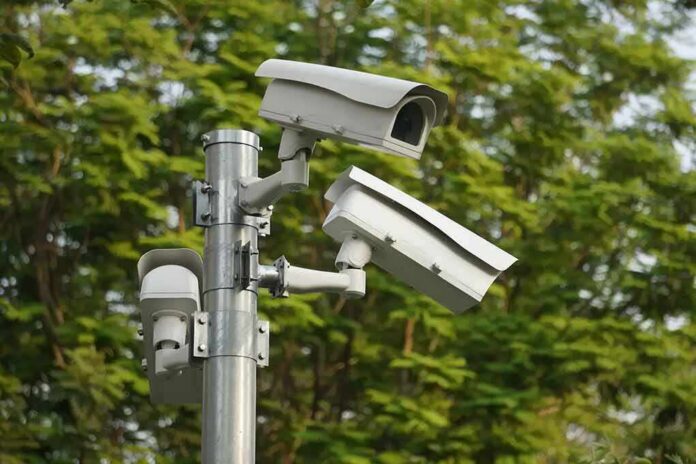
Flock Safety builds automated license plate reader cameras that many towns and suburbs now mount on poles and traffic signs to watch passing cars. The company’s network can store weeks of driving data and lets police search where a plate has been seen across wide areas. A judge in Norfolk, Virginia, has already ruled that collecting location data from 172 Flock cameras over time is a “search” under the Fourth Amendment, like putting a tracking device on a car, and cannot be used without a warrant.
Despite that ruling, there is still no clear nationwide warrant rule for searches of Flock’s huge license plate database. Research by civil‑rights groups shows agencies like Immigration and Customs Enforcement and Border Patrol can get access to local Flock data through “side doors,” such as asking local police to run searches on their behalf or using shared networks. In Washington state, auditors found that Border Patrol had “back door” access to Flock data from at least ten local departments that had not knowingly approved sharing with Border Patrol. That kind of quiet federal access is exactly what Self’s bill tries to bring under warrant control.
Cities Push Back After Learning About Federal Surveillance
City leaders in several places have reacted sharply after discovering how widely their residents’ information was being shared through Flock’s systems. Santa Cruz, California, and other communities learned that local license‑plate data had flowed into Flock’s national network and was then accessed by federal agencies, without clear awareness or consent from local officials. Some cities and college towns have responded by turning off their Flock cameras or ending contracts over fears the systems were feeding immigration surveillance and long‑term tracking of law‑abiding residents.
Critics say this pattern fits a deeper concern shared by many on both the left and right: powerful agencies quietly building tools to watch ordinary Americans, while elected officials only step in after abuse becomes public. At least one Washington court has ruled that Flock images are public records, meaning anyone can request copies of what local police cameras captured. That ruling underscores how deeply this technology is woven into government operations, and how exposed citizens are when data about their daily routines is treated as fair game for both police and public records requests.
Supreme Court Geofence Ruling Raises Constitutional Stakes
A recent Supreme Court decision on “geofence” warrants has increased pressure on mass location‑tracking systems like Flock. In that case, the Court held that when police demand cellphone location data for every device in a certain area and time window, they are carrying out a search under the Fourth Amendment and must get a warrant supported by probable cause. The ruling recognizes that detailed records of where people go, even in public spaces, can reveal private parts of their lives and therefore deserve strong protection.
What the Flock? Camera data not secured. Rep. Keith Self is doing something about it.
Watch David Pollack Primetime on OAN Live pic.twitter.com/AC0Tk70cIW
— One America News (@OANN) July 22, 2026
Legal advocates now argue that large license‑plate camera networks create similar risks because they let police and federal agents reconstruct a person’s movements over long periods. While past court decisions have said officers can check a single plate without a warrant, the Norfolk ruling and the new Supreme Court case highlight how constant, automated tracking changes the picture. For Americans who already feel the government serves elites more than citizens, the idea that federal agencies can quietly sift through weeks of driving history without a judge’s approval is another sign the surveillance state is growing faster than democratic safeguards.
Sources:
keithself.house.gov, instagram.com, youtube.com, x.com, coloradosun.com, denverite.com, journals.law.unc.edu, business-humanrights.org, abc7news.com
© patriotpostnews.com 2026. All rights reserved.