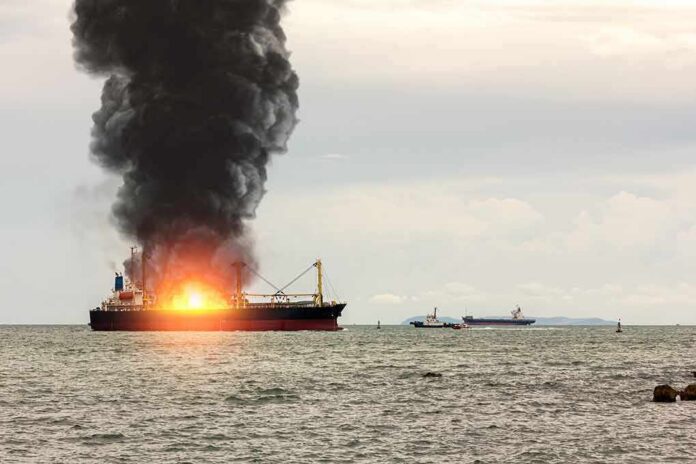
U.S. forces disabled three Iranian oil tankers within hours of reporting missile attacks on two Navy warships near the Strait of Hormuz, signaling a sharp escalation with direct impacts on global trade and energy security.
Story Snapshot
- Central Command said the strikes were self-defense after Iranian missile attacks on U.S. ships.
- More than 80 Iranian-linked targets were hit this week across multiple rounds, according to officials.
- Iran called the actions illegal and a breach of a ceasefire, vowing to respond.
- The Strait of Hormuz remains the tense chokepoint where fast moves can roil energy flows.
What The U.S. Military Says Happened
U.S. Central Command said American forces struck and disabled three Iranian oil tankers after Iran fired missiles at two Navy ships transiting near the Strait of Hormuz. The Navy vessels were not hit. Commanders framed the action as necessary and proportionate self-defense to protect ships and keep trade moving. Central Command also described wider strikes to degrade Iranian maritime and missile capabilities that threaten shipping in the corridor.
Central Command reported completing a separate round of operations this week hitting more than 80 targets tied to Iranian air defenses, radars, small boats, and command nodes. Officials said these actions aimed to reduce future risks to commercial traffic and U.S. personnel. The command has repeated that the United States does not seek wider war, but will defend its forces and enforce freedom of navigation in international waters near the Strait.
How Iran Is Framing The Clashes
Iran’s Foreign Ministry labeled the U.S. strikes “aggressive actions” that broke a fragile ceasefire and violated international law. Tehran said a U.S. air-launched missile hit an Iranian tanker’s engine space and accused Washington of harassing another vessel and striking a telecom site on Qeshm Island. Iranian statements also claimed quick retaliation against U.S. ships, and warned it would use all tools to respond to future attacks.
These claims place blame for the latest flare-up on Washington. They seek to paint Iran’s moves as defense of its territory and shipping. Independent verification of these specific Iranian assertions was not available in the cited reports. The U.S. account, by contrast, anchors its strikes to recent attacks on commercial ships and attempted hits on Navy vessels in or near international waterways used by global trade.
Why The Strait Of Hormuz Magnifies Risk
The Strait of Hormuz is a narrow sea lane that carries a large share of the world’s oil and liquefied natural gas. Attacks or threats there often trigger fast military moves and dueling legal claims. Analysts note that both sides tend to act quickly and argue self-defense before full records are public. That pattern lets early claims shape the story and rattle markets long before courts or independent bodies weigh in on law and facts.
The US military is retaliating for Iranian missile attacks on US Navy warships.
American Navy ships have carried out strikes on three Iranian oil tankers.. with two that the U-S says are permanently disabled, and a third that has been destroyed.
The U-S military says an aircraft… pic.twitter.com/iQL6lmQP0p— Worldwide News Network (@WorldwideNNX) September 6, 2026
History shows this chokepoint absorbs shocks yet stays vital. Past assessments suggest even serious conflict has a mixed and sometimes limited effect on long-run oil prices. But in the short run, incidents can delay cargoes, raise insurance costs, and stress already thin supply lines. That can hit families through higher fuel and shipping costs, while leaving small firms exposed to price spikes and shortages downstream from port to store shelf.
What This Means For Americans Now
These strikes reveal a hard truth many on the left and right share: vital security choices often unfold with little daylight for public oversight, yet the costs land on workers and consumers. If tankers slow or reroute, energy and shipping bills can rise. If fighting widens, service members face more danger. Leaders in Washington and Tehran say they are acting to protect their people. The risk is that fast moves at sea lock both sides into a cycle that neither openly seeks.
Key Questions As The Situation Evolves
Watch for clear evidence on the timing and location of the reported missile shots at U.S. ships, the condition and ownership of the disabled tankers, and any new limits on shipping lanes. Track how Central Command describes rules for stopping or disabling vessels near the strait. Follow insurance surcharges and route changes by major shippers. These details will show whether this is a short, sharp clash—or the start of sustained pressure on a global artery.
Sources:
facebook.com, reuters.com, foxnews.com, axios.com, moneycontrol.com, strausscenter.org
© patriotpostnews.com 2026. All rights reserved.