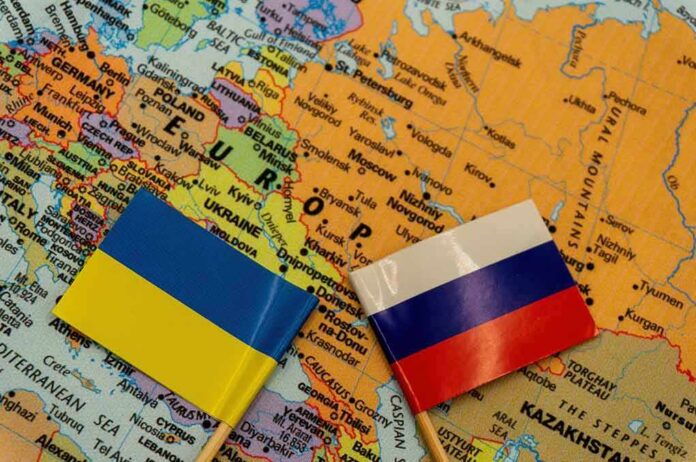
Putin’s 72-hour pause on strikes in Kyiv, timed with meetings with Trump’s envoys, signals movement—but also tests whether talk of peace means real change on the ground.
Story Snapshot
- Russia paused strikes on Kyiv for 72 hours as U.S. envoys visited Moscow.
- President Trump’s team engaged Putin while Washington pressed for broader talks.
- Moscow says it wants “lasting peace,” not a short truce, yet ties terms to its demands.
- Analysts warn partial, time-limited pauses often harden battle lines rather than end wars.
What Happened: A Timed Pause and High-Level Contacts
Russian officials announced a 72-hour halt on strikes against Kyiv, aligning with a visit by United States envoys linked to President Trump’s ongoing push to cool the war. The Kremlin described the pause as a response to a personal request from President Trump, while fighting continued elsewhere in Ukraine. The move followed earlier statements that Russia would limit attacks on energy sites for periods, but would not accept a broader, unconditional ceasefire.
Public messages from Moscow and Washington framed the pause as a window for diplomacy. United States-led talks, including recent sessions with Russian and Ukrainian representatives, have sought to test whether a short pause can open the door to wider steps. Earlier this year, President Putin said he agreed “in principle” to a 30-day ceasefire idea but stressed that any truce must lead to “lasting peace” and address root causes before it could stick.
Competing Aims: Pause for Peace or Leverage for Position
Russia has signaled that it favors a permanent deal over a patchwork truce, yet Kremlin conditions remain firm. Reports indicate Moscow resists halting long-range strikes in full and links a settlement to recognition of ground “realities,” which critics read as territorial concessions by Ukraine. Earlier, Russia agreed to stop hitting energy infrastructure for set periods but declined to back a full 30-day ceasefire that President Trump supported as a first step to a lasting deal.
Ukraine’s leaders, under pressure to protect cities and power grids, have floated the idea of freezing the current front line to start talks, rather than ceding land outright. President Volodymyr Zelenskyy has outlined a path that begins with a freeze, then moves to a diplomatic track to settle borders and security terms. Ukrainian-aligned outlets cast Russia’s short pauses as tactical, not a shift toward durable peace, and warn against mistaking a lull for a settlement.
Why This Matters: Patterns, Risks, and U.S. Stakes
History shows short, local ceasefires can reduce civilian harm, but they can also buy time for rearmament and entrench gains. Research from respected policy institutes warns that Russia tends to accept limited pauses that lock in advantages while avoiding terms that would reduce its leverage. Analysts caution that a ceasefire without firm monitoring and clear penalties can freeze a conflict in place rather than resolve it.
Three hours in the Kremlin. A thin red file. No substantive statement. On Sunday, the delegation flies to Kiev.
On Saturday, September 5, Steve Witkoff and Jared Kushner met with Vladimir Putin in the Kremlin, in the Red Room. Duration: about three hours, plus dinner, after the… pic.twitter.com/hastKZLbo0
— Dumitrescu Octavian Nicolae (@tavitag203) September 6, 2026
For Americans watching from home, the stakes are clear. If the pause eases attacks on a major city, that saves lives now. If it becomes a tool to stall and pressure Ukraine later, the war drags on and costs rise for everyone. People on the right and left worry that elites make deals that look good on paper but fail in practice. This is where trust is earned: clear terms, transparent enforcement, and results that match the promises made at the table.
What to Watch Next: Markers of Real Progress
Watch whether the strike pause in Kyiv holds for the full 72 hours and whether it expands to other targets. Track if Russia and Ukraine agree on written terms that specify where, when, and how monitors would verify compliance. Look for signs the United States builds a package that links any pause to tangible benefits for sticking to it—and costs for breaking it. Finally, note whether both sides set a date for the next round of talks with clear, public goals.
Sources:
independent.co.uk, bbc.com, nbcnews.com, reuters.com, english.news.cn
© patriotpostnews.com 2026. All rights reserved.