
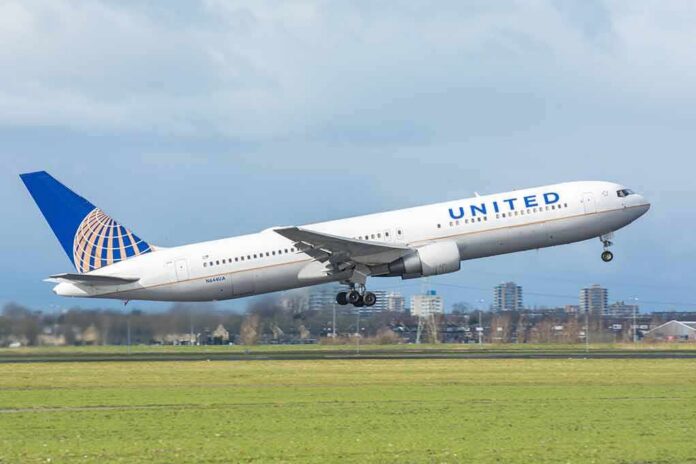
A United Airlines flight sent a hijack alert after a passenger said he had a bomb and tried to reach the cockpit, but the plane landed safely and the suspect was arrested, officials said.
Story Highlights
- United Flight 2174 landed safely in New Orleans after a midair bomb claim.
- Deputies arrested a 34-year-old passenger who allegedly tried to approach the cockpit.
- Authorities booked the suspect on felony counts tied to a false bomb threat.
- The case comes as unruly-passenger incidents remain a serious aviation concern.
What Officials Say Happened Onboard
Jefferson Parish deputies said a passenger on United Flight 2174 told crew he had a bomb and acted irrationally late Monday night. Pilots sent a hijack alert while continuing to New Orleans with 46 passengers and six crew members. After landing at Louis Armstrong New Orleans International Airport, deputies boarded the aircraft and arrested the suspect without incident. The sheriff’s office booked him on charges for communicating false information of planned arson and for terrorizing.
People magazine and other outlets named the suspect as 34-year-old Rony Gomez-Alberto and reported he tried to approach the cockpit during the flight. Those reports mirror the sheriff’s account that he claimed to have a bomb while in the cabin. Authorities have not reported any explosives found. The airline and local law enforcement treated the threat as real until they could secure the aircraft and passengers, which is standard after such claims.
Why Planes Treat Every Threat As Real
Airlines and airports do not gamble with bomb threats. Security teams assume the worst until they search the plane and clear the risk. Reuters reported that the vast majority of bomb threats turn out to be false alarms, but each one must be handled as if it is credible to prevent disaster. That protocol can mean alerts, diversions, escorts, and searches that slow travel but protect lives when seconds count.
These events also sit inside a broader pattern of disruptive behavior on planes. The Federal Aviation Administration (FAA) recorded 2,102 unruly-passenger incidents in 2024. Agency materials also note more than 150 Level 3 threats and over 40 Level 4 threats over the past decade. Those categories include violent acts and attempted cockpit breaches, which demand fast action from crews and trained passengers nearby.
How Crews Defend The Cockpit
Pilots and flight attendants train to lock down the flight deck at the first sign of a threat. After the attacks of September 11, 2001, airlines hardened cockpit doors and refined procedures to secure that space during flight. Risk research has warned that cockpit door transitions remain moments of potential weakness, so carriers rehearse quick, simple actions to block intruders and calm the cabin until law enforcement can meet the plane on the ground.
United Flight 2174 followed the playbook. Crew members reported the threat, pilots issued the alert, and the plane continued to an airport where deputies could respond and arrest the suspect. No passengers or crew were reported injured in the incident. Local prosecutors will decide next steps on felony charges tied to the alleged false bomb claim and related conduct once investigators finish their reports.
What This Means For Travelers And For Trust
Travelers can expect swift, strict responses to any bomb claim, even if it later proves false. This protects the cabin, but it also strains patience and schedules. Europe saw waves of hoax threats recently, which forced searches and delays even when nothing was found. Officials say there is no safe shortcut: speed and caution must work together, every time, to stop the one real threat that could slip through.
✈️ United flight triggers hijack alert after passenger claims bomb threat.
A suspect attempted to storm the cockpit on a flight bound for New Orleans.
Authorities arrested the individual following the mid-air security incident.#AviationSafety #UnitedAirlines pic.twitter.com/D8K8y4RPaD— WorldScopeX (@WorldScopeX2) November 11, 2026
Many Americans across the political spectrum worry that basic government duties are slipping. They see rising unruly behavior and threats, yet slow fixes and finger-pointing. This case shows frontline workers—pilots, flight attendants, and local deputies—doing the hard work that keeps people safe. Clear rules, quick action, and real consequences matter. They help keep faith that systems can still work when trained people are empowered to act and held to results, not headlines.
Sources:
pjmedia.com, en.royanews.tv, timesnownews.com, dailymail.com, kpel965.com, faa.gov
© patriotpostnews.com 2026. All rights reserved.