

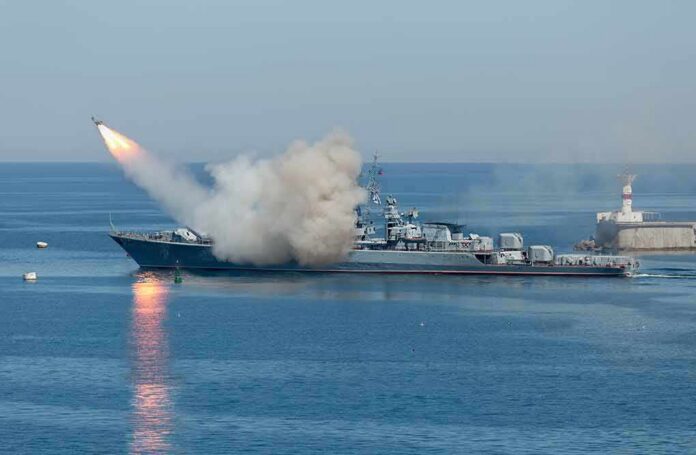
A Russian warship was wrecked at Libya’s Benghazi naval base after explosions and fire, and Libyan authorities say sea drones were likely used.
Story Snapshot
- Eastern Libya launched a joint probe with Russia after a suspected drone strike hit a Russian ship.
- Two Libyan military officials said multiple sea drones came from western Libya; two reached the target.
- Satellite analysis identified the vessel as the Russian corvette Merkury, seen burned and capsized.
- Ukraine has not claimed responsibility, leaving attribution under investigation.
What Officials Say Happened in Benghazi
Eastern Libya’s government said a suspected drone attack caused an explosion on a Russian ship at the Benghazi naval base on November 22, 2026. Leaders announced a joint investigation with Russia to identify who launched the attack and how it was carried out. Two Libyan military officials described a complex strike. They said multiple sea drones were launched, defenses intercepted several, and two hit the vessel, causing severe damage and a major fire at the pier.
Reporters on the ground and regional outlets described flames and black smoke rising from the harbor. Follow-up accounts said the ship was left burned and capsized at the berth. Those details suggest a large blast and intense heat, yet they do not prove who was behind the operation. Officials framed the event as suspected drone warfare, pending evidence from the ongoing probe that could include radar logs, recovered debris, and port security video.
Identifying the Targeted Vessel
Satellite imagery reviewed by analysts pointed to the target being the Russian Navy corvette Merkury. Reuters, cited by Al-Monitor, reported that imagery analysts identified the hull at the Benghazi pier and assessed the visible damage pattern after the fire. That imagery supports that a modern warship was heavily damaged, and possibly lost, though only a formal survey can confirm whether it sank or can be salvaged.
Public reporting varied on the ship’s final condition. Some outlets said the Merkury was almost certainly destroyed, while others stuck to “severely damaged,” reflecting the lack of an official damage report. The pictures and descriptions match a serious strike, but precise outcomes still need verification by a joint Libyan-Russian assessment or an underwater survey of the pier area.
Attribution: Claims, Gaps, and Why They Matter
Two Libyan military officials told the Associated Press the sea drones came from western Libya, where they said Ukrainian forces run a base. That claim lines up with Libya’s east-west split, with Benghazi in the east and rival power centers in the west. However, Ukraine has not claimed responsibility. That silence leaves the attribution as “suspected,” with open questions about launch site, personnel, and control of the drones.
https://twitter.com/Zoltan__D/status/2124783776265904259
Media and commentators have suggested a link to Ukraine’s growing use of sea drones beyond the Black Sea, and The War Zone cited a Ukrainian source asserting involvement by Ukraine’s security service. Those claims remain unconfirmed by Kyiv. Until investigators release debris evidence, serial numbers, or communications intercepts, the public record establishes the strike and damage more clearly than it proves who ordered it or why.
Why This Reaches Beyond Libya
This incident shows how cheap, fast sea drones can threaten large warships in ports far from the front lines. That raises risks for shipping and energy flows in the Mediterranean. It also exposes a bigger trust gap. Governments race to frame the story, while hard proof takes time. Citizens across the political spectrum see the pattern: officials demand patience, narratives harden early, and the truth often arrives late, if at all.
What to Watch Next
Watch for the joint Libyan-Russian investigation to release photos of recovered drone parts, radar logs, and chain-of-custody details. Look for independent satellite imagery that shows activity at any alleged launch site in western Libya. Expect pressure at the United Nations after eastern Libya requested international review. Clear answers on whether the Merkury sank, and whether other ships were hit in the same operation, will shape regional security and future maritime insurance costs.
Sources:
foxnews.com, upi.com, thehill.com, ilfoglio.it, al-monitor.com
© patriotpostnews.com 2026. All rights reserved.