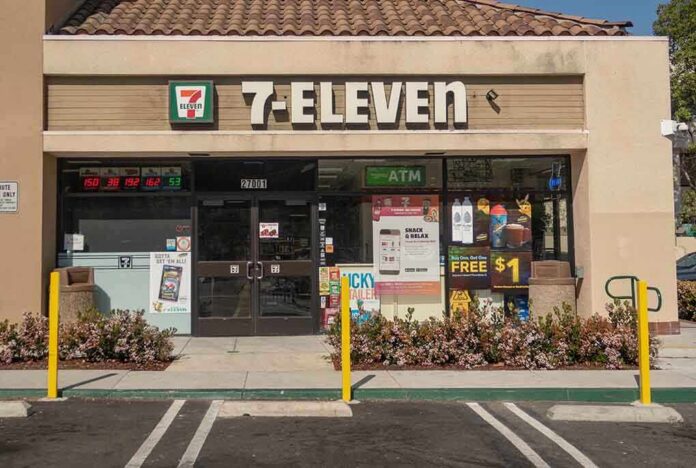
A single anti-ICE outburst at a Minneapolis 7-Eleven subsidiary is now putting a nationwide federal fleet-card partnership on the chopping block.
Quick Take
- Border Patrol Commander Gregory Bovino and federal agents were denied service at a Minneapolis Speedway location owned by 7-Eleven after a manager said the store doesn’t support ICE.
- A viral video posted Jan. 21, 2026, turned a local incident into a federal procurement issue with national consequences.
- The General Services Administration (GSA) sent 7-Eleven a Feb. 5 letter demanding details on training, internal review steps, and fleet-card policies tied to federal fueling access.
- GSA warned that continued uncertainty could jeopardize 7-Eleven’s acceptance of SmartPay fleet cards used by federal agencies, including DHS.
Minneapolis denial escalates from store dispute to federal contract scrutiny
U.S. Border Patrol Commander Gregory Bovino and other federal agents were turned away at a Speedway gas station in Minneapolis, a brand owned by 7-Eleven, after attempting to purchase fuel and items. Video of the interaction shows a manager telling the agents, “I don’t support ICE, and nobody here does,” before the group leaves without being served. The incident occurred in late January 2026 and quickly drew national attention once it circulated online.
The trigger for the broader political and business fallout was the viral post by conservative activist Cam Higby on Jan. 21, 2026, which framed the exchange as a refusal to serve federal law enforcement carrying out immigration-related duties. While the video does not itself document internal company policy, it did create a clear, time-stamped record of frontline staff behavior. That visibility matters because federal agencies rely on predictable access to basic commercial services during routine operations.
GSA’s Feb. 5 letter targets SmartPay access and demands compliance answers
GSA Deputy Administrator Michael Lynch sent a formal letter dated Feb. 5, 2026, to 7-Eleven COO Doug Rosencrans seeking detailed information on how the company is handling the incident. The letter requests information on any internal investigation, employee training content, and policies governing acceptance of federal fleet cards. GSA also emphasized that it is evaluating “program-related actions,” a signal that participation in the SmartPay ecosystem is not guaranteed if compliance concerns remain unresolved.
At the center of the dispute is GSA SmartPay, the purchasing and fleet-card system used broadly across the federal government for non-tactical purchases, including vehicle fueling. Speedway’s presence in that network gives federal drivers—often operating on tight schedules—a reliable, widely available option. GSA’s warning effectively tells 7-Eleven that store-level political activism cannot interfere with basic service obligations tied to a federal payment program, particularly when the end users include DHS components like ICE and CBP.
A pattern of refusals in Minneapolis adds pressure on national chains
Reporting around the Speedway incident situates it within a wider Minneapolis-area climate where anti-ICE sentiment has appeared in public-facing business decisions. Prior examples cited in coverage include a Hampton Inn in Lakeville that was removed from GSA’s approved lodging list after denying ICE stays—despite corporate-level efforts to resolve the matter—and a McDonald’s location that displayed “ICE/CBP not welcome” signage before the company ordered it removed. These episodes show how local actions can trigger corporate and federal responses.
The common thread is federal leverage through procurement: when a vendor benefits from federal travel, lodging, or fleet programs, the government can set participation conditions and pull listings if those conditions are not met. From a limited-government perspective, Americans often prefer less federal involvement in markets. But the government also has an obligation to ensure its own operations are not obstructed by ad hoc political gatekeeping—especially when the service at issue is routine commerce, like buying fuel, not a discretionary endorsement of policy.
What remains unknown as 7-Eleven stays quiet
As of early February 2026 coverage, 7-Eleven had not provided a public response to inquiries reported by Fox News, and no resolution had been announced. That leaves key questions unanswered: whether the Minneapolis location acted against corporate guidance, whether discipline or retraining occurred, and whether fleet-card acceptance policies are uniform and enforced across locations. With the inquiry still open, the most concrete facts remain the video, the timeline, and the GSA letter’s compliance demands.
Trump Admin Threatens to Pull MASSIVE Federal Contract From 7-Eleven After Radical Leftist Employee Denies Service to US Border Patrol https://t.co/jM6KEIlVEl #gatewaypundit via @gatewaypundit
— Debra Dosch (@DebraDosch) February 13, 2026
The stakes extend beyond one store because GSA’s action functions as a warning shot to any national chain participating in federal purchasing systems. If federal vehicles lose easy access to widely distributed fuel networks, operations can be disrupted and costs can rise as agencies scramble for alternatives. For 7-Eleven, the risk is reputational and financial, since SmartPay usage represents steady transactional volume. For the public, the episode underscores a basic principle: politics at the register can collide with the rule-of-law expectations that keep government functions running.
Sources:
7-Eleven to Pay Record $4.5 Million Penalty to Settle FTC Antitrust Order Violation Case
Trump administration warns 7-Eleven after Border Patrol’s Gregory Bovino refused service