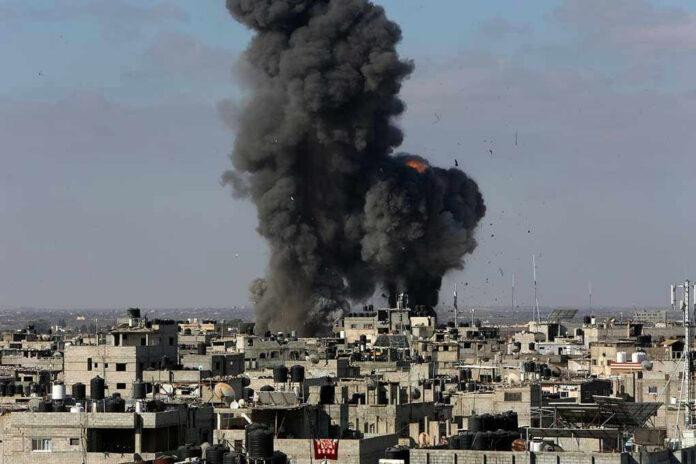
Three U.S. F-15E Strike Eagles falling out of the sky over a key Middle East ally—while Americans are told to shelter in place—shows how fast a regional conflict can spiral into chaos.
Story Snapshot
- Three U.S. F-15E Strike Eagles crashed over Kuwait on March 1-2 during combat operations tied to “Operation Epic Fury.”
- U.S. Central Command said the jets were mistakenly shot down by Kuwaiti air defenses amid Iranian missile, drone, and aircraft threats.
- All six aircrew members ejected safely and were recovered in stable condition, according to U.S. and Kuwaiti statements.
- The U.S. Embassy in Kuwait issued shelter-in-place guidance as missile and drone threats continued in the area.
Friendly-Fire Losses: What Happened Over Kuwait
U.S. Central Command said three F-15E Strike Eagle jets went down over Kuwait late March 1 into March 2 during operations connected to strikes and air defense activity in the region. CENTCOM attributed the losses to mistaken identification by Kuwaiti air defenses, not to Iranian weapons. Video posted online showed aircraft descending in flames in a flat spin. Officials said the two-person crews ejected and were recovered safely.
Kuwait’s Ministry of Defense publicly acknowledged that “several” U.S. aircraft crashed and emphasized that the crews were safe and that Kuwaiti and U.S. forces were coordinating technical measures. Reporting also indicated one crash site was geolocated roughly 10 kilometers from Ali Al Salem Air Base, a major hub for U.S. air operations in Kuwait. As of March 2, the exact sequence of misidentification was still under investigation.
Why the Embassy Shelter Order Matters to Americans
The U.S. Embassy in Kuwait issued warnings tied to missile and drone threats, directing U.S. personnel and advising American citizens to shelter in place as the situation developed. That guidance matters because it signals an active threat environment beyond a single aviation incident. The embassy messaging aligned with broader reporting that Iranian attacks in the area had intensified, with ongoing concerns that additional strikes could target bases or other facilities.
Stars and Stripes reported that Iran struck a U.S. base in Kuwait over the weekend, killing three U.S. Army soldiers, a key backdrop to the heightened alert posture. That loss helps explain why air defense systems and pilots were operating in a high-pressure, fast-moving environment. When missiles and drones are inbound, seconds matter—and the margin for error shrinks, especially when allied forces are defending the same airspace where U.S. aircraft are flying combat missions.
Operation Epic Fury and the Problem of Crowded, Contested Skies
Multiple reports described the crashes occurring during the third day of “Operation Epic Fury,” as the U.S. faced Iranian aircraft, ballistic missiles, and drones targeting U.S. assets. Kuwait hosts crucial U.S. facilities, including Ali Al Salem and Ahmad al-Jaber, and sits within reach of regional missile and air defense capabilities. In that kind of environment, identifying friend versus foe is not a political talking point—it is a life-or-death technical requirement.
Analysts cited in coverage questioned Iran’s claim that it shot down the jets, pointing instead to friendly fire as the more consistent explanation given locations and the proximity to defended bases. At the same time, officials have not publicly confirmed which specific system fired the shots. That gap matters: without confirmed details, outside commentary can only go so far. What is confirmed is the U.S. command’s attribution to allied air defenses and the fact that all aircrew survived.
A 23-Year Echo: The 2003 Patriot Incident as a Warning
The incident also revived a hard historical parallel. Reporting noted that in March 2003, a U.S. Patriot battery shot down a British RAF Tornado near Ali Al Salem during the opening phase of the Iraq War, killing two crew members. That tragedy underscored how quickly “blue-on-blue” can happen when warning systems, identification protocols, and human decision-making collide under pressure. The 2026 Kuwait losses show that the same risk remains in modern coalition warfare.
US Embassy Orders Americans to Shelter in Place as F-15 Fighter Jets Fall From Sky in Kuwait https://t.co/rL9EeUyZm5
— The Gateway Pundit (@gatewaypundit) March 2, 2026
For Americans watching from home, the conservative takeaway is straightforward: a strong military still needs disciplined coordination and clear rules of engagement, especially when allies are on edge under attack. The shelter-in-place order and the friendly-fire losses highlight that Middle East escalations can impact U.S. service members and U.S. citizens quickly. As investigations continue, the key unanswered questions center on airspace deconfliction, identification procedures, and how to prevent a repeat.
Sources:
F-15 Spins Into The Ground While On Fire In Middle East
US F-15 fighter jet crashes in Kuwait
F15 jets Kuwait crash friendly fire