
Foreign student visa applicants will now face mandatory social media screening as President Trump’s administration implements comprehensive vetting to safeguard America’s national security interests from potential threats.
Key Takeaways
- U.S. embassies worldwide have resumed issuing student visas with strict new requirements for social media reviews of all applicants.
- Applicants must make their social media accounts public for thorough screening of attitudes toward American values and institutions.
- The changes follow a temporary halt in visa interviews for “F,” “M,” and “J” visa categories ordered by the Trump administration in May.
- Heightened scrutiny specifically targets those expressing hostile attitudes toward American citizens, culture, government, or founding principles.
- Harvard University faces particular penalties, including frozen subsidies and suspended eligibility to accept international students, due to inadequate handling of anti-Israel protests.
Enhanced Vetting Procedures for Foreign Students
The Trump administration has implemented significant changes to the international student visa process, requiring all applicants to undergo thorough social media screening before approval. According to reports from The Epoch Times, U.S. diplomats and consular officers must now conduct comprehensive reviews of applicants’ online presence as part of the vetting procedure. This enhanced security measure aims to identify potential threats by examining digital footprints for concerning content or associations before granting entry to the United States.
“U.S. diplomats and consular officers have been directed to perform reviews of the online presence of all applicants for student and exchange visitor visas, The Epoch Times learned on June 18,” stated The Epoch Times
The new directive comes after a temporary pause in visa interviews for categories “F,” “M,” and “J” ordered by the State Department in May. This pause was strategically implemented to allow time for the development of more rigorous screening protocols that would better protect American interests. With the resumption of visa processing, embassy staff are now equipped with clearer guidelines for identifying concerning patterns in applicants’ social media history that might indicate hostility toward American values.
📢 Heads up, international students!
The U.S. just hit pause on new student visa interviews (F, M, and J visas) — all while eyeing stricter social media checks for applicants. If you're planning to study in the U.S., this could seriously slow things down. Worried about your… pic.twitter.com/mNYLN0GrhZ— Reddy Neumann Brown PC (@rnlawgroup) June 2, 2025
Targeting Anti-American Sentiment
The enhanced screening specifically targets prospective students who may harbor negative attitudes toward the United States. Applicants will be scrutinized for expressions of hostility toward American citizens, culture, government institutions, or founding principles. This approach reflects the Trump administration’s commitment to ensuring that foreign students entering the country respect American values and do not pose ideological threats to campus environments already struggling with rising anti-Semitism and anti-American sentiment.
“Under new guidance, we will conduct a comprehensive and thorough vetting, including online presence, of all student and exchange visitor applicants,” stated the State Department
The State Department will specifically be investigating evidence of “hostile attitudes toward our citizens, culture, government, institutions, or founding principles,” as reported by The Washington Post. This language indicates a deliberate focus on protecting America’s cultural integrity and constitutional foundations from foreign influences that may be antagonistic to traditional American values. The measure has drawn strong support from those concerned about the infiltration of radical ideologies through academic channels.
Consequences for Universities Failing to Uphold Standards
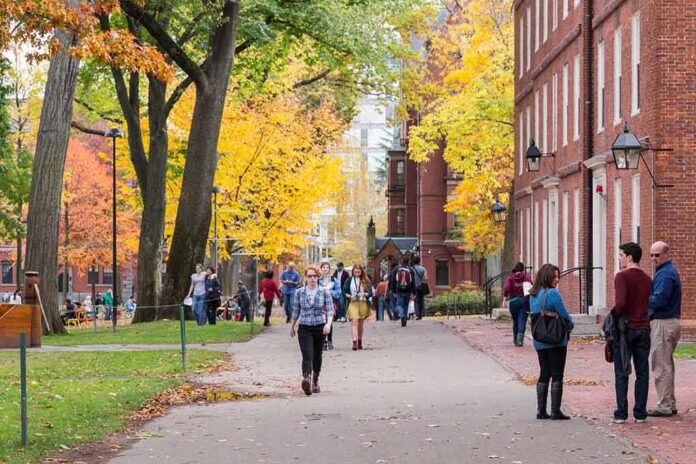
The Trump administration has taken decisive action against universities that have failed to address anti-Semitism and anti-American protests on their campuses. Harvard University stands as the most prominent example, now facing frozen federal subsidies and suspended eligibility to accept international students due to its permissive approach toward demonstrations against Israel. This sends a clear message that educational institutions receiving federal funding and hosting foreign students must maintain environments that respect American allies and values.
The more rigorous vetting process will likely reduce the overall volume of student visa approvals as embassy and consular staff face increased workloads. Critics argue this may impact America’s ability to attract global talent, but supporters counter that quality, not quantity, should be the priority when admitting foreign students. The administration’s focus on ensuring that those who enter on student visas genuinely share or at least respect American values represents a significant shift in immigration policy priorities.
By implementing these enhanced screening measures, the Trump administration demonstrates its commitment to national security through careful evaluation of who enters the country, even on temporary educational visas. This approach acknowledges the potential influence of foreign students on American campus culture and seeks to ensure that this influence aligns with rather than undermines traditional American values and interests.