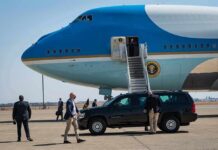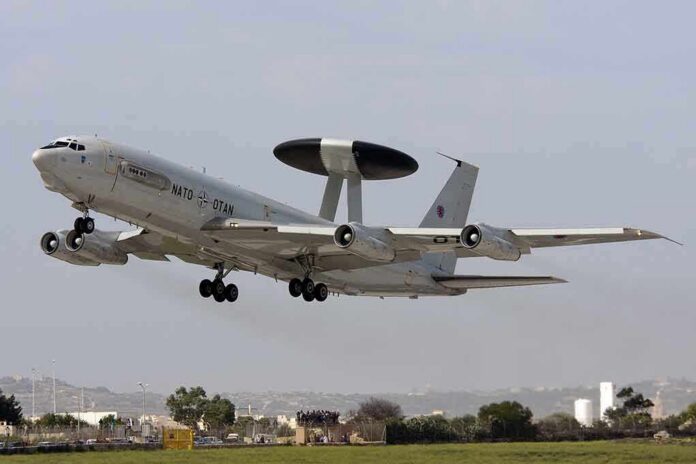
A small Baltic nation on Russia’s doorstep is now openly signaling it may welcome American nuclear weapons, turning NATO’s eastern flank into the most dangerous powder keg in Europe.
Story Snapshot
- Lithuania’s defence minister confirms talks on possible deployment of US nuclear capabilities tied to deterring Russia.
- NATO allies are weighing expanding nuclear-sharing to new frontline states, including the Baltics and Poland.
- Lithuania’s constitution currently bans weapons of mass destruction and foreign bases, forcing a showdown over amendments.
- Any deployment would be long-term planning, but Moscow and anti-nuclear activists are already shaping the narrative.
Lithuania Moves From Rhetoric To Real Nuclear-Hosting Talks
Lithuania’s Defence Minister Robertas Kaunas has publicly confirmed that his country is actively engaged in allied talks about expanding the deployment of United States nuclear capabilities in Europe, with Lithuania clearly signaling it wants a seat at the table.[3] Speaking in the Lithuanian parliament, Kaunas stated that “discussions are indeed taking place” and stressed that Lithuania is “certainly not standing on the sidelines,” directly linking nuclear capabilities to deterrence and national security.[3] These are not speculative media rumors but acknowledged government-level consultations with Washington.[1][3]
Reporting based on Financial Times sources indicates that the United States is looking at broadening its existing nuclear-sharing arrangements beyond the six North Atlantic Treaty Organization countries that currently host American nuclear weapons, including new dual-capable aircraft able to perform nuclear missions.[3] Lithuania is participating in those discussions as part of wider allied planning on the eastern flank, alongside nations like Poland and other Baltic states.[3] Kaunas emphasized that details remain classified, confirming that the talks are occurring at a serious working level rather than as political showmanship.[1][3]
Constitutional Roadblocks And A Brewing Legal Showdown In Vilnius
Lithuania’s leaders are openly wrestling with a hard legal reality: their own constitution forbids both weapons of mass destruction and foreign military bases on Lithuanian soil, which directly complicates any move to host American nuclear assets.[3] State media report that this issue came to a head after President Gitanas Nausėda vetoed amendments that would have allowed ships carrying nuclear weapons to enter the Klaipėda State Seaport, prompting wider debate over constitutional changes.[3] Senior figures, including the president, the speaker of parliament, and key committee chairs, now say they do not rule out opening discussions on amending the constitution.[3]
This means that before a single American bomb or dual-capable aircraft could be stationed in Lithuania, conservative and pro-sovereignty lawmakers would have to decide how far they are willing to reinterpret or revise a foundational safeguard that was originally designed to keep Soviet-era weapons out.[3] Some opposition politicians already back exploring nuclear hosting as part of a stronger deterrence posture, giving the idea a real domestic constituency rather than leaving it to fringe voices.[3] At the same time, anti-nuclear advocacy networks highlight the constitutional ban and argue that any loosening would erode hard-won restraints on weapons of mass destruction.[2][3]
NATO’s Eastern Flank, Russian Pressure, And Conservative Concerns For US Interests
Across Europe, debates over hosting United States nuclear assets typically arise when frontline states feel the Russian threat rising, want to signal resolve, and can plug into existing NATO nuclear-sharing frameworks; Lithuania fits that pattern precisely.[3] The Financial Times reporting cited by Lithuanian media says Washington is examining potential deployments in additional eastern-flank states, with any changes unlikely to occur in the short term, underscoring that this is long-range posture planning rather than an imminent deployment.[3] Yet Moscow is expected to frame even exploratory talks as provocative escalation, leveraging propaganda to blame the West for tensions.
@Lithuanian_MoD Robertas Kaunas clarified that US nuclear deployment is not being discussed as a peacetime measure. Lithuania’s Constitution currently restricts the deployment of nuclear weapons.
“Lithuania must defend its independence and security in times of crisis. And…
— Linas Kojala (@LinasKojala) June 4, 2026
For American conservatives, the situation raises several serious questions that go beyond European political theater and touch directly on United States security, spending, and alliance commitments. Lithuania’s profile in international anti-nuclear campaigns shows that, despite its constitutional ban, it still supports NATO’s identity as a nuclear alliance and backs the potential use of nuclear weapons on its behalf, while refusing to join the Treaty on the Prohibition of Nuclear Weapons.[2] That posture means United States taxpayers and servicemembers continue carrying the nuclear deterrence burden for allies who want the protection but retain veto power through domestic law or politics if conditions change.[2][3]
Deterrence Promise, Escalation Risks, And What Is Still Unknown
Supporters in Lithuania argue that bringing American nuclear capabilities closer to Russia’s borders would strengthen deterrence and reduce the odds of aggression, but no publicly available military analysis yet demonstrates how much that move would measurably change the balance.[3] Officials have not released details on whether discussions involve warheads, permanent storage sites, dual-capable aircraft rotations, or purely contingency rights, leaving crucial questions about survivability, targeting, and command-and-control unanswered.[3] Lithuanian authorities acknowledge that key aspects of the talks are classified, limiting citizens’ and allies’ ability to scrutinize escalation risks or costs.[1][3]
What is clear is that the issue will not disappear quietly: nuclear-hosting debates tend to polarize into simplified narratives of “deterrence versus escalation,” while unnamed-source leaks and activist campaigns fill the gaps before official documents ever see daylight.[3] In Lithuania’s case, the constitutional barrier guarantees a drawn-out political fight, during which Russian messaging and international pressure will attempt to sway public opinion. For American readers who value strong defense and limited, accountable government, the emerging Baltic nuclear question bears close watching as it tests how far Washington should extend its nuclear shield—and at what price in risk, secrecy, and long-term commitments.[2][3]
Sources:
[1] Web – POWDER KEG BALTICS: Lithuania Wants To Host US Nukes in Its Territory
[2] Web – Lithuania involved in discussions on possible US nuclear … – LRT
[3] Web – Lithuania | Treaty on the Prohibition of Nuclear Weapons
© patriotpostnews.com 2026. All rights reserved.