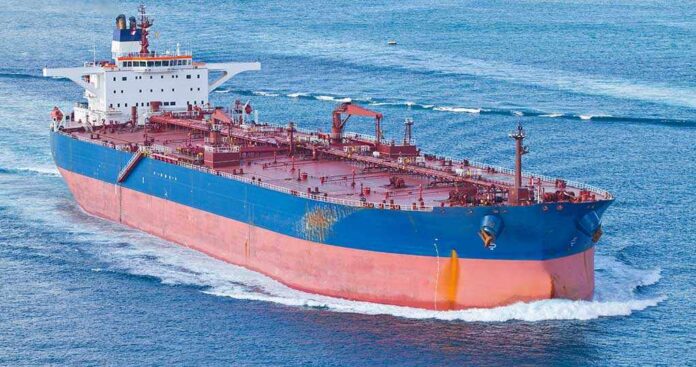
The Strait of Hormuz has stayed partly open even as the United States blocked Iranian ports and Iran warned ships away.
Quick Take
- U.S. forces imposed a military blockade on Iranian ports, and at least two tankers turned back on Monday after it began.
- Traffic through the strait has not stopped completely, but it remains far below normal levels.
- Iran says ships must use approved routes and, in some cases, seek permission before crossing.
- Real-time vessel data and official claims do not fully match, which has deepened confusion over who can sail safely.
Ports Blocked, Strait Still Partly Moving
The United States imposed a military blockade on Iranian ports in the Strait of Hormuz, and at least two oil or chemical tankers turned away soon after it began. U.S. Central Command said the blockade covers vessels tied to Iranian ports, including traffic in the Arabian Gulf and Gulf of Oman. At the same time, reporting from April said Iran described the strait as open for coordinated commercial transit during a ceasefire.
That split matters because the Strait of Hormuz carries a huge share of the world’s oil, so even small disruptions ripple far beyond the region. Reuters said shipping through the strait had fallen sharply, while BBC Verify found 99 vessels crossed in March despite repeated attacks. The picture is not total shutdown, but it is also not normal commerce. For ship owners, insurers, and energy buyers, that gap is the whole problem.
What the Traffic Data Shows
Recent data shows a narrow and uneven flow of ships, not a steady stream. BBC reported that nearly 100 vessels crossed in March, averaging five to six daily. Later, after the April 8 ceasefire, Kpler data said at least 172 ships crossed, with 42 on one Saturday. CNN also reported 25 commercial vessels on a Thursday after the June 17 memorandum of understanding, the highest level since April.
Those numbers help explain why both sides keep making competing claims. Iran points to the need for route approval and safe passage rules, while U.S. officials say the strait itself remains open for transit. Yet live trackers and maritime reports also show many ships turning back, idling, or avoiding the area. That leaves a practical reality that sits between the two slogans: some ships move, many do not.
Why The Dispute Keeps Escalating
Iran’s warnings have become more direct. Reports quoted Iranian forces telling ships that unauthorized crossings could be targeted, and that vessels should use designated routes or seek permission. Wall Street Journal reporting also described a recorded warning from Iranian naval forces saying ships without authorization could be hit. At the same time, Reuters reported that six Iranian tankers were forced to return because of U.S. blockade enforcement.
🚢 Strait of Hormuz vessel traffic drops over 50% amid renewed attacks
📍 Commercial crossings fall about 52% between July 10 and 12 near strategic waterway, as ships shift to perceived safer routes, MarineTraffic says
— Markets Today (@marketsday) July 13, 2026
The broader effect is a market and policy trap. Shipping firms face military risk, unclear rules, and insurance pressure at once. Reuters and other maritime reports said traffic had collapsed at points during the conflict, and live dashboards showed zero outbound commercial traffic at some moments. That creates the kind of uncertainty that feeds public anger on both sides: one camp sees coercion, the other sees chaos, and ordinary trade pays the price.
Sources:
insiderpaper.com, hormuzstraitmonitor.com, aljazeera.com, hormuztracking.com, statista.com, bbc.com, cnn.com, reuters.com, argusmedia.com, theguardian.com, gulfnews.com
© patriotpostnews.com 2026. All rights reserved.