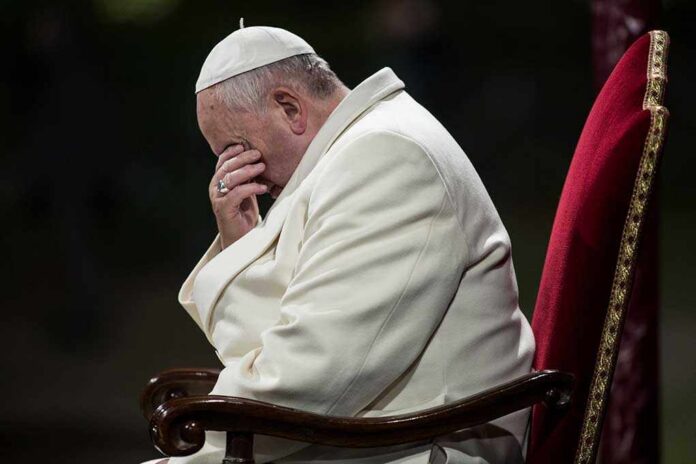
A cardinal once floated as a future pope is now sidelined by sexual assault claims from at least five women, raising fresh doubts about whether powerful church leaders ever face full accountability.
Story Snapshot
- At least five women have accused Cardinal Cristóbal López Romero of sexual assault, triggering a Vatican investigation.
- The cardinal admits “inappropriate behavior toward adult women” but firmly denies assault, violence, or sexual harassment.
- No criminal case exists in Morocco so far; the process is fully inside the Catholic Church’s system.
- The case fits a long pattern of abuse claims where church authorities, not public courts, control the outcome.
A powerful cardinal, serious claims, and an internal Vatican probe
Spanish-born Cardinal Cristóbal López Romero, the Archbishop of Rabat in Morocco, has stepped back from all public and pastoral duties after at least five women accused him of sexual assault in reports gathered by the Agence France-Presse news agency. A formal written complaint sent to the Vatican embassy in Rabat describes unwanted physical contact, including “particularly insistent and prolonged hugs” and an attempted kiss that the woman says she barely avoided. The Vatican has confirmed that “competent authorities of the Holy See” have opened a preliminary investigation into the allegations.
Agence France-Presse reporters say they spoke directly with one retired church worker and reviewed written testimony from a second woman, both accusing the seventy-four-year-old cardinal of sexual assault. A church source in Rabat told AFP that at least three additional women may have experienced similar behavior, though some of those reports came during confession and could not be independently checked. A Moroccan lawyer who focuses on sexual violence said the alleged behavior could amount to aggravated sexual harassment and aggravated sexual assault, especially because it involves a figure with spiritual authority over the women.
The cardinal’s denial and a process kept behind church doors
Cardinal López Romero responded with a formal public statement in which he said, “I have not committed any assault, violence, or sexual harassment,” while admitting he is “accused of inappropriate behavior toward adult women.” He announced that he would not preside over public worship or take part in pastoral activities “so as not to hinder” the investigation and stressed that the case is in the hands of Roman church authorities with whom he is cooperating. Moroccan judicial sources say there is no registered criminal complaint against him in the country’s justice system, meaning there is no state-led investigation at this time.
The clash between the women’s testimony and the cardinal’s sweeping denial leaves a sharp gap in the public record. The written complaint describes specific actions, such as long, intense embraces and an attempted kiss, but the cardinal has not publicly answered each detail point by point. All known evidence is testimonial; reports so far do not mention physical or forensic proof, medical records, or sworn depositions. The identities and full statements of the five accusers also remain private, which protects them but makes it hard for outsiders to judge credibility on their own.
Why this case hits a nerve in a country tired of elite impunity
López Romero was viewed in some media as a possible successor to Pope Francis, which raises concerns that senior church officials might feel pressure to protect him and the institution’s image. This possibility echoes a decades-long pattern: abuse claims against Catholic clergy often get handled first, or only, inside church channels instead of open courts. Research on Catholic abuse scandals shows thousands of clergy accused worldwide, yet many cases never reach criminal trial, feeding public anger toward systems that appear to shield the powerful.
For many Americans on both the right and the left, this story taps into a familiar frustration. People see one more example of a global institution, led by elites, investigating itself behind closed doors while ordinary victims rely on faith that the system will do the right thing. Conservatives who resent unaccountable “deep state” actors and liberals who fear unchecked power over the vulnerable can both recognize the risk when a church, a government, or any large body keeps critical facts out of public view. They worry that repeated abuse scandals show how far today’s leaders have drifted from basic ideas of equal justice, personal responsibility, and respect for human dignity.
Sources:
reuters.com, dawn.com, youtube.com, rtve.es, andersonadvocates.com
© patriotpostnews.com 2026. All rights reserved.