As Venezuelan families sleep in tents beside collapsed towers, a faith-based U.S. charity is quietly serving tens of thousands of hot meals while governments and “global elites” argue over what to do next.
Story Snapshot
- Back-to-back major earthquakes in Venezuela killed thousands and left tens of thousands injured and missing, exposing deep gaps in government disaster readiness.
- Christian aid group Convoy of Hope says its teams were already on the ground, serving food, water, and hot meals from mobile kitchens within hours.
- The group reports more than 30,000 hot meals served, plus tents, hygiene kits, and clean water for displaced families and rescue crews.
- Official counts and media reports still do not fully match, highlighting how citizens must often rely on charities instead of clear, trusted government information.
Earthquakes Expose Human Cost When Systems Fail
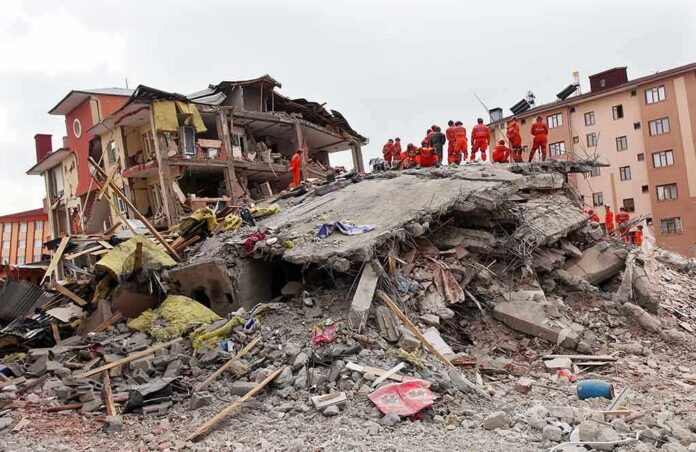
On June 24, 2026, two massive earthquakes hit northern Venezuela, measured about 7.2 and 7.5 in strength and striking within seconds of each other. They collapsed high-rise homes, hotels, and businesses, leaving people trapped under concrete and steel. Early reports spoke of more than 160 dead and nearly 1,000 injured, with numbers rising as rescuers dug through rubble. Later coordination minutes cited about 4,490 deaths, 16,740 injured, and over 25,000 people living in temporary camps.
Rescue workers and local doctors described entire blocks of buildings down, including 15- to 20-story towers, and hundreds of people still trapped days later. Families who once lived in apartments were suddenly forced into parks and streets, afraid to return to cracked and leaning structures. United States officials said the quakes caused “significant damage” across several cities and warned that full assessments would take time as aftershocks and debris blocked access. For ordinary Venezuelans, the disaster added to years of economic crisis and distrust in national leadership.
Convoy of Hope’s Rapid On-the-Ground Response
Global relief group Convoy of Hope, based in Springfield, Missouri, says it was already on the ground in Venezuela as news of the quakes spread. A company update stated that its teams were “currently providing life-sustaining immediate relief, including food, water, and hot meals from mobile kitchens” in some of the hardest-hit areas. A video message repeated that teams were on the ground “right now” delivering food and water from mobile kitchens and promised support “for the long haul.” This early presence matters when official systems are slow or overwhelmed.
Field reports and social posts from Convoy staffer Ethan Forhetz show him on scene, describing a “dire” situation and daily deliveries of food, water, and essential supplies to survivors and rescue workers. Convoy later said it served more than 30,000 hot meals in the worst-hit communities, alongside ongoing distribution of food and clean water to displaced families and search-and-rescue teams. Local TV coverage in Missouri echoed that teams had been in Venezuela since the quakes hit, bringing meals, water, and tents for families too afraid to sleep in damaged buildings.
Charities Step In Where Governments Come Up Short
International aid did arrive, including search teams from other countries and large groups like Project Hope and United Nations-linked partners, but coverage of the response shows a familiar pattern. Governments and big agencies held meetings, issued statements, and talked about logistics, while smaller charities and churches quietly moved food, water, and basic shelter to people living outside in fear. Convoy of Hope and similar Christian groups are cited as providing clean drinking water, shelf-stable food, hygiene kits, and hot meals from mobile kitchens placed near affected neighborhoods.
Official numbers about deaths, injuries, and missing people shifted as days passed, from a few hundred dead in early media reports to several thousand in later United Nations-coordinated figures. That kind of change is common in disasters, but it feeds the sense, on both the right and the left, that ordinary people are the last to get clear truth while elites focus on image and control. When casualty counts move by thousands, families in tents may trust the team handing them dinner more than a distant ministry office.
Why This Story Resonates With Americans on Both Sides
For many Americans, Venezuela’s tragedy taps into wider anger at how large systems fail real people. Conservatives see a broken state, heavy on promises and light on protection, after years of global deals and mismanaged spending that did not keep buildings safe or infrastructure strong. Liberals see deep inequality, where poor families suffer most from crumbling structures and thin safety nets, while the powerful fly over disaster zones for photo ops. Both sides see a pattern: regular people pay the price.
The #STLCards recently partnered with Convoy of Hope to raise funds for their effort in Venezuela after the earthquakes and you can still donate down below!
Convoy is all around the world responding to disasters and fighting against poverty. I got to see first hand this week…
— Josh Jacobs (@joshjaco98) July 25, 2026
Convoy of Hope’s story cuts across that divide. A mid-sized, faith-based charity claims no special ties to political elites. It shows teams cooking hot meals beside rubble and handing bottled water to parents and rescue crews. Its reports are emotionally charged and clearly connected to fundraising, so they deserve independent verification, yet they match the basic outline given by mainstream outlets and official coordination minutes. Whether one leans right or left, this looks like citizens stepping up where governments did not.
Limits of the Evidence and The Need for Vigilance
The record we have still has gaps. Most damage claims come from aid groups and survivors rather than engineering surveys or detailed city-by-city building reports. Convoy of Hope’s meal counts and water distributions are based on its own statements, not public shipping logs or beneficiary audits. Casualty figures vary by source and date, and we do not yet see a single, settled, official tally that ties every report together. That is normal early in a major disaster, but it also means citizens must stay watchful.
For Americans worried about a “deep state” or unaccountable elites, Venezuela’s earthquakes are a warning sign. When a crisis hits, regular people often depend first on neighbors, churches, and front-line charities, while political leaders argue and systems lag behind. Convoy of Hope’s work in Venezuela appears real and life-saving, yet its very visibility highlights the core problem: in moments of greatest need, the people closest to the pain are usually the ones doing the most, and the ones with the least power.
Sources:
youtube.com, convoyofhope.org.uk, streetinsider.com, facebook.com, cbn.com, ky3.com, gna.news, logcluster.org, reuters.com, gofundme.com
© patriotpostnews.com 2026. All rights reserved.