One of the world’s biggest chip makers is betting another €5 billion on Ireland to power the next wave of artificial intelligence.
Story Snapshot
- Intel is investing €5 billion to upgrade and expand its Leixlip chip manufacturing campus in Ireland.
- The site makes advanced Intel 3 wafers and is described as Europe’s most cutting-edge semiconductor factory.
- The move fits a wider European Chips Act push to double Europe’s share of global chip production by 2030.
- The project raises shared questions about subsidies, corporate power, and who really benefits from massive tech deals.
Intel’s New €5 Billion Bet on Ireland
United States chip giant Intel announced a new €5 billion capital investment at its Leixlip campus in County Kildare, Ireland, marking the next phase in expanding the site’s manufacturing capacity. Intel says the money will upgrade existing fabrication buildings and install new high-end equipment, all aimed at meeting fast-growing demand for chips used in artificial intelligence and high-performance computing. The Leixlip campus already anchors Intel’s European manufacturing base and will now play a larger role in global data center supply chains.
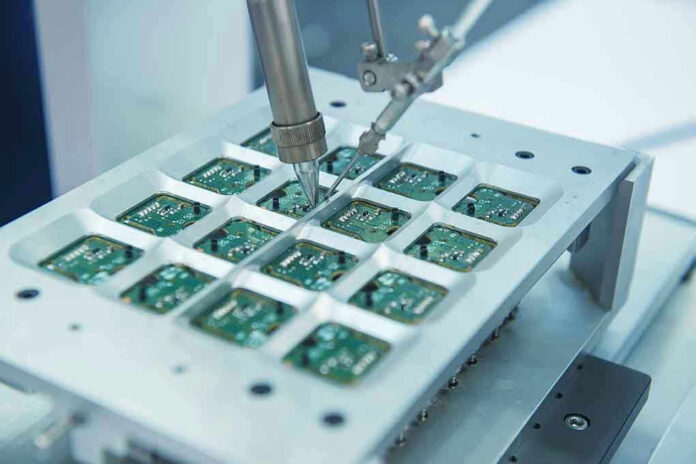
Intel reports that Leixlip produces chips on its Intel 3 process, which it calls the most advanced semiconductor manufacturing facility of its kind in Europe. Company leaders say the new investment will expand output of Intel Xeon 6 and next-generation Intel Xeon processors built on this node, chips designed to power “AI factories” and cloud computing systems. A key part of the project is extending an automated track system that links different modules on the campus into one faster, more efficient production line.
Jobs, Training, and Ireland’s “Silicon Isle” Ambition
Intel states that the €5 billion program will create permanent high-tech jobs and bring in specialized construction and equipment workers during the build-out phase. Over past upgrades, Intel says thousands of construction workers and several thousand Intel staff have been employed at Leixlip, turning the area into a major technology hub. Irish leaders often describe the region as a growing “Silicon Isle,” because total Intel investment in Ireland is now projected around €30 billion when earlier and current projects are combined.
Intel says the new investment will not just expand production but also advance research and development activities at Leixlip. According to reporting on the announcement, the company plans to retrain staff at the campus, preparing workers to run more complex manufacturing tools and AI-focused processes. For many Americans watching from afar, this raises familiar questions: will similar high-tech training and job growth happen in the United States, or will more of the next-generation factory work move to subsidy-rich regions overseas instead?
Part of a Bigger European Chips Strategy
European Union officials have pushed hard to grow the continent’s chip industry through the European Chips Act, which aims to double Europe’s share of global semiconductor output from about 10% to 20% by 2030. The law mixes public subsidies, looser state aid rules, and support for new factories to bring more strategic industries back onshore. Analysts note that most big chip plants announced in Europe since 2023 are tied, one way or another, to these incentives and public funds.
Intel has already outlined tens of billions of euros in planned chip investments across Europe this decade, describing the program as a way to grow the region’s full semiconductor “value chain.” Research from policy groups finds that companies like Intel benefit from large direct grants and tax breaks, while host governments gain prestige and local jobs but also take on long-term risks. Those risks include dependence on a few global firms, pressure to offer more subsidies, and political blowback if local communities feel they are paying the price for deals that mainly enrich multinational shareholders.
Subsidies, Corporate Power, and Public Frustration
For Americans across the political spectrum, news of another huge, subsidy-linked factory deal abroad taps into deeper frustration with how the global economy works. Many conservatives see decades of “globalist” policy choices as helping big corporations move key industries offshore, hollowing out United States manufacturing while taxpayers still foot bills for incentives at home. Many liberals see the same pattern as proof that powerful companies play governments against each other to secure subsidies while inequality grows.
INTEL TO INVEST €5 BILLION IN IRELAND TO BOOST AI CHIP PRODUCTION
🇮🇪 TRIVANE IRELAND UPDATE
Intel has announced a €5 billion ($5.7 billion) investment in its Leixlip campus in County Kildare to expand advanced semiconductor manufacturing.
The project will upgrade the…
— Trivane News (@TrivaneNews) July 13, 2026
Policy studies of chip acts in both the United States and Europe warn that huge public investments, if not tightly managed, can end up reinforcing corporate power more than national resilience. Ordinary citizens on both sides of the Atlantic see political and business elites celebrating multi-billion euro deals, but they still worry about high living costs, job insecurity, and shrinking chances to achieve the classic American Dream. Intel’s new €5 billion bet on Ireland adds another data point to a trend many already suspect: the race to control advanced chips is not just about technology, but also about who really holds power in modern economies.
Sources:
insiderpaper.com, newsroom.intel.com, investing.com, youtube.com, n-tv.de, bbc.com, semiwiki.com, csis.org, digital-strategy.ec.europa.eu, institutmontaigne.org, ifri.org
© patriotpostnews.com 2026. All rights reserved.