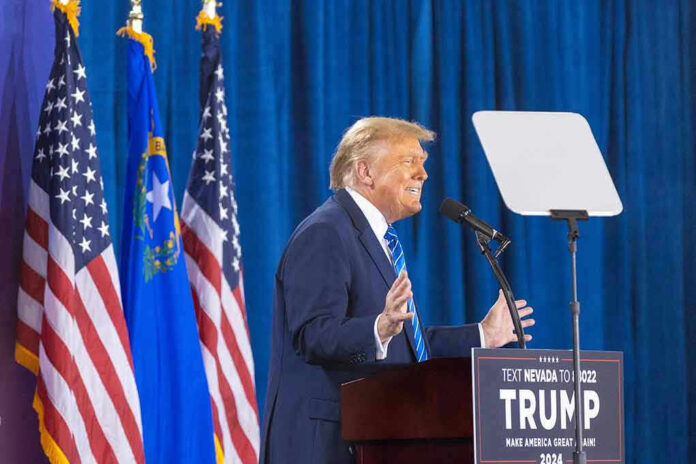
Trump once called him a “bullsh*t artist,” but the real show began when Elon Musk’s so-called “fatherly fixation” on the former president erupted into a public feud that’s got both MAGA diehards and Silicon Valley elites picking their jaws off the floor, as the billion-dollar bromance behind closed doors devolved into a circus of social media jabs, political fallout, and a conservative movement wondering who, exactly, is driving the Republican bus these days.
At a Glance
- Elon Musk’s “fatherly fixation” on Trump, as confirmed by Trump’s Chief of Staff, unraveled in spectacular fashion after a high-profile policy disagreement.
- The Musk–Trump alliance, once flush with campaign cash and public praise, ended in a dramatic, very public split over the “Big Beautiful Bill.”
- Musk’s flirtation with starting a third party threatens to fracture the conservative coalition ahead of the 2028 election.
- Their falling out exposes just how volatile and personality-driven the intersection of tech billionaires and presidential power has become.
“Fatherly Fixation” Gives Way to Family Drama in the Trump–Musk Saga
Back in the days when the border was wide open, inflation was eating away retirements, and “woke” policies were flooding our schools, the last thing anyone expected was a tech mogul swooping in to play kingmaker in conservative politics. Yet that’s exactly what happened: Elon Musk, the world’s richest man and a guy who once said Trump was “not the right guy” for America, went from Silicon Valley skeptic to Trump’s indispensable sidekick. By 2024, Musk wasn’t just throwing his weight—and $200 million—behind Trump’s campaign; he was handpicked to spearhead a government efficiency task force, much to the chagrin of liberal bureaucrats everywhere.
But as always seems to happen with outsized egos and unchecked ambition, the honeymoon didn’t last. The so-called “Big Beautiful Bill”—Trump’s legislative crown jewel—met with Musk’s public criticism, and the alliance that once seemed unbreakable imploded in a matter of days. Trump’s Chief of Staff, Susie Wiles, called it a “troublesome ending,” and the rest of us were left to watch the fireworks as the two went scorched earth on each other across Truth Social and X. Musk, ever the disruptor, decided maybe he’d just up and start his own party—a move some say could hand the next election straight to the Democrats. The question for conservatives: Who do you trust, and does anyone have the stomach for another round of ego-driven drama at the top?
When Alliances Are Built on Egos, Not Values
Digging into the timeline, the Trump–Musk relationship was always a powder keg. Musk started out backing Hillary Clinton, then pivoted to Trump’s economic advisory council after 2016, only to storm out when Trump ditched the Paris Climate Agreement. They feuded publicly in 2022—Trump called Musk a “bullsh*t artist,” Musk mocked Trump’s age—and then, almost overnight, they were best buddies again as the 2024 campaign heated up. If that sounds like a soap opera, it’s because it is—a reality TV spectacle masquerading as governance, with the fate of the country’s most important policies hanging in the balance.
When Musk’s money was flowing and his companies stood to benefit from federal contracts and deregulation, the alliance seemed ironclad. But the moment Trump’s policies didn’t align with Musk’s business interests, the partnership collapsed—reminding anyone with a memory longer than last week’s news cycle that political marriages of convenience rarely end well. Now, with Musk on the outs and hinting at a third-party run, conservatives are right to wonder whether these high-profile alliances serve American families, or just the egos of the rich and powerful.
What’s at Stake for Conservatives—and the Country
The fallout from the Trump–Musk breakup is more than just tabloid fodder. Trump’s legislative agenda—especially on big-ticket items like border security and government reform—just lost its most high-profile outside cheerleader, not to mention a tech and media powerhouse who could amplify the conservative message far beyond traditional outlets. The Republican Party’s campaign war chest took a direct hit. And with Musk now floating the idea of a third party, the risk of splitting the conservative vote has establishment strategists quietly panicking about 2028, as if we needed another reason to distrust the donor class.
What’s worse, the episode highlights a dangerous trend: Instead of principled leadership based on the Constitution, family values, and a respect for the rule of law, we get policy by personality and politics by social media spat. If the future of the conservative movement is going to hinge on which billionaire can throw the most shade on X or bankroll the most PACs, we’re headed for a repeat of the very dysfunction that has driven inflation, open borders, and government bloat in the first place. Maybe it’s time to get back to basics—like putting the interests of American families ahead of the egos of the elite.
Sources:
Business Insider: Timeline of Musk–Trump Relationship
The Independent: History of Trump–Musk Friendship
CBS News: Timeline of Trump–Musk Feud