Four lives lost, a church burned, and a political firestorm ignited—Michigan’s latest mass shooting is more than tragedy; it’s a flashpoint in America’s battle over faith, violence, and identity.
Story Snapshot
- Former Marine Thomas Jacob Sanford attacked a Mormon church, killing four and injuring several before being shot dead by police.
- Donald Trump called the rampage an “attack on Christians,” framing the violence as part of a broader epidemic.
- The FBI deployed over 100 agents, launching a sweeping investigation into motives and affiliations.
- The incident reignited debates on gun violence, religious freedom, and political extremism.
Violence Hits Sacred Ground: Attack Details and Immediate Fallout
In rural northern Michigan, peace shattered as a truck crashed through a Mormon church’s front doors mid-service. Thomas Jacob Sanford, a 40-year-old ex-Marine with pro-MAGA leanings, exited the vehicle armed with an assault rifle, opening fire on congregants before unleashing gasoline and accelerants to set the sanctuary ablaze. Four worshippers died, several suffered injuries, and the suspect was killed in the parking lot by police responding within minutes. The church’s devastation was matched only by the shock rippling through the local community.
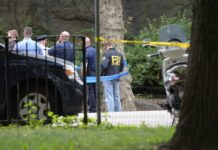
Police and emergency crews sealed off the area as the FBI dispatched more than 100 agents to secure evidence and interview the stunned survivors. The ferocity and coordination of Sanford’s attack—combining high-powered gunfire and arson—underscored a chilling intent to maximize harm. Within hours, the site transformed from a place of prayer to the epicenter of a national investigation, with federal agents combing through debris and digital trails for clues to motive and method.
Political Response: Trump’s Narrative and the Battle Over Meaning
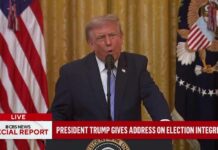
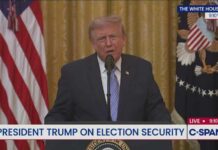
President Donald Trump seized the narrative, condemning the attack as part of an “epidemic of violence against Christians.” His statement thrust the incident into the national spotlight, reframing it from isolated tragedy to evidence of mounting religious persecution. Trump’s characterization resonated with supporters and critics alike, fueling intense debate: Was this the latest salvo in a culture war targeting faith communities, or the act of a radicalized individual with a military past and political grievances?
The suspect’s identification as a pro-MAGA former Marine added layers to the controversy. Media outlets dissected Sanford’s background, raising questions about veteran radicalization, online extremism, and the volatile intersection of politics, religion, and violence. The FBI’s ongoing investigation focused on Sanford’s digital footprint, affiliations, and possible ideological motives, with law enforcement officials cautioning against premature conclusions while affirming the seriousness of the threat.
Historical Patterns and Escalating Threats Against Religious Communities
The Michigan church shooting joins a grim roster of American religious attacks—Charleston’s AME Church, Sutherland Springs’ Baptist congregation, Pittsburgh’s synagogue—all reminders that sacred spaces are not immune to violence. Analysts note an alarming trend: attackers increasingly employ multi-method tactics, from firearms to arson, in pursuit of maximum casualties and psychological impact. Security experts warn that faith communities must confront new realities, investing in protocols and protection as threats evolve.
Social scientists and religious advocates point to deeper currents: rising political and religious polarization, amplified by online echo chambers and culture wars. The Michigan incident, with its blend of military experience, political allegiance, and religious targeting, exemplifies the complex factors driving domestic extremism. Community leaders, meanwhile, grapple with the immediate trauma—loss, fear, and the daunting task of rebuilding both physical structures and a sense of safety.
Impact, Aftermath, and the Road Ahead: Security, Solidarity, and Debate
The fallout extends far beyond the burned church walls. Survivors and families face lasting grief and trauma, while local residents confront the reality of violence striking close to home. Religious organizations nationwide reassess security, balancing openness with protection. Economically, the cost of rebuilding and safeguarding places of worship rises, straining resources and priorities.
Politically, the incident stokes renewed demands for gun control, hate crime legislation, and defense of religious liberty. Experts diverge on solutions, with some emphasizing mental health interventions and others calling for robust law enforcement and counter-extremism strategies. As the FBI’s investigation continues and public debate intensifies, one fact remains: America’s faith communities, once havens of sanctuary, now stand on the front lines of a conflict that is physical, ideological, and deeply personal.
Sources:
The Independent: Michigan church shooting latest