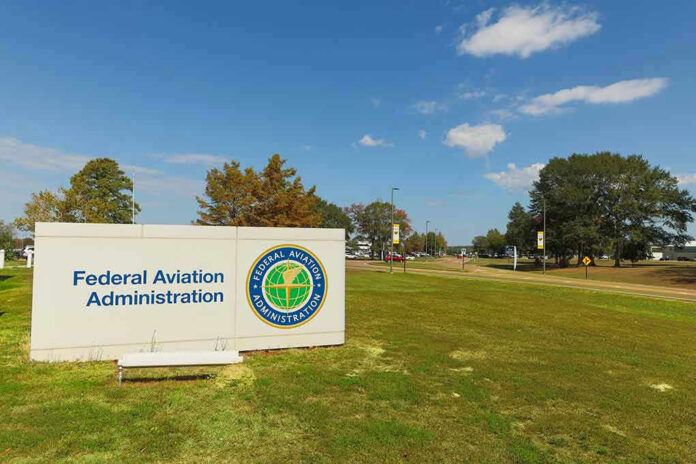
System-wide flight chaos has exploded across the U.S., not from storms or technology glitches, but from the most American of sources: a political standoff that has forced the FAA to cut the nation’s air traffic by nearly a tenth, grounding travel plans for millions when it matters most.
Story Snapshot
- FAA emergency order slashes flights at 40 major U.S. airports during the longest government shutdown in American history.
- Over 1,500 flights canceled and 6,500 delayed in just one weekend, upending holiday travel plans and straining airlines to the limit.
- The crisis exposes chronic air traffic controller shortages and the fragility of U.S. air travel infrastructure.
- With Congress deadlocked and disruptions escalating, travelers and the aviation industry face an uncertain, chaotic future.
FAA’s Drastic Emergency Order: How We Got Here
On November 7, 2025, the Federal Aviation Administration issued a sweeping emergency order, rolling out forced reductions of up to 10% of scheduled flights at the nation’s busiest airports. This was not a weather event or technical failure, but a direct response to a government shutdown that began October 1, now the longest in U.S. history. The FAA’s move marks a rare, almost unprecedented use of regulatory power, triggered by severe air traffic controller shortages and a Congress locked in partisan gridlock over government funding. Airlines, blindsided by the mandate, were given just days to slash schedules, warning passengers of what was coming but unable to cushion the blow.
By November 10, over 1,500 flights were canceled and 6,500 delayed, stranding travelers, wrecking business trips, and igniting social media outrage. The phased reductions began at 4% but quickly ramped up, with each day bringing fresh rounds of disruption. On November 11, carriers like American Airlines confirmed a 6% reduction at 40 airports, a loss of up to 200 flights per day for some. By November 14, the target climbs to 10%, a level that aviation analysts say could have cascading effects for weeks if not resolved quickly.
Why the Shutdown Shredded the Airways: The Roots of the Crisis
The cracks in the system were visible long before this shutdown. Chronic shortages of air traffic controllers have haunted the FAA for years, the result of underfunding, retirements, and slow hiring pipelines. Normally, the agency muddles through—delays here, rerouted flights there. But this shutdown, now in its 41st day, has pushed the system to a breaking point. Unlike previous shutdowns, where delays mounted but operations mostly continued, the FAA saw no alternative but to step in with a sledgehammer: cut flights or risk safety. The timing could not be worse, arriving just as the holiday travel season launches into full swing.
Travelers are not the only casualties. Airlines face mounting financial losses from canceled flights, rebooking costs, and customer compensation. Crews and ground staff see schedules upended daily. Businesses that depend on fast air cargo, from fresh produce to high-value electronics, find supply chains snarled. For air traffic controllers—those who remain on the job—the workload has intensified, with fewer colleagues to share the stress and no end in sight as Congress remains at loggerheads.
Political Power Plays, Industry Fallout, and the Search for Accountability
At the heart of the crisis lies a power struggle. The FAA holds the authority to manage airspace but depends entirely on Congressional appropriations to hire and pay its workforce. Airlines must comply with every FAA order, yet have scant leverage over the political process that funds the agency. Congressional leaders, meanwhile, appear more interested in scoring points than solving the impasse, even as public frustration mounts and the economic toll grows. Travelers are left in limbo, demands for accountability ricocheting from airline customer service desks to Capitol Hill.
Industry experts warn that these flight reductions, if prolonged, could fundamentally shift how Americans view air travel reliability. Calls for reform echo louder: some urge stable, dedicated funding for the FAA insulated from politics; others push for more automation and modernization to ease dependence on human controllers. Academic voices note that critical infrastructure—when left at the mercy of political infighting—cannot deliver on its promises of safety and efficiency. For now, the only certainty is continued disruption, with the rolling reductions scheduled to intensify if Congress fails to act.
Unfolding Impacts and the Shadow of Long-Term Change
Immediate effects are brutally clear: millions of travel plans in tatters, economic losses piling up for airlines and related industries, and morale plunging among workers forced to cope with chaos. The social and political backlash could reshape debates over government shutdowns, with air travel’s essential role now front and center in the national conversation. If trust in the system erodes, the consequences could last long after the shutdown ends—prompting more travelers to seek alternatives and businesses to rethink logistics strategies.
Broader questions loom: Will Congress finally address the vulnerabilities exposed by this crisis, or will the next shutdown bring even greater disruption? Can the FAA rebuild its workforce and public confidence, or has a line been crossed that makes lasting change unavoidable? As travelers, airlines, and policymakers grapple with daily uncertainty, the story of November 2025 stands as a stark warning—when politics grounds the planes, no one escapes unscathed.
Sources:
FAA Emergency Order (official government document)
American Airlines: An update on the FAA directive
Fox News: Government shutdown, FAA flight cancellations & delays