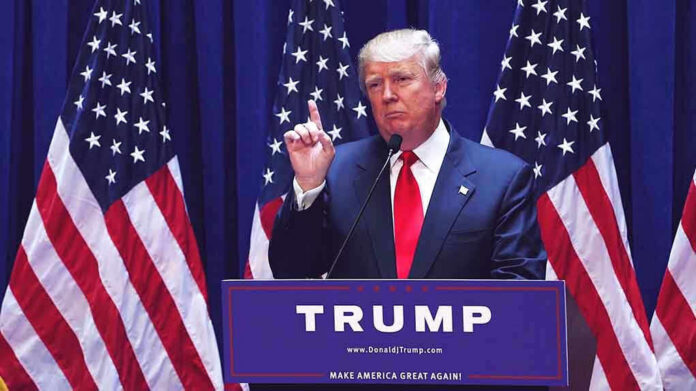
President Trump launched an unprecedented public attack on Pope Leo XIV, calling him “weak on crime” and too liberal in a rare presidential rebuke of the Catholic Church’s leader that signals deepening divisions between Washington and the Vatican.
Story Snapshot
- Trump declared “I’m not a fan of Pope Leo” in scathing remarks accusing the pontiff of tolerating Iranian nuclear ambitions and enabling crime
- The confrontation follows Pope Leo’s criticism of U.S. military actions in Iran and Venezuela as driven by a “delusion of omnipotence”
- Trump suggested the American-born pope was elected specifically to counter his presidency, claiming “If I wasn’t in the White House, Leo wouldn’t be in the Vatican”
- The extraordinary clash unfolds as U.S.-Iran ceasefire negotiations continue in Pakistan amid ongoing regional tensions
Presidential Broadside Against Vatican Leader
President Trump delivered a stunning rebuke of Pope Leo XIV on Sunday, declaring to reporters “I’m not a fan of Pope Leo” after deplaning from Florida to Washington. Trump’s comments expanded on a lengthy social media post attacking the pontiff as “WEAK on Crime” and accusing him of “catering to the Radical Left.” The president specifically objected to what he characterized as papal acceptance of Iran obtaining nuclear weapons, stating “I don’t want a Pope who thinks it’s OK for Iran to have a Nuclear Weapon.” This direct presidential criticism of a sitting pope represents an exceedingly rare escalation in church-state tensions.
Trump’s attack goes beyond traditional diplomatic disagreements to include personal characterizations of the pope’s ideology and effectiveness. The president told reporters Leo is “a very liberal person” who “doesn’t believe in stopping crime,” linking the Vatican leader’s positions to broader domestic policy debates. Trump also referenced U.S. military strikes against Venezuela over drug trafficking issues as another point of contention. The sweeping nature of Trump’s criticism suggests this conflict extends beyond any single foreign policy disagreement to fundamental differences in worldview between the administration and the Vatican.
Pope’s Peace Advocacy Triggers Confrontation
The clash erupted after Pope Leo XIV presided over an evening prayer service Saturday at St. Peter’s Basilica, where he suggested a “delusion of omnipotence” fuels the ongoing U.S.-Israel military campaign in Iran. His remarks came on the same day U.S. and Iranian negotiators began face-to-face talks in Pakistan under a fragile ceasefire arrangement. The American-born pontiff’s criticism of U.S. foreign policy, combined with his calls for peace amid active military operations, clearly struck a nerve with Trump, who views such statements as undermining American strength and resolve at a critical diplomatic moment.
Trump’s response included a provocative claim that Pope Leo’s election was orchestrated because of his American background, specifically to manage relations with a Trump presidency. This assertion, while unverifiable, reflects the president’s view that establishment forces aligned against him extend even into the Catholic Church hierarchy. The president leveraged his 2024 electoral victory as validation, noting his administration enjoys strong support from evangelical Christians who view the Iran conflict through a different lens than the Vatican. This dynamic highlights the growing gap between traditional religious authority and the political coalition backing Trump’s America First agenda.
Unprecedented Rift Raises Broader Questions
According to America Magazine, while tensions between U.S. presidents and popes are “not unusual,” Trump’s response qualifies as “extraordinary” and “stinging” in its directness and personal nature. The public nature of this confrontation stands apart from previous diplomatic disagreements, which typically played out through carefully worded statements and private channels. Trump’s willingness to attack Pope Leo by name, question his motives, and dismiss his authority signals a fundamental shift in how the administration views Vatican influence. For Americans already skeptical of institutional power, this clash reinforces concerns that unelected global figures presume to lecture democratically chosen leaders.
The conflict places American Catholics in a difficult position, potentially forcing them to choose between religious and political loyalties. Trump’s evangelical base, which views the Iran situation differently than the pope, provides the president with a religious counterweight to Vatican criticism. The short-term impact includes escalating U.S.-Vatican tensions during sensitive negotiations, while long-term implications could include further polarization of American Catholics along political lines. Many Americans watching this unfold see another example of overseas elites—even religious ones—attempting to constrain American sovereignty and the will of voters who delivered Trump a decisive mandate.
As ceasefire negotiations continue in Pakistan and military operations remain on hold, the Vatican has not issued a formal response to Trump’s attacks. The silence may reflect careful deliberation about how to engage a president willing to publicly challenge papal authority, or recognition that further comment could deepen the rift. Either way, this confrontation exposes fundamental disagreements about America’s role in the world, the proper response to nuclear threats, and whether traditional institutions retain moral authority to shape policy. For citizens frustrated with government officials who seem more responsive to international opinion than voter mandates, Trump’s willingness to reject papal criticism may resonate regardless of their religious affiliation.
Sources:
Trump Attacks Pope Leo XIV Over Iran, Crime, and Venezuela – America Magazine