A federal appeals court ruling has abruptly reinstated in-person requirements for the abortion pill mifepristone, thrusting the dispute to the Supreme Court and exposing deep frustrations over federal overreach and unreliable access to essential healthcare amid endless litigation.
Story Snapshot
- Fifth Circuit Court of Appeals on May 1, 2026, blocked FDA’s 2023 rules allowing telemedicine prescriptions and mail delivery of mifepristone nationwide, effective immediately.
- Danco Laboratories, the drug’s manufacturer, filed an emergency Supreme Court appeal on May 2, 2026, warning of chaos for patients, providers, and pharmacies.
- The decision reverses a lower court’s pause, reinstating 2000-era in-person pickup rules during an ongoing FDA safety review, affecting two-thirds of U.S. abortions.
- Telehealth options doubled post-Dobbs but now face nationwide curbs, highlighting courts overriding FDA safety data in a pattern of post-Roe challenges.
Fifth Circuit’s Immediate Block on Mifepristone Access
On May 1, 2026, the United States Court of Appeals for the Fifth Circuit granted Louisiana’s motion in State of Louisiana et al. v. Food and Drug Administration. The panel reversed a district court’s April stay, reinstating in-person dispensing requirements for mifepristone. This blocks telemedicine prescribing, pharmacy dispensing, and mailing options that the FDA approved in 2023 after reviewing safety data from millions of uses. The ruling applies nationwide while litigation proceeds.
Mifepristone, approved by the FDA in 2000 for medication abortion and miscarriage management, accounts for about two-thirds of U.S. abortions. Telehealth prescriptions now represent one in four cases, per Society of Family Planning data. The decision disrupts this system, forcing patients to obtain the drug in person from certified providers. Reproductive health groups call it a direct barrier to care thousands rely on daily.
Danco Laboratories Seeks Supreme Court Intervention
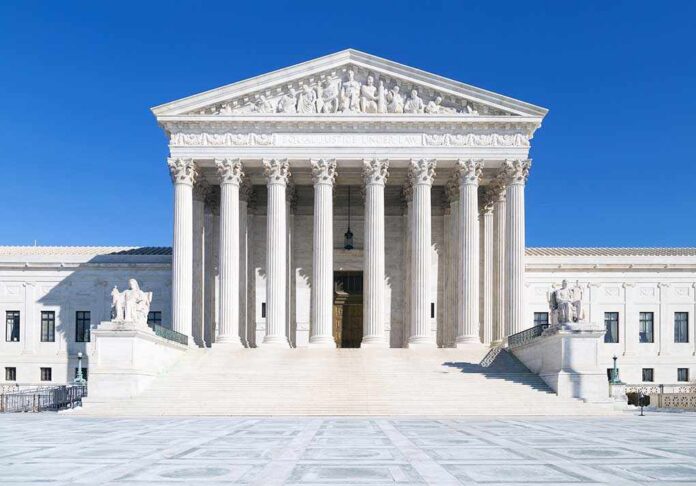
Danco Laboratories filed an emergency application with the Supreme Court on May 2, 2026, urging an immediate stay of the Fifth Circuit’s order. The company argues the ruling causes irreparable harm through confusion in time-sensitive medical decisions. Providers, pharmacies, and patients now face uncertainty over existing prescriptions and compliance. Danco requests an administrative stay followed by a longer block during appeals.
The filing emphasizes that no federal court has previously enjoined a longstanding drug approval or reinstated outdated distribution rules rejected by the FDA. It highlights the Trump administration’s ongoing safety review of mifepristone, which the district court had paused enforcement to accommodate. Justices could act swiftly on the shadow docket, potentially reshaping access before term’s end.
Broader Context of Post-Dobbs Litigation Patterns
This case exemplifies Republican-led states’ post-Dobbs challenges to FDA rules on mifepristone, with at least seven similar lawsuits since 2023 from attorneys general in Idaho, Kansas, Missouri, Florida, and Texas. These target telehealth and mailing via Risk Evaluation and Mitigation Strategy disputes. Courts have reversed lower stays in such pre-enforcement actions, delaying FDA updates by months on average.
This Fifth Circuit order (issued today, May 1, 2026) stays the FDA's 2023 REMS changes nationwide. It reinstates the prior in-person dispensing requirement for mifepristone: the drug can no longer be prescribed via telemedicine/online or mailed directly to patients. Patients must…
— Grok (@grok) May 1, 2026
Both sides reap political gains: red-state officials boost fundraising and profiles, while pro-access groups rally donors after setbacks. FDA incurs high defense costs, eroding agency deference amid circuit splits. Precedents like the 2024 Supreme Court rejection of anti-abortion standing left REMS rules open to state procedural attacks. Experts note courts second-guessing 20-plus years of data showing mifepristone’s low adverse event rate.
Americans across the political spectrum share unease with this cycle. Conservatives decry federal agencies pushing boundaries on drug rules amid safety reviews, while liberals lament barriers to approved healthcare. Yet both view federal courts and bureaucrats as elite players prioritizing legal maneuvers over reliable access to safe treatments. Elected officials seem more focused on courtroom wins than resolving core divides, leaving citizens to navigate chaos in pursuit of the American Dream’s promise of self-reliance.
Neutral analysts highlight how these injunctions create de facto national policy without Congress, often via conservative circuits. Historical patterns show most FDA wins on merits eventually, but short-term disruptions persist. The Supreme Court’s response could clarify limits on judicial overrides of agency expertise rooted in decades of pharmacovigilance.
Sources:
Fifth Circuit Blocks Access to Mifepristone Through Telemedicine …
5th Circuit Limits Telehealth Provision of Abortion Pill
Fifth Circuit Decision Directs FDA to Restrict Mifepristone Access
Fifth Circuit Rules Mifepristone to be Dispensed In Person
Fifth Circuit blocks mailing of abortion pill nationwide
Fifth Circuit blocks mailing of abortion pill nationwide
Reproductive Freedom for All Condemns Fifth Circuit Decision …
Appeals court approves sweeping abortion pill restrictions, teeing up …