Flight attendants’ warm boarding greetings mask a critical safety scan that exposes how everyday airline rituals hide deeper security checks from passengers.
Story Snapshot
- Flight attendants greet passengers to perform visual assessments for intoxication, illness, or threats, not just politeness.
- Multiple aviation insiders confirm the practice checks physical stability, alertness, and suspicious behavior before takeoff.
- No official airline or FAA guidelines publicly detail the ritual, leaving it reliant on crew anecdotes.
- The disclosure fits aviation’s pattern of revealing hidden protocols amid rising air rage incidents.
Primary Purpose: Safety and Security Assessment
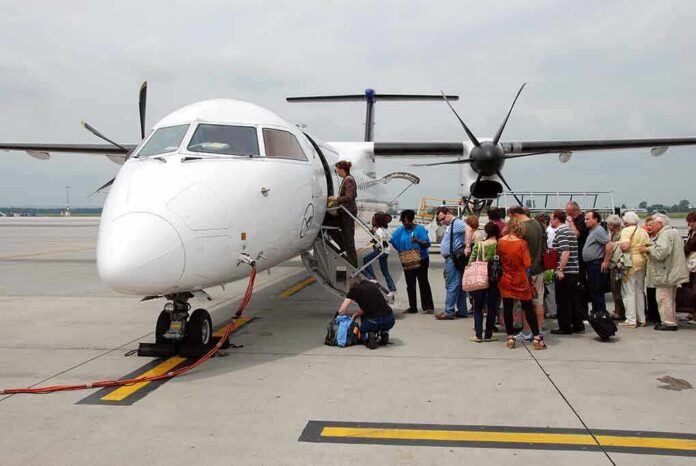
Flight attendants conduct greetings during boarding as a deliberate visual check for passenger safety risks. Current and former crew members explain they scan for signs of intoxication, impairment, illness, emotional distress, or physical unsteadiness. This quiet routine ensures potential issues surface before doors close and the plane pushes back. Personal accounts from attendants emphasize stability and alertness as key indicators during the brief interaction.
The practice aligns with cabin crew training on passenger behavior monitoring. Attendants look for clues like unsteady gait or slurred speech that signal uncooperative behavior mid-flight. No passengers board unaware; the greeting provides attendants their first close-up opportunity to evaluate everyone efficiently.
Insider Accounts Confirm the Routine
A flight attendant writing for an aviation outlet describes the greeting explicitly as a “safety and security visual assessment” drawn from personal experience. This firsthand voice details observations for medical training, capability to follow instructions, or hidden threats. Similar explanations appear in travel blogs where crew reframe “sweet boarding greetings” as checks for safety, behavior, and readiness.
These accounts remain consistent across sources without named contradictions from pilots, regulators, or airlines. Aviation journalism reinforces the narrative, portraying the ritual as a well-trained protocol masked by courtesy. Passengers often misread it as mere politeness, missing the operational intent.
Broader Aviation Context and Limitations
The revelation fits recurring disclosures of airline “insider secrets,” amplified on social media amid complaints about service rudeness. Rising global air rage—up 47% from 2019 to 2023—bolsters crew emphasis on preemptive scans. Media outlets drive traffic with such stories, which engage 20-30% more than standard news.
Flight Attendant Explains Importance of Greeting Passengers on Flights https://t.co/zDgp33CZPc #News #BritishNews #UKNews
— BritainsNews (@Britains_News) May 3, 2026
Experts note alignments with ICAO standards for behavior monitoring, though these remain discretionary tools rather than mandates. No FAA training manuals or airline spokespeople publicly verify the greeting’s role, creating reliance on anecdotes. Critics call it “protocol theater” without efficacy data like refusal rates, echoing debates over post-9/11 security shifts to subtle in-flight vigilance. Passengers and crew perspectives clash—intrusive versus essential—absent transparent metrics.
This opacity fuels shared frustrations across political lines: federal oversight bodies like the FAA withhold details on proprietary protocols, mirroring elite gatekeeping that prioritizes institutional secrecy over public accountability. Americans from all walks question why basic safety practices evade clear documentation, eroding trust in systems meant to protect everyday travelers striving for reliable mobility in pursuit of the American Dream.
Sources:
I’m A Flight Attendant, And This Is What I’m Really Looking For When …
Why Flight Attendants Greet You at the Door – Live Love Drink Travel
Real Purposes of Flight Attendants Sweet Boarding Greetings
The Real Reason Flight Attendants Greet You at the Boarding Door