
Federal agents conducting immigration enforcement in Chicago came under direct gunfire Saturday morning, marking a dangerous escalation in the growing confrontation between federal authorities and sanctuary city communities.
Story Snapshot
- Unknown gunman in black Jeep fired multiple shots at Border Patrol agents in Chicago’s Little Village neighborhood
- Agents faced coordinated attacks including vehicle ramming attempts, bricks, and paint cans thrown by hostile crowd
- Shooting occurred during Operation Midway Blitz, a controversial federal immigration enforcement campaign
- Federal judge had restricted agents’ use of force just days before the incident
- Suspect remains at large while community tensions continue to escalate
Gunfire Erupts During Federal Immigration Operation
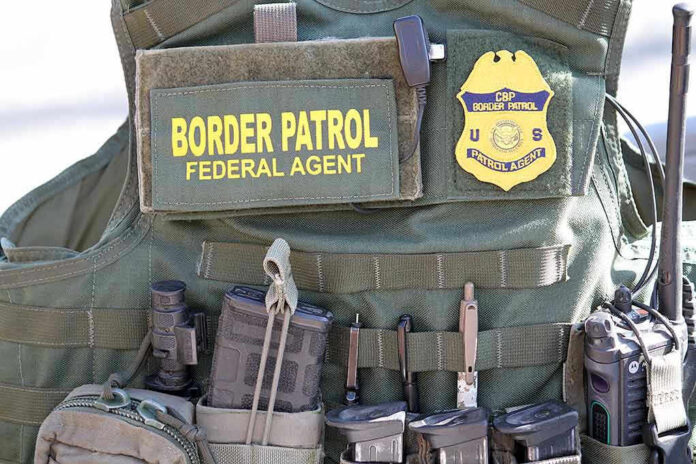
Border Patrol agents conducting immigration enforcement in Chicago’s Little Village neighborhood found themselves trapped by an angry crowd around 9:30 AM Saturday when an unknown man driving a black Jeep opened fire on them. The agents, part of the ongoing Operation Midway Blitz enforcement campaign, escaped without injury as the gunman fled the scene. Department of Homeland Security officials confirmed the agents came under direct gunfire while attempting to carry out their duties in the predominantly Mexican-American neighborhood.
The shooting represents the most serious escalation in violence against federal agents since immigration enforcement intensified in Chicago two months ago. Federal officials described a coordinated attack where protesters boxed in the agents’ convoy before the gunman struck, suggesting a level of organization that goes beyond spontaneous community resistance.
Coordinated Attacks Target Federal Convoy
The gunfire marked only the beginning of a morning filled with violence directed at federal agents. After the initial shooting, protesters pelted the Border Patrol vehicles with bricks and paint cans, forcing Chicago police to assist in evacuating the trapped agents. The hostile crowd’s actions demonstrated a calculated effort to obstruct and intimidate federal law enforcement officers performing their legally mandated duties.
Later that morning, another vehicle attempted to ram the Border Patrol convoy, prompting agents to deploy a controlled tire deflation device. The driver was arrested, but the incident highlighted how quickly community resistance had transformed into active assault on federal personnel. These weren’t isolated acts of frustration but coordinated attempts to prevent lawful immigration enforcement through violence and intimidation.
Judicial Restrictions Complicate Agent Safety
The attacks occurred just three days after Federal Judge Sara Ellis issued an injunction restricting Border Patrol agents’ use of force, following allegations of misconduct during previous enforcement operations. The timing raises serious questions about whether judicial limitations on agent authority emboldened criminal elements within the community to escalate their resistance tactics. The Department of Justice has appealed the restrictions, arguing they compromise agent safety and operational effectiveness.
The judicial intervention came after community activists alleged excessive force by federal agents, including claims that pepper spray affected a one-year-old child during a recent operation. However, the Saturday violence demonstrates the dangerous position agents face when their authority to defend themselves becomes restricted while community hostility intensifies. The balance between protecting civil rights and ensuring agent safety has clearly tilted too far toward constraining law enforcement.
Sanctuary City Policies Enable Lawlessness
Chicago’s sanctuary city status has created an environment where federal immigration law is openly defied, and community leaders actively organize resistance to lawful enforcement operations. The “ICE watch” groups and organized protests represent a systematic effort to obstruct federal authorities from carrying out congressionally mandated immigration enforcement. When local officials refuse to cooperate with federal law and instead encourage resistance, violence becomes an inevitable outcome.
The escalation from peaceful protest to armed attacks on federal agents reflects the dangerous consequences of sanctuary city policies that prioritize political ideology over rule of law. Community leaders who organize resistance to federal enforcement bear responsibility for creating the conditions that led to Saturday’s violence. Their rhetoric and actions have fostered an environment where some residents believe attacking federal agents is justified or acceptable.
Sources:
ABC News – Chicago police respond to report of shots fired at federal agents
ABC News – DHS shooter at large after firing at border patrol in Chicago